You can buy the most expensive serum on the shelf and still break out, if it is made for the wrong skin type. Skin type test is where every real skincare routine should start, before the products, before the ten-step routines you saw on TikTok.
Most people guess their skin type based on how their face feels the moment they wake up, which is honestly not a bad start, but it is not the full picture either. Your skin changes with the seasons, your hormones, the water where you live, and yes, your age. A skin type quiz you took at nineteen might not hold up at thirty-five.
This guide walks through the bare-face test dermatologists actually use, breaks down each of the five main skin types, and points you toward the skincare tools and treatments worth spending money on, and the ones you can skip.
The Bare-Face Test: How Dermatologists Actually Check Skin Type
Skip the guesswork. Here is the test estheticians and dermatologists rely on:
- Wash your face with a gentle, fragrance-free cleanser and pat it dry.
- Do not apply any moisturizer, serum, or product.
- Wait 30 minutes, then check your T-zone (forehead, nose, chin) and your cheeks.
- Wait another hour and check again.
What you see tells you almost everything:
- Shine across your whole face: oily skin
- Tightness, flaking, or a dull look: dry skin
- Shine only in the T-zone, normal or dry cheeks: combination skin
- No shine, no tightness, even tone: normal skin
- Redness, stinging, or a reaction to the cleanser itself: sensitive skin
A blotting paper test can confirm what you see. Press a clean blotting sheet against your forehead, nose, and cheeks. Heavy oil on all areas points to oily skin. Oil only from the T-zone points to combination skin. Almost no oil at all points to dry or normal skin, depending on how tight your skin feels.
Normal Skin
Normal skin sits in the middle: not too oily, not too dry, with small pores and few breakouts. If your skin rarely reacts to new products and holds its moisture through the day, this is probably you.
What to look for in products: lightweight, hydrating formulas rather than heavy, oil-control ones. A gentle cleanser, a vitamin C serum for morning, and a daily SPF 30 or higher cover most of what normal skin needs. Overloading normal skin with actives it does not need is one of the most common mistakes people make once they start following skincare influencers.
Oily Skin
Oily skin means your sebaceous glands are producing more sebum than your skin actually needs. Expect a shiny T-zone by midday, visible pores, and a higher chance of blackheads and breakouts.
Oily skin is not the enemy. It ages more slowly than dry skin because that extra oil keeps the skin barrier intact for longer. The mistake most people with oily skin make is over-stripping it with harsh, alcohol-based products, which triggers even more oil production to compensate.
What actually helps: a gel-based cleanser with salicylic acid, oil-free or “non-comedogenic” moisturizers, and clay masks once or twice a week rather than daily. Niacinamide serums are worth the money here since they regulate oil production over time instead of just stripping it away.
Dry Skin
Dry skin does not produce enough natural oil, which leaves it feeling tight, looking dull, and prone to flaking, especially around the nose and cheeks. Fine lines tend to show up more visibly on dry skin too, since there is less oil to plump the surface.
Cold weather, hot showers, and harsh cleansers make dry skin worse fast. If your skin still feels tight ten minutes after washing, even with moisturizer on, that is a strong sign.
What actually helps: cream-based, fragrance-free cleansers, a moisturizer with ceramides or hyaluronic acid, and layering a facial oil on top at night. Skip anything with alcohol, and be careful with strong exfoliating acids, since dry skin has a thinner barrier and reacts more easily.
Combination Skin
Combination skin is the most common skin type, and also the most confusing to shop for. Your T-zone runs oily while your cheeks stay normal or dry, so a single all-purpose product rarely works well everywhere.
What actually helps: multi-masking is genuinely useful here, a clay mask on the T-zone and a hydrating mask on the cheeks, done at the same time. A lightweight gel moisturizer usually works better than a heavy cream across the whole face, with a richer cream applied only where you need it.
Sensitive Skin
Sensitive skin reacts, sometimes to fragrance, sometimes to a new active ingredient, sometimes to weather changes with no clear trigger at all. Redness, stinging, and tightness are the usual signs.
Sensitive skin is not always its own category. It can overlap with any of the other four types, which is why some dermatologists treat it as a separate axis rather than a fifth type. A patch test on your inner arm 24 to 48 hours before trying a new product is the easiest way to avoid a reaction on your face.
What actually helps: fragrance-free, minimal-ingredient formulas, mineral sunscreen over chemical sunscreen, and introducing one new product at a time so you can actually tell what caused a reaction if one happens.
Acne-Prone Skin
Acne-prone skin can show up on oily, dry, or combination skin, which is part of why it gets treated as its own category. Clogged pores, hormonal shifts, bacteria, and excess oil all play a role, and most people dealing with it need more than a cleanser and a prayer.
A standard approach includes a gentle cleanser, a targeted treatment with benzoyl peroxide or salicylic acid, and non-comedogenic moisturizer so the skin does not overcompensate with more oil. Persistent or cystic acne is worth a dermatologist visit, since prescription-strength retinoids or oral treatments work faster than anything sold over the counter.
When a Skincare Tool Is Worth the Money
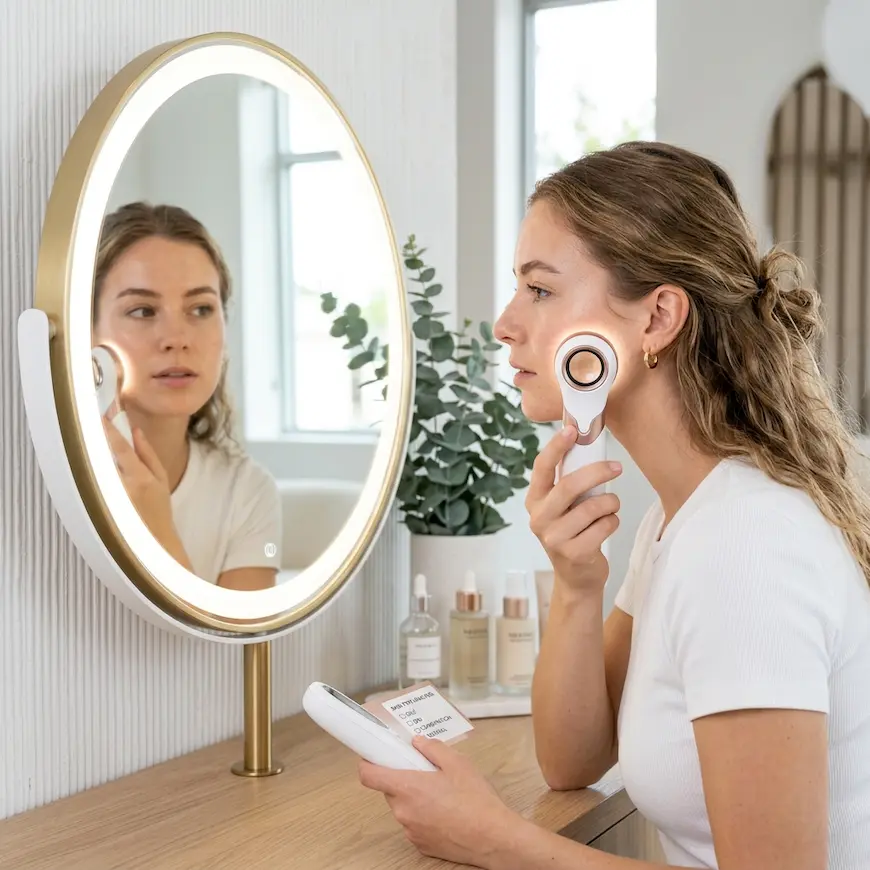
Once you know your skin type, some at-home devices genuinely earn their price tag, and others do not. LED light therapy masks can help with acne-prone and aging skin when used consistently. Facial cleansing brushes work well for normal to oily skin but can be too harsh for dry or sensitive types. If you are considering an at-home dermaplaning device, our Michael Todd Sonicsmooth Pro+ review breaks down whether it is worth it for different skin types.
Building a Routine Around Your Skin Type
Once your skin type is confirmed, the order you apply products in matters almost as much as the products themselves. Our full guide to layering skincare products covers the correct morning and night order so actives do not cancel each other out.
If you are working with a tighter budget, a drugstore skincare routine under $50 can cover every skin type just as effectively as a luxury lineup, provided the ingredients match what your skin actually needs.
Frequently Asked Questions
Can my skin type change over time?
Yes. Hormones, climate, age, and even the products you use regularly can shift your skin from oily to combination, or from normal to dry. Retest every season if your skin has been acting differently than usual.
Is oily skin worse than dry skin?
Neither is worse. Both come with different long-term tradeoffs, oily skin tends to show fewer fine lines earlier, while dry skin is more prone to visible aging without proper hydration.
Do I need to see a dermatologist to know my skin type?
Not for a basic read. The bare-face test at home is reliable for most people. A dermatologist becomes useful when you are dealing with persistent acne, rosacea, or a reaction you cannot pin down on your own.
How often should I retest my skin type?
Every three to four months, or any time you move somewhere with a different climate.
Sources
- American Academy of Dermatology, Dermatologists’ Top Tips for Relieving Dry Skin
- American Academy of Dermatology, How to Pick the Right Moisturizer for Your Skin
- American Academy of Dermatology, How to Safely Exfoliate at Home

Hi, I’m Marwa ✅
I test skincare, haircare, and makeup on real skin and a real budget, and writes the honest reviews to prove it.