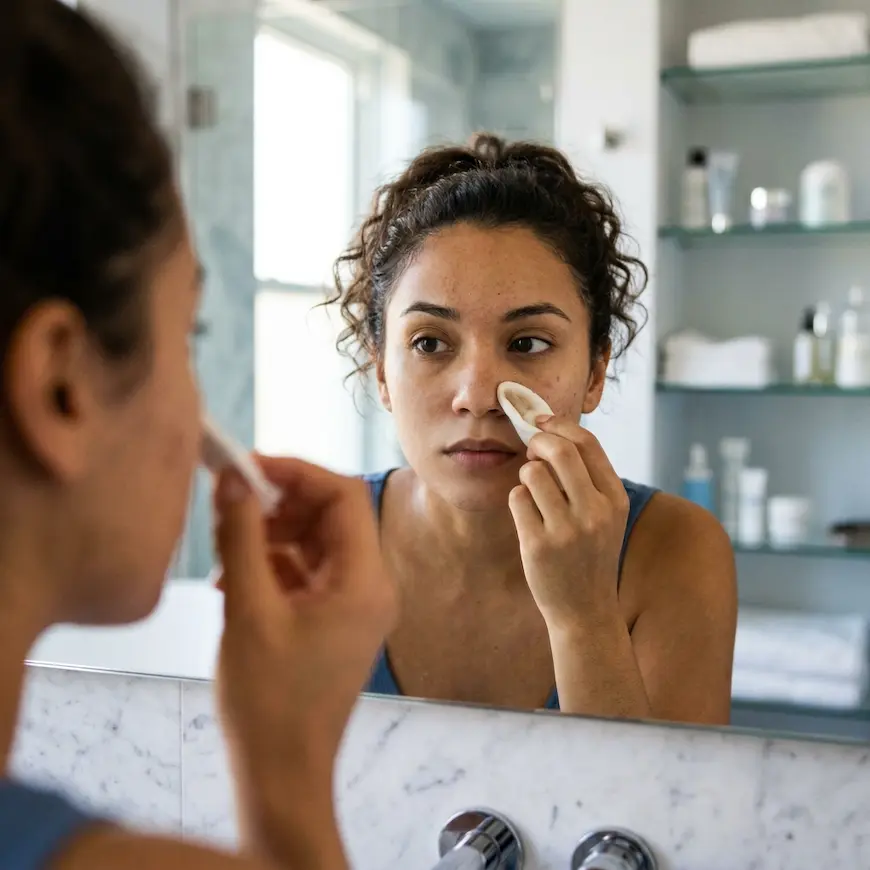
Quick Answer: Most “blackheads” on the nose aren’t blackheads at all. They’re sebaceous filaments, which are normal, universal, and impossible to remove for good. True blackheads look dark and raised. Filaments look flat, grey-tan and evenly spaced. If you want to get rid of blackheads properly, salicylic acid and retinoids work over 6 to 8 weeks. Filaments refill within about 30 days no matter what you do.
I spent most of my twenties convinced I had terrible blackheads on my nose. I steamed. I stripped. I bought a metal extractor and gave myself a red nose and two small marks that took months to fade.
They weren’t blackheads. They were sebaceous filaments, a normal structure everyone has. I’d spent years trying to get rid of blackheads that were never there, and permanently removing part of my own face was never on the table.
Nobody told me the difference. Once someone did, the whole thing got less frustrating. So that’s where this starts.
First: are they actually blackheads?
Two minutes here will save you months. Skipping this step is the most common reason people fail to get rid of blackheads.
| Blackheads (open comedones) | Sebaceous filaments | |
|---|---|---|
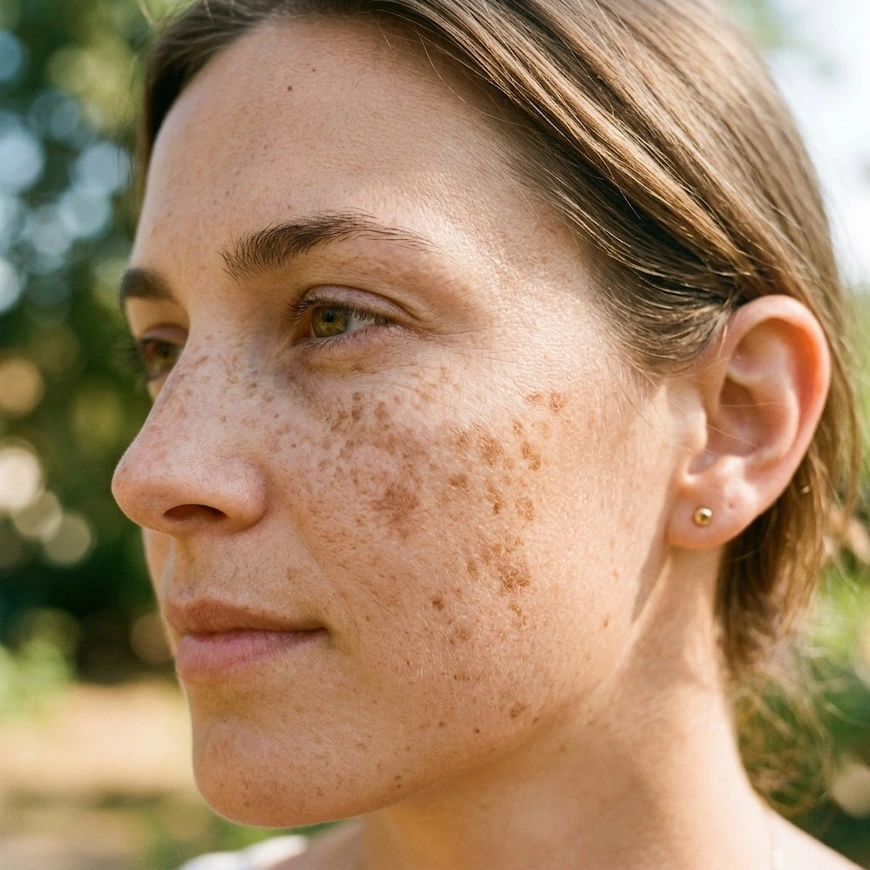
| Look | Dark brown or black, slightly raised | Grey, tan or light, flat |
| Size | Varies, irregular | Uniform, small |
| Pattern | Scattered, uneven | Evenly spaced across the nose |
| Where | Nose, chin, forehead, back | Mostly nose, inner cheeks |
| When squeezed | A firm dark plug | A thin, soft white-yellow thread |
| Normal? | No, it’s a clogged pore | Yes, everyone has them |
| Removable? | Yes, with treatment | No, they refill in about 30 days |
Sebaceous filaments are how your pores deliver oil to the surface of your skin. They aren’t a flaw, they aren’t dirt, and they aren’t going anywhere permanently. You can make them less noticeable by keeping oil in check and pores clear. You cannot eliminate them, and any product promising otherwise is selling you a temporary result.
If yours are evenly spaced grey dots across your nose, those are filaments. Manage them, don’t fight them, and skip to the maintenance section.
If they’re dark, raised and irregular, those are genuine blackheads. Keep reading.
What actually causes blackheads
A blackhead is a pore blocked with sebum and dead skin cells, where the pore stays open at the surface. The dark colour isn’t dirt. It’s the trapped material oxidising on contact with air, the same way a cut apple browns.
Which is exactly why scrubbing fails. The colour isn’t sitting on the surface, and the blockage sits deep in the follicle where a face wash never reaches. Understanding that is the first step to get rid of blackheads without wrecking your barrier.
The usual contributors: oily skin, hormonal shifts, pore-clogging products, and makeup left on overnight. The AAD’s acne overview covers the underlying process. Blackheads are a mild form of acne, not a separate condition.
The two things that actually work
Two ingredients do almost all of the work here. The rest of this article is scaffolding around them.
1. Salicylic acid (BHA)
Salicylic acid is oil-soluble, which is the entire point. It dissolves through the sebum sitting in the pore and exfoliates from inside the follicle. AHAs like glycolic acid are water-soluble and work on the surface, which is good for texture and much less useful when you want to get rid of blackheads specifically.
How to use it: 2% concentration, starting 2 or 3 times a week, building to daily if your skin tolerates it. Leave-on products beat cleansers, because a cleanser rinses off within a minute.
- Paula’s Choice Skin Perfecting 2% BHA Liquid Exfoliant, the leave-on most people get results with
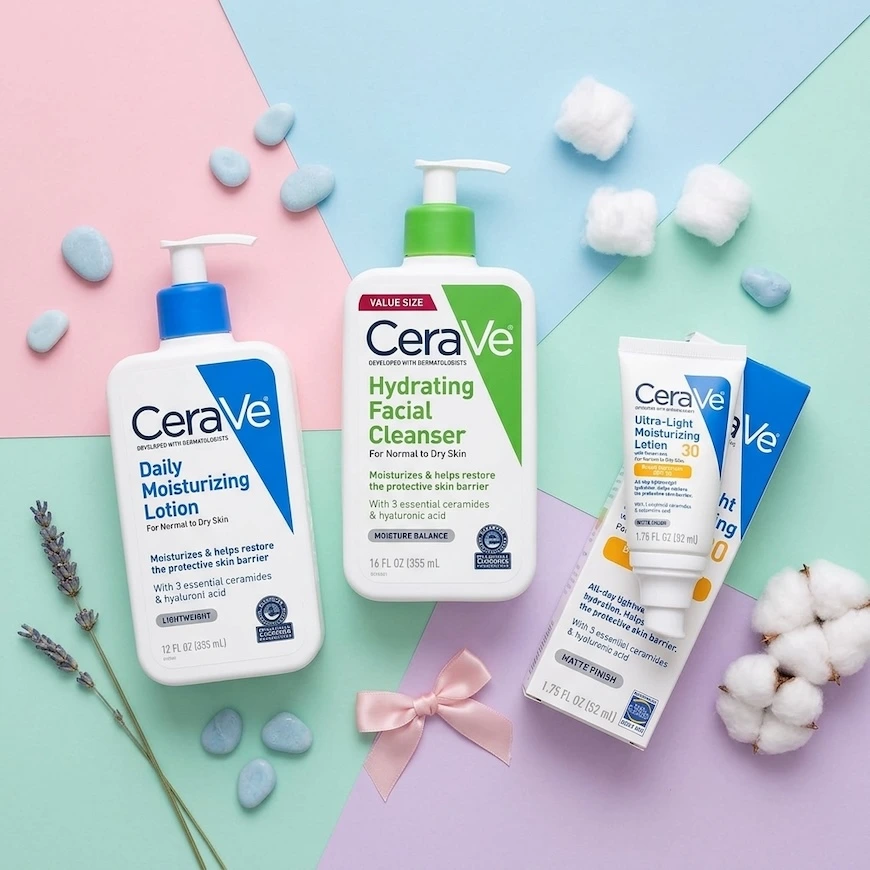
- CeraVe Renewing SA Cleanser, gentle enough for daily use
- Neutrogena Oil-Free Acne Wash, cheaper and more drying
2. Retinoids
Retinoids speed up cell turnover so dead cells stop piling up in the pore in the first place. Salicylic acid clears what’s already there. Retinoids stop it re-forming, which is what turns a short-term fix into a real way to get rid of blackheads long term.
Adapalene (Differin) is available over the counter and is the strongest thing you can buy without a prescription.
How to use it: a pea-sized amount for the whole face, at night, 2 or 3 nights a week to start. Expect an adjustment period. Dryness and purging in the first 4 to 6 weeks is normal, not a sign of failure.
Don’t use salicylic acid and a retinoid in the same routine while you’re starting out. Alternate nights instead. My guide to which skincare ingredients not to mix has the full picture.
Timeline: 6 to 8 weeks minimum before you judge either one. The AAD advises that most acne treatments need 6 to 8 weeks to show results, and blackheads clear slowly because they form deep.
Supporting steps that help
Cleanse properly, twice a day
Not harder. Properly. A gentle cleanser morning and night, lukewarm water, no scrubbing. Over-cleansing strips the barrier and triggers more oil production, which works against everything else you’re doing to get rid of blackheads.
Always take your makeup off before bed, and use the right tool for it. Makeup wipes leave residue behind, which is the last thing you want if you’re prone to congestion.
Choose non-comedogenic products
The AAD advises looking for products labelled non-comedogenic or oil-free if you’re acne-prone, and washing your applicators regularly. Heavy foundations and rich creams are common culprits.
- CeraVe Daily Moisturizing Lotion, lightweight and non-comedogenic
- Neutrogena Hydro Boost Water Gel, an oil-free gel for oily skin
And yes, you still need moisturiser. Skipping it because you’re oily makes your skin produce more oil.
Clay masks
Kaolin and bentonite clay absorb surface oil and can make pores look temporarily smaller. That effect is real and it feels good. It’s a maintenance step rather than a way to get rid of blackheads, and it lasts a day or two.
Once or twice a week, and don’t let it dry to cracking point. That’s over-drying, not extra strength.
Sunscreen, daily
Sun damage thickens the skin around pores and makes them more noticeable, which quietly undoes work you’re doing to get rid of blackheads. Both salicylic acid and retinoids also increase sun sensitivity, so this isn’t optional.
- EltaMD UV Clear Broad-Spectrum SPF 46, the standard pick for acne-prone skin
- La Roche-Posay Anthelios Melt-in Milk SPF 100
More options in my roundup of the best sunscreens for summer and winter.
Things that don’t work as well as you’ve been told
Steaming doesn’t “open your pores”
Pores have no muscles. They don’t open and they don’t close, so cold water doesn’t seal them either.
What warmth does is soften the sebum plug, making it slightly easier to dislodge. That’s a real and modest effect, worth doing before extraction. It just isn’t the mechanism people think it is.
And please don’t lean over boiling water. Hot tap water in a bowl, or five minutes in a steamy shower, does the same job without the scald risk.
- Nano Ionic Facial Steamer, if you want the controlled version
Pore strips remove filaments, not blackheads
That satisfying forest of little spikes on a used pore strip? Those are sebaceous filaments, the normal structures from the first section. You’ve removed the visible tips of something universal, and they refill within days.
Strips don’t reach genuine blackheads, which sit anchored deeper. Repeated use on the same patch of skin irritates it and, over time, makes pores look worse.
So they’re fine the night before an event, when you want a short cosmetic win. As a way to get rid of blackheads, useless.
Extraction tools, the honest version
Metal comedone extractors work in trained hands. At home, the common outcomes are bruising, broken capillaries, dark marks, and pushing material deeper where it turns into an inflamed papule instead of a blackhead.
The AAD lists picking and squeezing among the habits that worsen acne, and scarring from at-home extraction is common.
If you’re going to do it anyway, and plenty of people will:
- Only after softening with warmth, never on dry skin
- Sterilise the tool with alcohol before and after, every time
- Only on visibly ready, surface-level blackheads
- Two attempts maximum. If it doesn’t come out, it isn’t ready, so stop
- Never on inflamed spots, cysts, or anything painful
- Antibacterial afterwards, and hands off for the rest of the day
- Blackhead extractor kit, if you use one, sterilise it
I’d rather you spent that money on salicylic acid. But an honest article says what people actually do.
Baking soda, lemon juice, toothpaste
No. None of these get rid of blackheads. Baking soda is strongly alkaline and wrecks your skin’s pH. Lemon juice causes phytophotodermatitis in sunlight. Toothpaste contains nothing that treats acne and just irritates the spot into a mark.
Scrubbing
Physical scrubs don’t reach the blockage and they do damage the surface. The AAD’s guidance on exfoliating safelyfavours gentle chemical methods for congested skin.
Lifestyle factors worth the effort
On diet, the evidence is strongest for high-glycaemic foods and, to a lesser extent, skim milk. Modest effect, not a cure, and it doesn’t apply to everyone. Worth an 8 week trial if you’re curious about your own skin. Not worth feeling guilty over a slice of bread.
Change your pillowcase weekly. It’s cheap and it matters more than people expect.
Keep your hands off your face, which is the single most effective free habit if you’re trying to get rid of blackheads and also the hardest one to keep.
And watch your hair products. Pomades and heavy conditioners running down onto your forehead and hairline cause a very specific pattern of congestion right along there.
When to see a dermatologist
- No improvement after 8 to 12 weeks of consistent salicylic acid or adapalene
- Blackheads alongside painful, deep cysts
- You’re scarring or marking after breakouts
- It’s affecting how you feel about being seen
A dermatologist can prescribe stronger retinoids, or offer professional extraction, chemical peels or microdermabrasion. All of those work differently from the at-home versions, and if 12 weeks of correct home treatment hasn’t helped you get rid of blackheads, a prescription starts earning its cost.
Frequently asked questions
What’s the difference between blackheads and sebaceous filaments?
Blackheads are dark, raised, irregularly scattered clogged pores. Sebaceous filaments are flat, grey-tan, evenly spaced and completely normal. Everyone has them, mostly on the nose, and they can't be permanently removed.
Do pore strips work?
They lift sebaceous filaments and surface debris, which looks dramatic but isn't the same as treating blackheads. The result lasts a few days and repeated use can irritate skin. Fine occasionally, useless as treatment.
Does steaming open your pores?
No. Pores have no muscles and cannot open or close. Warmth softens the hardened sebum inside the pore so it's easier to dislodge, which is a real but much smaller effect than the phrase suggests.
Should I squeeze my blackheads?
Ideally no. At-home extraction commonly causes broken capillaries, dark marks and scarring, and can push material deeper. If you do it anyway, soften with warmth first, sterilise the tool, and stop after two attempts.
Why do I keep getting blackheads on my nose?
The nose has the highest density of sebaceous glands on your face. It's also the most common site for sebaceous filaments, which are normal and constantly mistaken for blackheads.
The bottom line
Work out which one you have first. If they’re evenly spaced grey dots on your nose, they’re sebaceous filaments, which are normal and not a problem to be solved.
If they’re genuine blackheads, then 2% salicylic acid and adapalene, used consistently for eight weeks, is how you get rid of blackheads. Everything else on this list is maintenance and comfort.
And put the metal extractor down. I say that as someone with the marks to prove it.

Hi, I’m Marwa ✅
I test skincare, haircare, and makeup on real skin and a real budget, and writes the honest reviews to prove it.