Quick Answer: Most effective lash serums, including nearly every lash serum for sensitive eyes on the shelf, contain a prostaglandin analog. Look for an ingredient ending in -prostenolamide, -prost, or -cloprostenol. These work, and they’re also linked to eyelid darkening, redness, and in longer-term studies of glaucoma patients, loss of fat around the eye. A “sensitive” version usually keeps the same active and changes the supporting formula instead. Peptide-only serums are genuinely gentler but they condition rather than grow, so expect thicker, glossier lashes rather than longer ones.
Most lash serums that genuinely grow lashes work through the same class of ingredient. It’s rarely on the front of the box, it usually sits near the end of the ingredient list, and almost nobody selling you a lash serum will explain what it is.
If you have reactive eyes, that’s the thing you most need to know. It matters more than which brand calls itself the gentlest lash serum for sensitive eyes.
The ingredient almost every lash serum brand avoids naming
The whole category exists because of an accident.
Ophthalmologists prescribing prostaglandin analog eye drops for glaucoma kept noticing the same odd thing: their patients’ eyelashes were getting longer, thicker and darker. It went into the paperwork as a side effect. Then somebody worked out that the side effect was worth more than the drug.
That’s how Latisse, the only lash growth product the FDA has approved as a drug, came to exist. It’s also why the cosmetics industry spent the following years building molecules that do the same job while staying on the cosmetic side of the line.
A 2015 review in the Journal of the American Academy of Dermatology states it without hedging: the prostaglandin F2α analogs prescribed for glaucoma are known to cause excess hair growth and skin darkening. Those two effects are the entire foundation of the lash serum category. One is why you buy it. The other is the part nobody puts on the box.
The “sensitive” versions usually keep it
This is the part that surprises people, and it’s the single most useful thing to understand before buying a lash serum for sensitive eyes.
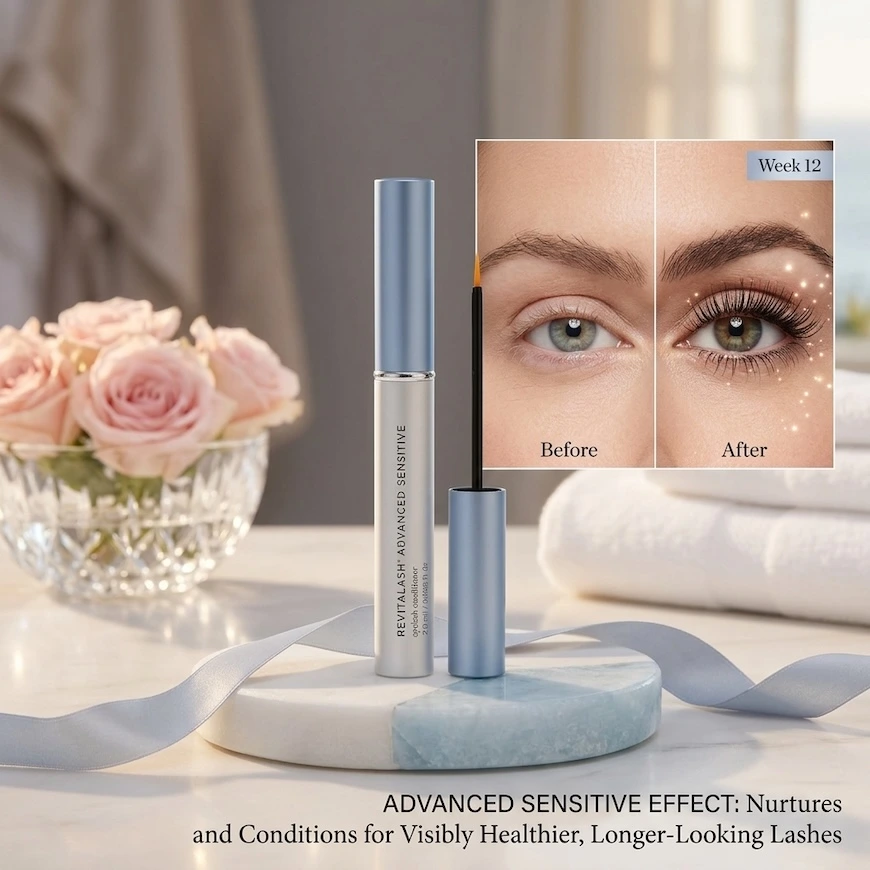
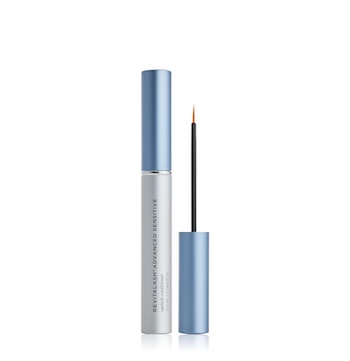
RevitaLash Advanced Sensitive is the product most often recommended for reactive eyes, and the one I’ve used. It lists Dechloro Dihydroxy Difluoro Ethylcloprostenolamide in its ingredients. Same active as the standard formula.
What the Sensitive version changes is everything around the active: a different peptide, different preservatives, no fragrance, no alcohol.
That’s a real improvement. For a lot of people it’s the difference between tolerating a serum and abandoning the category altogether. But it’s a narrower claim than the marketing implies. It’s gentler. It isn’t prostaglandin-free.
So which version you need comes down to what “sensitive” means in your case. If your problem is contact irritation, meaning stinging, itching or watering from fragrance and preservatives, then a reformulated lash serum for sensitive eyes may solve it outright. If your concern is the prostaglandin itself, it won’t touch it, and you want the peptide section further down.
What can actually go wrong
I want to be careful here, because the honest version is more useful than the alarming one. This is also the section that should decide whether you buy a lash serum for sensitive eyes at all.
The strongest evidence comes from glaucoma patients using prescription eye drops. That’s a higher dose of a different molecule, dripped into the eye rather than brushed along the lash line. It tells you the mechanism is real. It doesn’t tell you how often the same thing happens to someone using a cosmetic serum, and anyone who tells you it does is filling a gap with confidence.
In a 2025 study in Cutaneous and Ocular Toxicology, researchers followed 86 patients who used a prostaglandin analog in one eye only, so each patient acted as their own comparison. After at least three months:
- Orbital fat atrophy was the most common change, at 48.8%
- Deepening of the upper eyelid sulcus: 38.4%
- Involution of dermatochalasis: 32.6%
- The eye sitting visibly deeper in the socket: 26.7%
- Using the product beyond a year significantly raised the odds of more severe changes
The effects reported with cosmetic serums, roughly in order of how often you’ll hear about them:
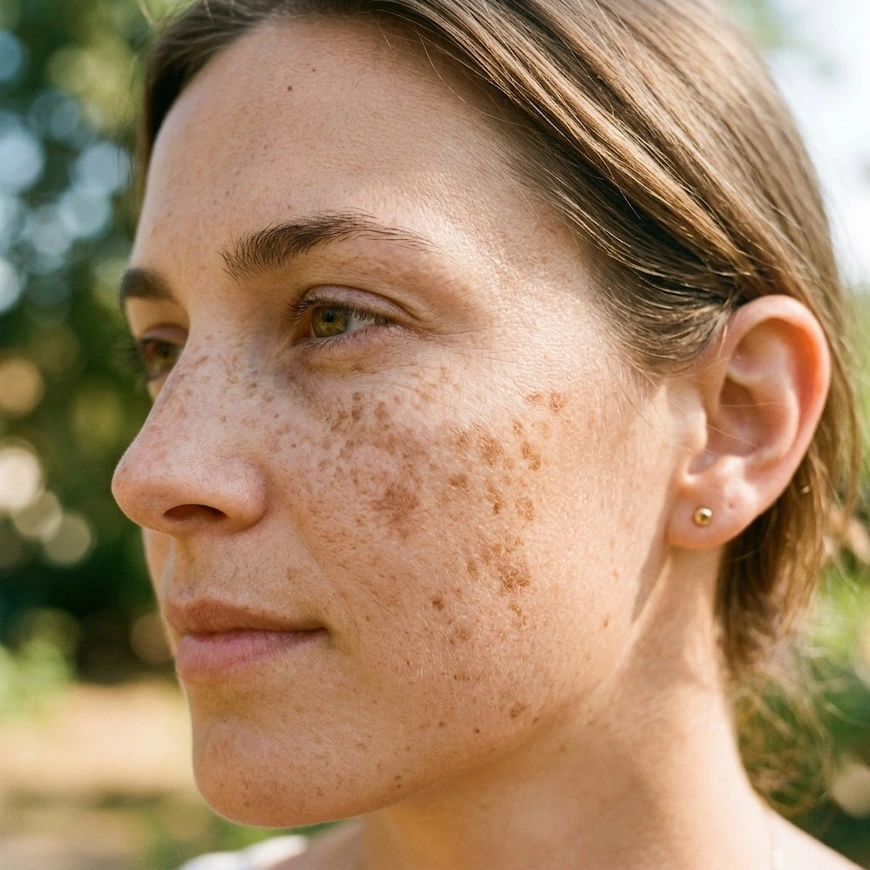
Common, and reversible. Redness and itching along the lash line. Watering eyes, particularly in the first fortnight. Darkening of the eyelid skin, which usually fades within weeks to months of stopping.
Less common, and worth taking seriously. Periorbital fat loss produces a hollowed, sunken look around the eye, and it’s what people mean when they say a serum “aged” them. It may not fully reverse. Permanent iris darkening, where brown pigment spreads through a light-coloured iris, is documented with prescription drops applied into the eye. Very unlikely from something brushed along the lash line, but it’s why anything that runs into the eye should be blotted, and why blue and green eyes get the strongest warnings.
Nobody knows the rates for cosmetic serums. That isn’t evasion, it’s the actual state of the evidence, and the reason is worth understanding.
Under the FDA’s definitions, a claim that a product restores hair growth is a drug claim, and drugs need approval before they’re sold. A product claiming to condition lashes is a cosmetic, and cosmetics don’t go through pre-market approval at all.
Which is exactly why every lash serum on the shelf is called a conditioner.
Why “hypoallergenic” tells you almost nothing
Three phrases turn up on nearly every product aimed at reactive eyes. Here’s what each is worth.
“Hypoallergenic.” The FDA’s position is that no federal standard or definition governs the term at all, which leaves it meaning whatever the company using it wants it to mean.
The FDA did try to fix that. It issued a regulation in 1975 requiring companies to prove a hypoallergenic product caused significantly fewer reactions than comparable products. Almay and Clinique sued, the U.S. Court of Appeals for the D.C. Circuit struck the regulation down, and nothing has replaced it in the fifty years since. The agency also says it knows of no scientific studies showing that products making this claim cause fewer reactions than conventional ones. So when you’re comparing one lash serum for sensitive eyes against another, that word contributes nothing.
“Dermatologist-tested” and “ophthalmologist-tested.” Equally undefined. They tell you a test happened. Not what it measured, how many people took part, or what came out of it. A product tested on twenty people for forty-eight hours can print both.
“Clinically tested.” Note the word. Tested, not proven. “Clinically proven” is a meaningfully stronger claim and should arrive with a study you can go and read.
None of this means these products don’t work. RevitaLash Advanced Sensitive is a well-made formula and I use it. It means the ingredient list is the only part of the packaging that’s regulated, and it’s the part worth your attention.

As an Amazon Associate I earn from qualifying purchases. If you buy through a link on this page I may receive a small commission at no extra cost to you.
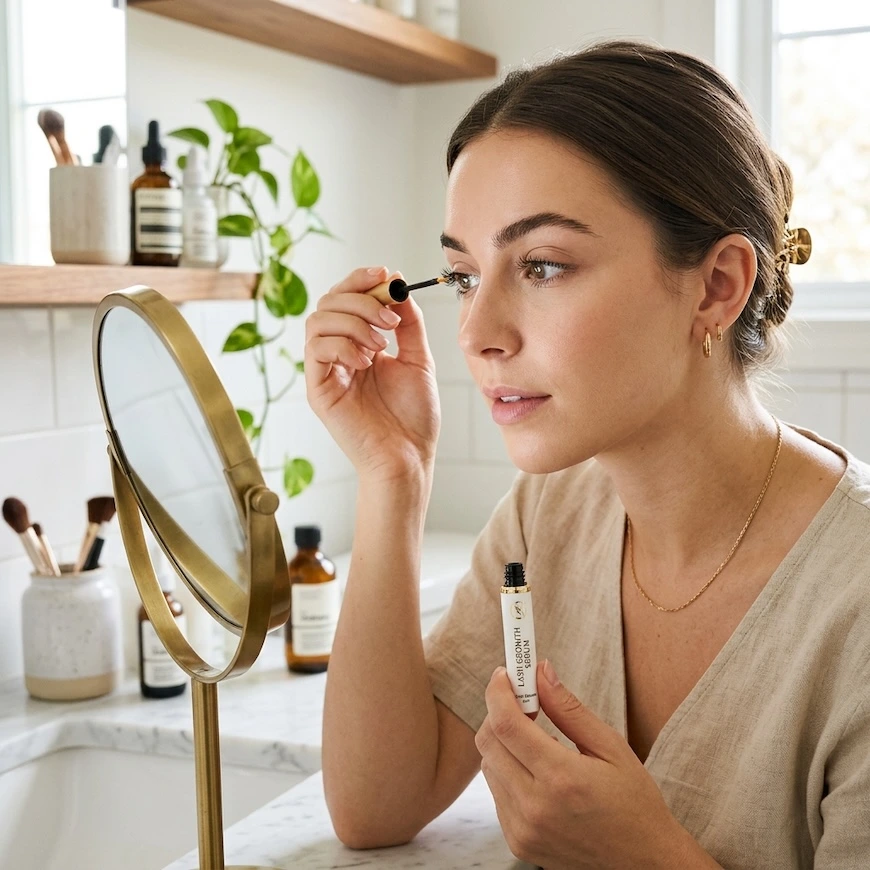
How to apply a lash serum for sensitive eyes without irritation
Most irritation comes from application error rather than the formula.
- Take everything off first. All makeup, especially waterproof mascara. Residue traps serum against the lash line, where it migrates into the eye.
- Dry your lashes completely. Water dilutes the serum and helps it run.
- One dip, both eyes. Using more product is the single most common mistake. It doesn’t work faster, it just increases what runs into your eye and what sits on your eyelid skin.
- Upper lash line only. One thin stroke at the base, like a fine liquid liner. Never on the lower lashes, where gravity and blinking take it straight into the eye.
- Blot immediately. Run a clean tissue along the lid just below the lash line. This is the step that reduces eyelid darkening, and hardly anyone bothers.
- At night, after everything else. Give it two minutes to dry before your face touches the pillow, and keep a retinol serum near the eye out of the same routine, because stacking two irritants on thin skin is how tolerable turns intolerable.
- Once a day, not twice. Twice daily doubles your exposure and does not double your result.
- Photograph week zero. Same light, same angle, eyes closed. You won’t remember what your lashes looked like twelve weeks from now, and this is the only reliable way to judge.
Contacts out before, back in after fifteen minutes. If it stings, rinse with cool water, skip the next night, then try a thinner line. Stings again? Stop.
What a realistic timeline looks like
| Week | Prostaglandin serum | Peptide serum |
|---|---|---|
| 1 to 2 | Nothing visible. Possible mild watering. | Nothing visible. |
| 3 to 4 | Lashes feel less brittle. | Noticeably glossier. |
| 6 to 8 | First real length. Fringe looks fuller. | Less fallout on the cotton pad. |
| 12 to 16 | Full result. As long as they’ll get. | Condition maintained; no added length. |
| After stopping | Reverts over 6 to 8 weeks. | Reverts. |
It reverts. Both types. A lash serum for sensitive eyes is maintenance rather than a one-off purchase, and a premium bottle works out to a recurring monthly cost for as long as you want the result. Worth knowing before your first bottle rather than your third.
Frequently asked questions
Does a lash serum for sensitive eyes without prostaglandin actually work?
It works for a narrower thing. Peptide and panthenol serums reduce breakage and improve how lashes look and feel, so if yours are thinning because they're snapping off, you'll see a real improvement. They don't extend the growth phase, so they won't add length. Anyone claiming a peptide formula matches prostaglandin results is overstating it.
Can a lash serum change my eye colour?
Permanent iris darkening is documented with prescription prostaglandin drops applied directly into the eye, and it's most likely in mixed-colour or light-brown irises. It's considered very unlikely from a serum applied to the lash line, since far less product reaches the iris. Blue or green eyes and you'd mind? That's a fair reason to choose a peptide formula.
What is periorbital fat loss, and will it reverse?
It's a thinning of the fat pad around the eye, which makes the area look hollow and the eye look sunken. In a 2025 study of glaucoma patients using prostaglandin drops in one eye, orbital fat atrophy was the most common periorbital change at 48.8%, and use beyond a year raised the odds of more severe changes. Unlike eyelid darkening, it may not fully reverse once you stop. It's the main argument for treating any prostaglandin serum as a course rather than something you use indefinitely.
Can I use a lash serum while pregnant or breastfeeding?
There's no safety data for prostaglandin analogs applied to the lash line in pregnancy, and prostaglandins act on uterine tissue. Standard advice is to avoid them. Peptide serums and plain castor oil are generally considered fine, but check with your midwife or doctor.
Can I use a lash serum with eyelash extensions?
Ask your technician first. Some formulas leave a residue that interferes with adhesive, and extensions themselves put traction on the natural lash. If your lashes have thinned from extensions, take a break from extensions before starting a serum. Nothing will outrun ongoing mechanical damage.
Why do my eyelids look darker since I started?
That's eyelid hyperpigmentation, a known and fairly common effect of prostaglandin analogs, and switching to a lash serum for sensitive eyes won't prevent it when the active is the same. It usually fades over weeks to months after stopping. Two things reduce it: using less product, and blotting the lid with a tissue straight after each application.
How long before I see results?
Six to eight weeks for the first visible length with a prostaglandin formula, twelve to sixteen for the full result. A peptide lash serum for sensitive eyes improves condition within four to six weeks and stops there. Photograph your lashes on day one in consistent light, because it's the only reliable way to judge.

Hi, I’m Marwa ✅
I test skincare, haircare, and makeup on real skin and a real budget, and writes the honest reviews to prove it.