This post contains affiliate links. If you buy through them, we may earn a commission at no extra cost to you.
Quick Answer: Ice rollers work genuinely well for one thing: reducing puffiness. Cold constricts blood vessels and helps move retained fluid, which is why a puffy morning face looks noticeably better after five minutes. They do not shrink pores, tighten skin lastingly, or clear acne, pore size is genetic and cold only changes how it looks for a few minutes. Never roll one area for more than about 5 minutes, and skip them entirely if you have rosacea, Raynaud’s or cold urticaria.
Ice rolling went from esthetician trick to bathroom-shelf staple in about two years, and it’s one of the few viral tools that actually does something.
It also gets credited with a long list of things it doesn’t do. So here’s the split. What an ice roller for face puffiness is genuinely worth, and what’s just copy on the box.
What ice rolling genuinely does
It brings down puffiness, and that’s the main event.
Cold triggers vasoconstriction. Blood vessels narrow, less fluid leaks into the surrounding tissue, and rolling helps shift what’s already pooled. Under the eyes it shows fastest, since the skin there is thinnest and holds swelling most visibly. If you want to be careful about technique, the skin around your eyes needs a lighter hand than the rest of your face.
Slept badly, ate something salty, cried, drank more than you meant to? An ice roller for face swelling works on all of it, and fast. That’s the whole reason these things caught on.
It calms heat and irritation.
Cold is a simple anti-inflammatory. An ice roller for face irritation earns its place after a workout, after waxing, on a brutal day, or after sun exposure. Cold compresses have been standard medical advice for about as long as medical advice has existed.
It feels good, which counts.
Five minutes of cold on your face is a pleasant pause in a morning that probably doesn’t have many. If a tool is what gets you to take those five minutes, that’s a real benefit. It just isn’t a dermatological one, and it’s worth being clear about which is which.
It works as a primer.
Skin that’s less puffy and less flushed takes makeup better, so an ice roller for face prep does help foundation sit flat. Modest but real, and it stacks with everything else that keeps makeup that sits smoothly looking that way past lunchtime.
It might help a tension headache.
Cold on the head and neck is old, ordinary self-care for headache, and plenty of people swear by it. Not a migraine treatment. A reasonable thing to try.
What it doesn’t do
Being blunt here, because these claims sit on nearly every ice roller listing, including the ones this post used to repeat.
| Claim | Reality |
|---|---|
| “Minimizes pores” | No. Pore size comes down to genetics, oil production and collagen. Cold makes pores look slightly less visible for a few minutes, then it reverses |
| “Tightens skin” | Same mechanism, same few minutes. Not tightening |
| “Clears acne” | It can calm the redness of one inflamed spot. It doesn’t treat acne |
| “Removes blackheads” | No. Blackheads are oxidised sebum sitting in the pore, and cold does nothing to them |
| “Removes dark circles” | Partly. Helps when they’re puffiness and shadow. Does nothing for pigmentation or thin skin showing vessels |
| “Boosts collagen” | No evidence |
| “Reduces wrinkles” | No |
On blackheads specifically, most of what people are trying to roll away isn’t even a blackhead. Worth reading up on blackheads and what isn’t one before you spend money on the wrong tool. And if breakouts are the actual problem, an ice roller for face redness will take the heat out of a single spot and nothing more. You want a proper acne routine for that.
So: an excellent de-puffing tool, pleasant to use, not a treatment device. Anything promising permanent change from temperature alone is describing something that doesn’t happen.
That isn’t a reason to skip it. De-puffing is genuinely useful and it’s why people keep reaching for these. It’s a reason to buy the $12 one instead of the $40 one.
Who shouldn’t use one
No listing mentions any of this, and some of it matters more than the technique does.
Skip it entirely if you have cold urticaria, which is a real condition where cold exposure brings on hives. Rolling will set it off. Same goes for Raynaud’s phenomenon, where cold triggers vascular spasm, and for any known cold intolerance or cryoglobulinemia.
Use real caution if you have rosacea. Extreme temperature swings are a recognised trigger, and the rebound flush after cold can leave you redder than you started. Some people with rosacea handle brief cooling fine and others flare, so test a small area before committing to an ice roller for face flushing. Same caution applies to very reactive or thin skin, particularly around the eyes, where prolonged cold can damage superficial capillaries. If your barrier is already compromised, repairing a reactive barrier comes before adding any new tool.
And if you have reduced sensation in your face for any reason, be careful: you can’t feel cold becoming damaging if you can’t feel cold. Three rules that apply to everyone: Never more than about five minutes on one area. Prolonged direct cold can cause an ice burn, and the early warning signs are redness and a stinging or prickling feeling that turns into numbness. Keep it moving. Don’t park it in one spot, especially under the eyes.
Stop if skin goes white, numb, or stings sharply. That isn’t the thing working. That’s the signal to stop. Using actual ice instead of a roller? Wrap it. Bare ice on skin is how people get burns, and half the point of a roller is putting a barrier between the two.
How to use one properly
- Freeze it at least two hours. Most gel rollers want overnight before the first use.
- Cleanse first. You’re rolling over whatever is already on your face.
- Roll outward and upward: centre of the face towards the ears, jaw towards the ear, forehead outwards. That follows lymphatic drainage.
- Under the eyes, go inner corner to temple, gently, and keep moving.
- Five minutes total is plenty. More is not better.
- Apply skincare afterwards, while skin is cool and calm.
- Mornings beat evenings, because that’s when overnight fluid has pooled and an ice roller for face de-puffing has the most to work with.
Daily is fine within those limits. There’s no cumulative benefit, so using it twice as long won’t get you twice the result. This is about as low-maintenance as dermatologist basics get.
How to clean it, the step everyone skips
This thing touches your face and then goes back in the freezer, which is a poor combination if you never wash it.
Wipe it after every use with a clean cloth, since sweat, oil and product all transfer onto the head. Wash it weekly with soap and warm water, then dry it completely before it goes anywhere near the freezer. Never freeze a wet roller, or moisture and frost build up inside the handle. Store it in a bag or box rather than loose between the frozen peas. And replace a gel roller if the gel leaks or the seal goes.
Breaking out on exactly the areas you roll? Check the roller before you blame the technique. An unwashed ice roller for face use is a much likelier culprit than the rolling itself.
Two worth buying
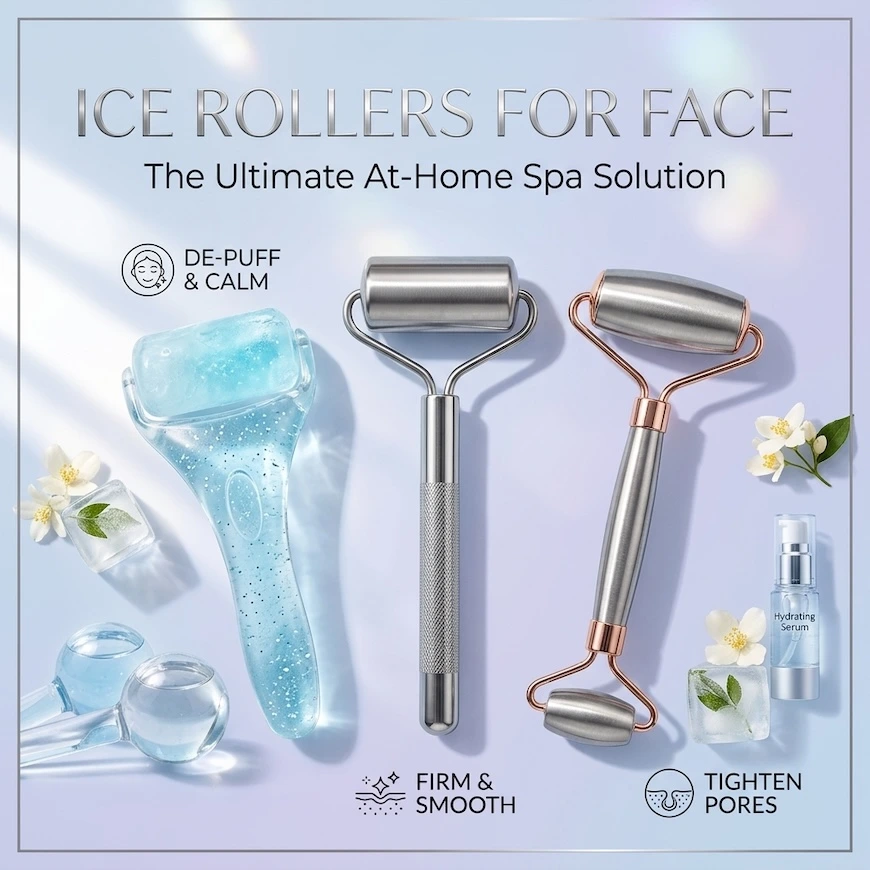
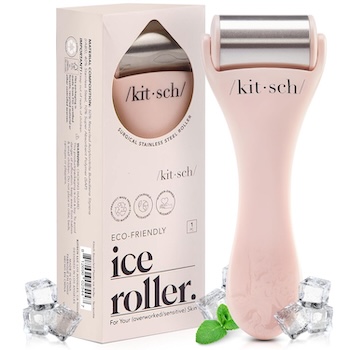
1. Best overall: a stainless steel roller head. Steel holds cold longer than plastic-encased gel and there’s no gel to leak. Wipes clean in seconds, and it works chilled from the fridge as well as frozen. Skip it if you want something you can leave sitting out, because steel loses its cold faster once it’s off the ice.

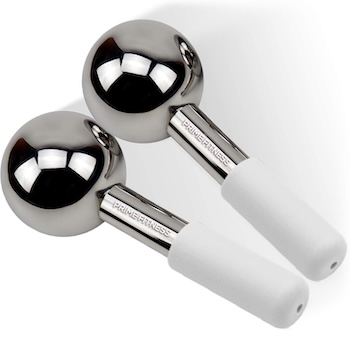
2. Best for under-eyes: ice globes. Two small spheres you hold rather than roll. Better control on the eye area and around the nose, and more comfortable than a roller on small areas. Skip them if you want to cover your whole face quickly, since globes are slower.
Before you spend more: a bag of frozen peas in a cloth does the same thing. A roller is more pleasant, more controlled and easier to steer around a face, but you’re buying convenience rather than a different mechanism. That’s true of most of this category, and it’s the honest through-line in any comparison of at-home skincare devices compared.
Ice roller vs the alternatives
Worth knowing where gua sha and facial massage fit before you decide, because they solve a different problem.
| Tool | Best for | Not for |
|---|---|---|
| Ice roller | Whole-face de-puffing, fast | Anything structural |
| Ice globes | Under-eyes, precision | Speed |
| Gua sha / facial massage | Fluid movement, tension release | Cold’s anti-inflammatory effect |
| Cold spoon or wrapped ice | Free, works | Comfort and control |
| Caffeine eye cream | Persistent under-eye puffiness | Whole-face flushing |
If your puffiness is daily and stubborn, look wider than the tool. Sleep, salt, alcohol and allergies are the usual culprits, and an ice roller for face puffiness manages the symptom rather than the cause. Fluid retention along the jaw is a separate question again, and closer to what causes a double chin than to anything a roller addresses.
Frequently asked questions
Does an ice roller shrink pores?
No. Pore size is set by genetics, oil production and collagen levels, and nothing you apply to the surface changes it. Cold causes brief vasoconstriction that makes pores look a little less visible, then it reverses completely. Temporary visual effect, not a change to your pores.
How long should you use an ice roller for face rolling?
Around five minutes total, and never more than roughly five on any one area. Keep it moving instead of resting it in place. Prolonged direct cold can cause an ice burn, and there's no extra benefit to going longer.
Can you use an ice roller every day?
Yes, within those time limits. Daily morning use is when an ice roller for face puffiness earns its keep, since that's when overnight fluid has settled. There's no cumulative effect, so more often or longer changes nothing. It works each time and wears off each time.
Is an ice roller for face rosacea a bad idea?
It can be. Extreme temperature change is a recognised rosacea trigger, and the rebound flush after cold can leave skin worse than before. Some people with rosacea tolerate brief cooling and others flare. Test a small area, and stop if it worsens redness.
Can an ice roller cause acne?
The cold doesn't, but an unwashed roller can. It picks up oil, sweat and product from your face, then sits in the freezer until next time. Wipe it after every use and wash it weekly with soap and water. Breaking out where you roll? Suspect the roller first.
Does ice rolling help dark circles?
Only when they come from puffiness and the shadow it casts, in which case yes, noticeably. If they're pigmentation, or thin skin showing the vessels underneath, cold changes nothing. Pigmentation in particular is worth a dermatologist's opinion rather than a gadget.
How do you clean an ice roller for face use?
Wipe after each use, wash weekly with soap and warm water, and dry it completely before it goes back in the freezer. Never freeze it wet, since moisture gets trapped in the handle. Store it in a bag or box rather than loose among food.
Ice roller or gua sha, which is better?
They're not competing. An ice roller uses cold to bring down swelling and inflammation, and it's faster. Gua sha uses pressure and direction to move fluid and release tension, which takes longer but does more for facial tightness. Plenty of people use both, on different days.
Is an ice roller for face care worth buying?
If you regularly wake up puffy, yes. It's cheap, it works for that, and it's nice to use. If you're buying it for pores, wrinkles or acne, no. And frozen peas in a cloth do the same job, so what you're paying for is comfort and control on the face.
Reviewed August 2026. General information, not medical advice. Avoid cold therapy entirely if you have cold urticaria or Raynaud’s, and see a dermatologist about persistent facial swelling or redness.

Hi, I’m Marwa ✅
I test skincare, haircare, and makeup on real skin and a real budget, and writes the honest reviews to prove it.