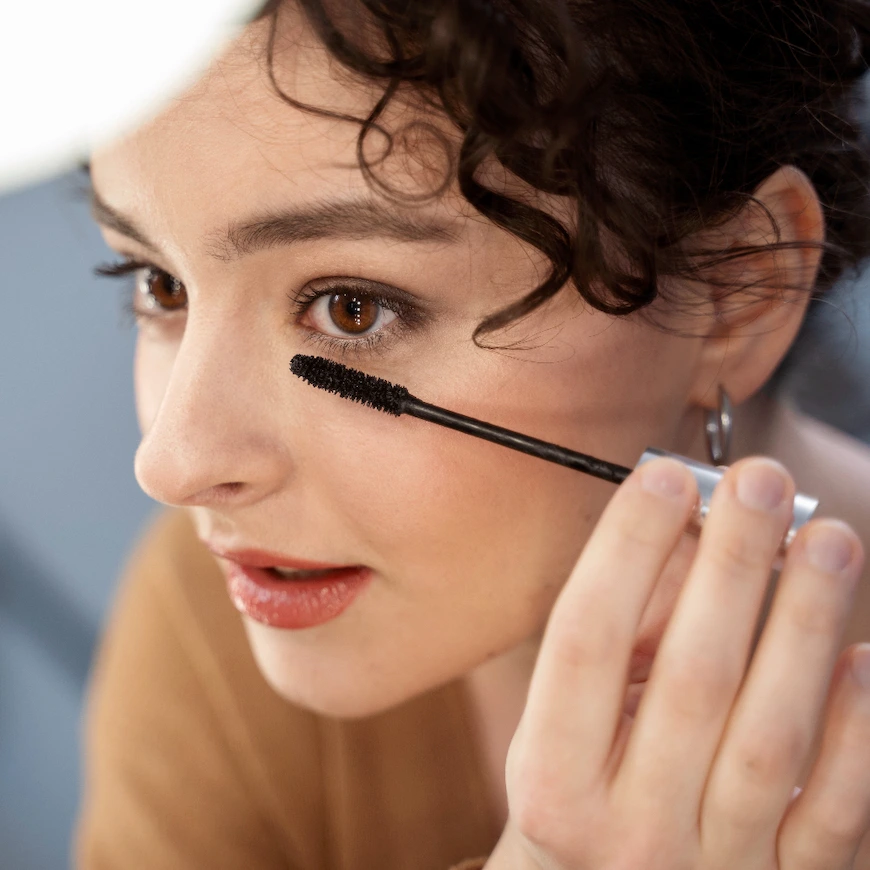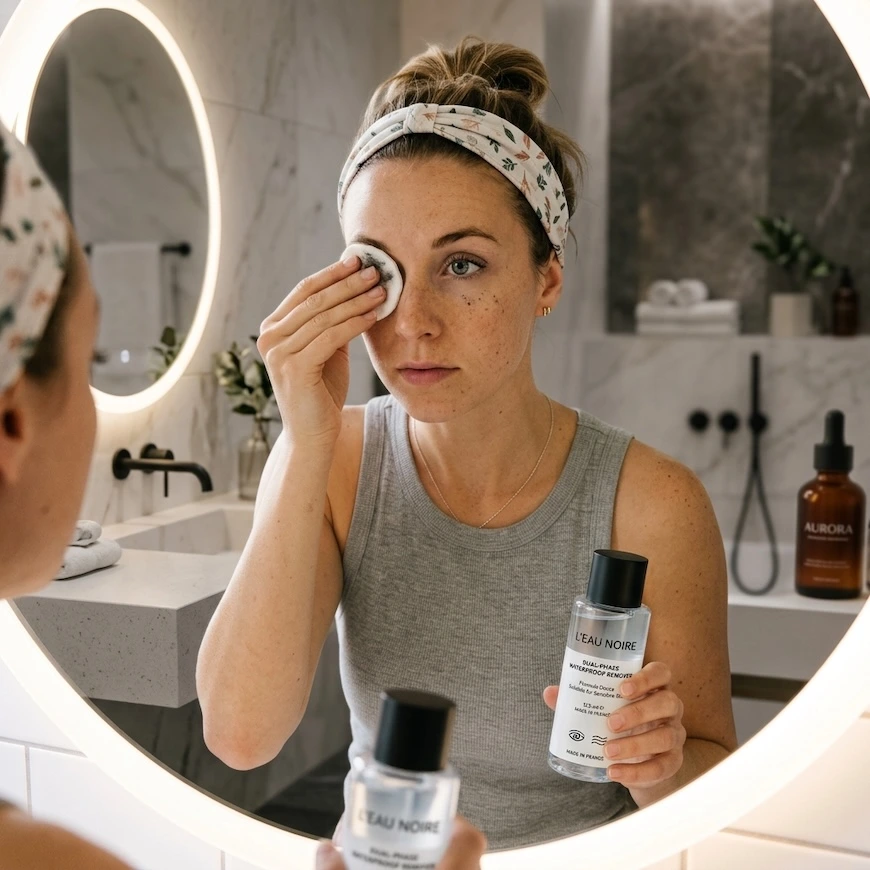
Quick Answer: Here is how to remove waterproof mascara without losing lashes over it. Saturate a cotton pad with a bi-phase or oil-based remover, press it against your closed eye and hold it there for a full 20 seconds without moving it, then wipe once, downward. The waiting is the technique. Waterproof formulas are wax and silicone, so they have to be dissolved rather than dragged off. Then clean the lash line itself, which is where leftover mascara causes the real trouble. If you are doing this nightly, a tubing mascara removes with warm water and no friction at all.
Waterproof mascara is built not to come off. That is the whole point of it, and it is also the reason most people quietly damage their lashes every night without ever connecting the two things.
Almost everyone learns how to remove waterproof mascara by trial and error, which usually means learning to rub harder. The fix is not a better remover. It is giving whatever remover you already own enough time to do its job before you touch anything.
Why waterproof mascara resists everything
Regular mascara is pigment suspended in water and wax. Waterproof mascara swaps much of that water base for silicones, film-forming polymers and heavier waxes that cure into a flexible, water-repelling shell around each lash.
That shell is why it survives swimming, humidity and crying. It is also why water and a normal cleanser slide straight off it. They cannot get through a barrier built specifically to repel them.
So force is the wrong tool. Rubbing does not break the film down. It just drags on lashes that are attached far less firmly than you would think, and on the thinnest skin on your body. What works is dissolving the film, and that takes a solvent plus about twenty seconds of patience.
How to remove waterproof mascara: four methods that work
1. Bi-phase and oil-based removers
These are the two-layer bottles you shake before use. One phase is oil or silicone, which dissolves the waterproof film. The other is water, which lifts the residue away. They are the most reliable option and the one I would use nightly.
Shake until the layers combine. Saturate a cotton pad properly, not just damp. Press it against the closed eye and hold for 20 full seconds, counting them. Wipe downward, once, following the direction of lash growth. Take a fresh pad if anything is left.
The 20 seconds is the step everyone skips. Press, wait, wipe once. If you find yourself going back for a third and fourth wipe, you did not wait long enough on the first.
Wipe downward rather than sideways. Lashes grow outward and slightly down from the lid, so wiping across them bends them against their own direction and snaps them at the base.
2. Cleansing balms and cleansing oils
Often gentler than a pad, because no cotton drags across the lid at all. Warm a small amount between your fingers, massage it over closed eyes for around half a minute, then rinse with lukewarm water and follow with your regular cleanser. That second step is the one people leave out.
This suits anyone who wears waterproof mascara often, and anyone prone to eyelid irritation from cotton pads.
3. Micellar water, with a caveat
Micellar water works through micelles, tiny particles that grab oil and dirt. It is excellent on ordinary makeup.
Standard micellar water is not the answer for how to remove waterproof mascara. That is not a formulation failure, it simply was never designed to dissolve a silicone film. If you have tried it and ended up scrubbing, that is why.
Buy the bi-phase eye version instead. Most brands make one, usually labelled “eye” or “waterproof”, and you can spot it because the bottle separates into two visible layers rather than sitting clear. Those work.
4. Reusable microfibre cloths
Effective with nothing but warm water, and cheaper over time than pads and remover. Warm water, press and hold, one gentle wipe. Same technique as everything else.
The catch is that the texture invites scrubbing, which is precisely what you are trying to avoid. Wash them at 60C every two or three uses, too. A damp cloth living on a bathroom shelf grows bacteria, and you are pressing it into your eye.
How to remove waterproof mascara without makeup remover
This is one of the most searched versions of the question, and the answer is less complicated than the product aisle suggests.
Coconut, olive, sweet almond and jojoba oils all dissolve waterproof mascara. Chemically that is exactly what an oil-based remover is doing. In a pinch they work. Vaseline works too, though it lifts rather than dissolves, since it is occlusive rather than a solvent.
Two cautions before you reach for the kitchen cupboard. Oils blur your vision for a while if any gets into the eye, which is harmless but worth doing before bed rather than before driving. And you have to follow with a cleanser, because oil left along the lash line contributes to clogged glands, milia and styes.
Skip oils entirely if you wear lash extensions. Oil dissolves the adhesive, and this is the single most common way people lose extensions early.
One myth worth correcting while we are here: oils do not strengthen or grow lashes. They coat and condition the lash shaft, which makes it look glossier and reduces breakage slightly. There is no evidence they do anything to the follicle.
The step almost everyone skips: your lash line
Along the inner edge of your eyelid, right at the lash line, sit the meibomian glands, roughly 25 to 40 in each lid. They secrete the oil layer of your tear film, which is what stops your tears evaporating. Block them and you get dry, gritty, irritated eyes. Over time the glands can drop out permanently.
Mascara residue accumulates exactly there, which is why how to remove waterproof mascara is only half the question. Where you remove it from is the other half.
A study of 220 women published in the Saudi Journal of Ophthalmology compared makeup wearers with non-wearers using tear break-up time and meibography. Every makeup group, whether eyeliner only, mascara only, or both, showed significantly worse tear film stability and significantly greater meibomian gland loss than the no-makeup group. Tear production itself was unchanged. What differed was the oil layer and the glands themselves. The mascara group in that study wore waterproof formulas specifically, which makes it more relevant here than it first looks.
Nobody needs to give up mascara over this. What it should change is where you point the cotton bud at the end of the night.
Once the mascara is off, wet a cotton bud with your cleanser or a dedicated lid cleanser. Look up, gently pull the lower lid down, and run the bud along the base of the lashes. Repeat on the upper lid with the eye closed, along the lash roots. Rinse.
Thirty seconds. If the bud comes away grey, that residue was sitting in your glands.
You have been skipping this if you wake up with crusting at the lash roots, or you get a gritty feeling, redness along the lid margins, recurring styes, or eyes that water constantly. That is blepharitis, it is extremely common, and lid hygiene is the first thing any eye doctor will tell you to fix.
The full technique, start to finish
How to remove waterproof mascara?
- Take contact lenses out first. Oil and remover residue cling to lenses and cloud them.
- Wash your hands.
- Saturate the pad properly. A dry pad is friction with nothing to dissolve.
- Press and hold for 20 seconds. Closed eye, no movement.
- One downward wipe. Fresh pad if you need a second pass.
- For lower lashes, hold the pad under the lower lash line, look up, and wipe downward.
- Clean the lash line with a cotton bud.
- Cleanse the whole face with your regular cleanser to clear any residue.
- Rinse with lukewarm water. Never hot on the eye area.
- Pat dry rather than rubbing.
- Finish with eye cream, tapped on with your ring finger along the orbital bone, not on the lid itself, then carry on with the rest of your evening routine.
Common mistakes
| Mistake | What it causes |
|---|---|
| Wiping before the remover has worked | Lash breakage, and by some distance the biggest cause of it |
| Wiping side to side | Snapping lashes against their growth direction |
| Using makeup wipes on waterproof | They rely on friction, which is the whole problem |
| Cleansing the lashes but not the lash line | Blocked glands, styes, blepharitis |
| Hot water | Strips the barrier on the thinnest skin you have |
| Oil-based removers with lash extensions | Dissolves the adhesive |
| Sleeping in it “just this once” | Dried film flakes into the eye overnight |
| Rubbing your eyes while removing | The most avoidable cause of long-term lash loss |
One more, less obvious: keeping the tube too long. Waterproof formulas dry out faster than regular ones once opened, and the FDA’s eye cosmetic safety guidance covers the infection risk directly. If you are unsure when to throw mascara out, three months from opening is the usual advice.
Should you be wearing waterproof at all?
Worth asking, because for most people the answer is not every day. The best answer to how to remove waterproof mascara might be to wear less of it.
Waterproof mascara is the right tool for swimming, weddings, funerals, humid climates and long days you cannot predict. It is a poor default, because the nightly removal is unavoidably harsher than the alternative, and doing anything abrasive to your lash line 365 times a year adds up.
The alternative that solves this properly is tubing mascara. Rather than coating lashes in wax and pigment, tubing formulas wrap each lash in a flexible polymer tube. They do not smudge or flake, and they come off with warm water and gentle pressure. The tubes slide off whole and you can see them on your fingertips. There is no solvent involved and no rubbing required.
You give up a little volume compared with a heavy traditional formula. What you get back is the smudge resistance you wanted from waterproof, without a removal routine that costs you lashes.
If your lashes have thinned and you have worn waterproof daily for years, that is very likely the reason. Switching is the fix, not a lash serum.
Getting waterproof mascara out of fabric
A different problem entirely, and one people search for nearly as often. If you’re wondering how to remove waterproof mascara, waterproof mascara on a white towel, a pillowcase or a car seat is a wax-and-pigment stain.
Do not rub it in. Scrape any surface product off with the edge of a spoon first.
On washable fabric, apply a small amount of liquid dish soap or an oil-based makeup remover directly to the stain and let it sit for five to ten minutes to break down the wax. Work it gently with a soft toothbrush, from the outside of the stain inward. Rinse with cold water, since hot sets the pigment. Launder as normal and air dry, because a tumble dryer bakes in whatever is left.
On carpet or upholstery, blot with a cloth dampened with a little dish soap in cold water, working inward. Never pour liquid on directly. It spreads the stain and pushes it into the backing.
On white towels and bedding, dish soap first, then oxygen bleach if a shadow remains. Chlorine bleach can react with the pigment and leave a rust-coloured mark.
Frequently asked questions about How to Remove Waterproof Mascara
Does micellar water remove waterproof mascara?
Standard micellar water does not do it well. It was not formulated to dissolve a silicone film, so you end up scrubbing. Use the bi-phase "eye" or "waterproof" version instead, the one that separates into two visible layers in the bottle.
Is coconut oil safe to use around the eyes?
For most people yes, as long as you follow it with a cleanser. It will blur your vision temporarily if it gets in the eye, and residue left along the lash line contributes to clogged glands, milia and styes. Do not use it with lash extensions.
Does waterproof mascara cause lash loss?
The formula does not. The removal does. Nightly rubbing to get it off is one of the most common causes of gradual lash thinning, and because it happens so slowly nobody connects the two. If you wear it daily and your lashes look sparser than they used to, switch to a tubing mascara for everyday and keep waterproof for occasions.
Why do my eyes feel gritty even after removing my makeup?
Most likely because the lashes got cleaned but the lash line did not. Residue builds up around the meibomian glands at the lid margin and blocks the oil layer of your tear film. A study of 220 women found mascara and eyeliner users had significantly more meibomian gland loss than non-users. Run a damp cotton bud along the base of the lashes each night.
How to remove waterproof mascara if you wear lash extensions?
Not with anything oil-based, because oil dissolves the adhesive and your extensions will shed early. Use an oil-free foaming extension cleanser and a soft brush, and ideally do not wear waterproof mascara over extensions at all. Most technicians will tell you the same thing.
How long should I hold the remover on my lashes?
Twenty seconds, without moving the pad. It feels longer than it is. This one change protects your lashes more than any product you could buy, because it means one gentle wipe instead of four hard ones.
Is it bad to sleep in waterproof mascara?
Yes, and worse than sleeping in regular mascara. The dried film flakes overnight and the fragments can scratch the surface of the eye, and residue sits against the lid margin for hours. If you are genuinely too tired, learning how to remove waterproof mascara with a bi-phase remover and a cotton pad kept on the bedside table takes about forty seconds.

Hi, I’m Marwa ✅
I test skincare, haircare, and makeup on real skin and a real budget, and writes the honest reviews to prove it.