Almost every guide to skin barrier repair tells you what to buy. Very few tell you what broke it, and that matters, because if you don’t remove the cause you will be repairing the same barrier again in two months.
Quick Answer: A damaged skin barrier stings when you apply products that never used to sting, feels tight after washing, looks red and flushed, and flakes. The fix is mostly subtraction. Stop every active, meaning acids, retinoids, benzoyl peroxide, vitamin C and scrubs, and use only a gentle cleanser, a ceramide moisturiser and sunscreen. Most barriers recover in two to four weeks. The most common causes are over-exfoliating, ramping up a retinoid too fast, washing with water that’s too hot, and using too many actives at once.
What the skin barrier actually is
Your skin barrier is the stratum corneum, the outermost layer, and it gets described as a brick wall often enough that the image is worth keeping. Flattened dead cells called corneocytes are the bricks. The mortar holding them together is a mix of lipids: ceramides, cholesterol and free fatty acids.
That mortar does two jobs at once. It keeps water in, and it keeps irritants, allergens and microbes out. When the barrier is intact, your face tolerates almost anything you put on it. When the mortar degrades, water escapes faster, which dermatologists measure as transepidermal water loss, and things that never bothered you start to sting.
Here’s the bit most explanations leave out, and it’s why some barrier creams work far better than others: the ratio of those three lipids matters, not just their presence.
Zettersten and colleagues at UCSF, writing in the Journal of the American Academy of Dermatology, tested lipid mixtures on skin that recovers slowly, using aged mice and human volunteers in their eighties. An equimolar mixture let recovery proceed normally. A mixture with cholesterol as the dominant lipid sped it up significantly. A fatty-acid-dominant mixture did the opposite and delayed recovery.
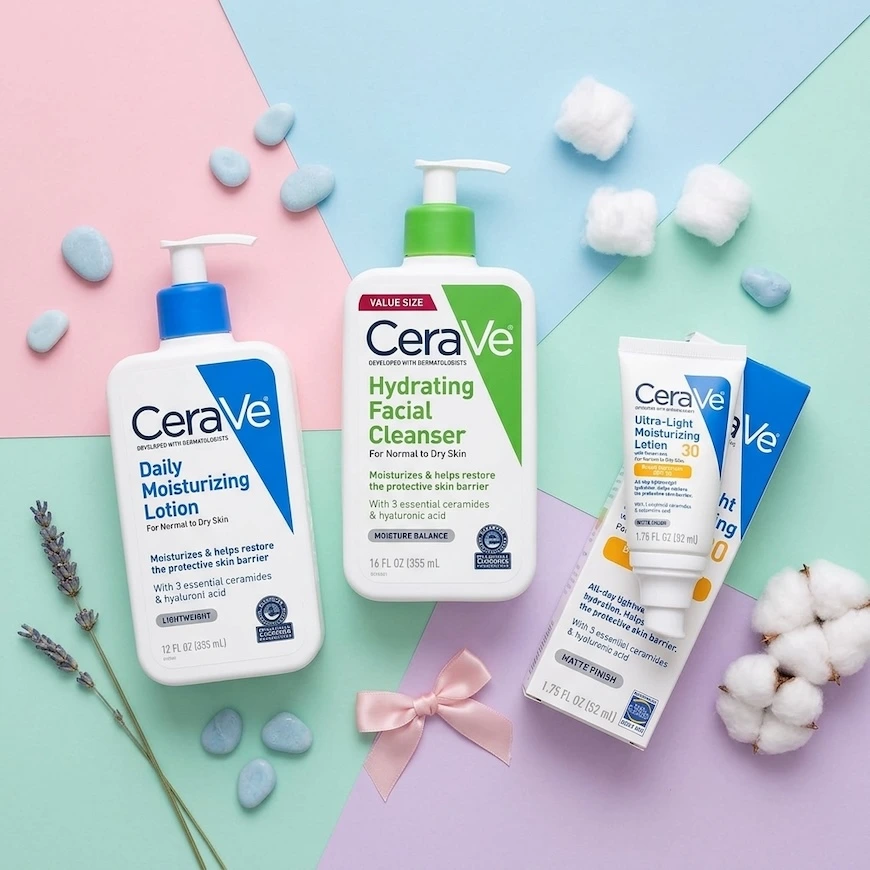
So a moisturiser containing ceramides is not automatically a barrier repair product. The proportions matter, and getting them wrong can work against you. That is why the better-formulated ceramide creams from brands that actually fund this research, CeraVe, La Roche-Posay’s Cicaplast, Bioderma’s Atoderm, outperform products that print “ceramides” on the front of the box and stop there.
What damages the skin barrier
- Over-exfoliating. By a wide margin the most common cause. An acid toner every night, plus a weekly scrub, plus an acid cleanser, adds up faster than people realise, and because each product feels gentle on its own, nobody suspects the combination.
- Ramping a retinoid too fast. Nightly from week one is how most people wreck a healthy barrier. Retinoids are worth using. The schedule is what people get wrong.
- Stacking actives. Vitamin C in the morning, acid at lunchtime, retinol at night, benzoyl peroxide on spots. Each one is fine. All four together is not.
- Water that’s too hot. Hot showers and hot face washing strip lipids directly. Lukewarm, always.
- Over-washing. Twice a day is plenty for most people. Once, at night, is enough for many with dry or reactive skin.
- Harsh surfactants. Foaming cleansers that leave skin feeling squeaky clean have removed more than they should have. That squeak is a stripped barrier.
- Cold, dry air and central heating. Low humidity pulls water straight out through the skin. It’s why so many people’s faces fall apart in January.
- Physical friction. Aggressive towel-drying, cleansing brushes on a high setting, at-home devices run more often than the instructions say, harsh scrubs, and over-enthusiastic makeup removal.
- Age. Lipid synthesis, cholesterol in particular, declines as you get older, which is why barrier recovery slows down and why mature skin does better with a richer, more lipid-focused moisturiser than the lightweight gel that worked at 25.
What a damaged skin barrier looks like
| Sign | What it feels like |
|---|---|
| Products sting that never used to | The single most reliable sign of a damaged barrier. Even plain moisturiser burns for a few seconds |
| Tightness after washing | Skin feels like it is shrinking until you moisturise |
| Redness and flushing | Especially across the cheeks and around the nose |
| Flaking and rough patches | Often around the nose and mouth. Makeup clings to them |
| Dehydrated but oily | Tight and shiny, the combination that confuses people most |
| Reactive to weather | Wind, cold and air conditioning suddenly bother you |
| Small bumps and congestion | Looks like breaking out, but see below |
About the claim that barrier damage causes acne
You will read constantly that a weakened barrier lets bacteria in and causes spots. That’s not how acne works.
Acne forms inside the follicle: excess sebum, dead cells shedding into the pore rather than off the surface, C. acnes multiplying in that environment, and inflammation. It isn’t bacteria crossing a weakened surface.
Your skin can still look worse when the barrier is compromised, for reasons that have nothing to do with bacteria getting in.
- Irritation causes inflammation, and inflammation makes existing acne worse.
- Small inflamed bumps from irritant reactions get mistaken for acne. They aren’t acne, and treating them with acne products makes everything worse.
- A compromised barrier means you cannot tolerate your acne treatment, so you stop using it, and your actual acnecomes back.
If your face is stinging and breaking out at the same time, treat the barrier first. Adding a stronger acne product to an already irritated face is how people end up in a spiral that lasts months.
Skin barrier damage, or something else?
Some things that look like barrier damage are not, and they need a doctor rather than a moisturiser.
- Contact dermatitis: a defined patch, often with a border, sometimes weeping or blistering. Usually an allergy to one specific product.
- Perioral dermatitis: small red bumps around the mouth and nose, often with a clear rim of skin right at the lip line. Frequently triggered by topical steroids, and it needs prescription treatment.
- Rosacea: persistent central-face redness, visible vessels, flushing set off by heat, alcohol or spice.
- Eczema: itchy, dry, often on the eyelids, neck or hands as well as the face.
- Ordinary dry skin: tight and flaky, but it tolerates whatever you put on it. Different problem, gentler fix.
Go to a doctor if it’s weeping, crusting, blistering or spreading; if it is intensely itchy rather than stinging; if you have a defined patch with an edge; or if four weeks of a stripped-back routine has changed nothing.
The skin barrier repair routine
Barrier repair is mostly subtraction. You can’t buy your way out of this with more products. You get out by removing what is causing the damage and letting the skin do the rest.
Stop everything for two weeks
Every active. All of them:
- AHAs and BHAs, so glycolic, lactic, mandelic and salicylic
- Retinol, retinaldehyde, tretinoin, adapalene
- Benzoyl peroxide
- Vitamin C
- Scrubs, cleansing brushes, exfoliating cloths
- Clay masks
- High-percentage niacinamide. Yes, even though niacinamide supports the barrier. 10% and 20% are the strengths most associated with stinging, and a reactive face is the wrong place to find out
This is the step people skip, and it’s the one that works. Two weeks of nothing does more for a wrecked barrier than any cream.
What to use instead
Three products. That’s the whole routine, and a simple routine to rebuild from is a separate job for once you have healed.
- A gentle cleanser, once a day. Cream or milk texture. No foaming, no sulfates, no fragrance. Use a gentle, non-abrasive cleanser and lukewarm water, applied with your fingertips rather than a cloth. Wash at night only while you’re healing; a rinse in the morning is enough. Lukewarm, never hot.
- A ceramide moisturiser, twice a day. This is the workhorse of barrier repair. Look for ceramides, cholesterol and fatty acids together rather than ceramides alone, and remember the ratio finding above: cholesterol-dominant formulations speed recovery up, fatty-acid-dominant ones can slow it down. In practice, pick a well-researched barrier cream rather than any product with “ceramide” on the front.
Supporting ingredients worth having alongside them: glycerin, squalane, panthenol, centella asiatica and colloidal oatmeal.
- Sunscreen, every morning. UV damages the barrier directly, and skin without an intact one is more vulnerable to begin with. Mineral filters, zinc oxide and titanium dioxide, tend to be better tolerated on reactive skin. If sunscreen stings, that tells you how compromised things are. It’s not a reason to skip it. Try a mineral formula and apply it over your moisturiser.
A note on panthenol
Panthenol, or pro-vitamin B5, is in nearly every barrier product and it earns its place. One caveat, and it runs against expectation. A 2025 paper in Dermatitis reports that contact allergy to panthenol, while still uncommon, is rising: from 0.2 to 0.7% up to roughly 1.2% in recent patch testing. It turns up most often in products marketed as gentle and hypoallergenic.
That’s not a reason to avoid panthenol. It’s a reason to suspect the soothing ingredient itself when your soothing cream is making things worse.
The timeline
| Time | What to expect |
|---|---|
| Days 1 to 3 | Stinging reduces. Skin still tight and red |
| Week 1 | Flaking settles. Products stop burning |
| Weeks 2 to 4 | Redness fades. Skin tolerates moisturiser comfortably. Most barriers recover here |
| Weeks 4 to 8 | Reintroduce actives, one at a time |
| Months 2 to 6 | Severe or repeated damage takes this long |
Roughly a fortnight is the natural turnover time of the stratum corneum, which is why two to four weeks is the honest answer for most people rather than the overnight repair some products imply.
Reintroducing actives
This is where people undo four weeks of progress in three days.
Bring things back one at a time, in the right order, never two at once. Start at the lowest strength you can buy, twice a week. Wait two full weeks before adding anything else. Buffer everything: moisturiser first, active on top, moisturiser again. If it stings, stop, rather than pushing through.
If you had four actives before, you may find you only need two now. Most barriers break because the routine was doing more than the skin needed, so if you’re not sure what yours needs, work out your skin type before you rebuild.
Lifestyle: what holds up and what doesn’t
Helps:
- Omega-3 fatty acids from salmon, flaxseed and walnuts. They support lipid production and the evidence is reasonable.
- Sleep. Skin repairs overnight, and that’s measurable.
- Humidity. A humidifier in a heated bedroom reduces overnight water loss, and it is one of the more underrated things you can do for a struggling barrier.
- Not smoking.
Doesn’t help, despite being repeated everywhere:
- Eight glasses of water a day. There’s no evidence that pushing water intake past normal improves skin hydration or skin barrier function. Hydration in the skin is governed by the lipids and natural moisturising factors within it, not by how much you drink. Stay hydrated because it is good for you, not as a skincare step.
- Caffeine dehydrating your skin. At normal intakes it doesn’t. Coffee has a mild diuretic effect that the water in it offsets.
Frequently asked questions about skin barrier
How long does a damaged skin barrier take to heal?
Two to four weeks for most people, which lines up with the natural turnover of the outer skin layer. Severe or repeated damage can take several months. The variable that matters most is whether you actually stopped the cause. People who keep using acids "just twice a week" while trying to repair a skin barrier usually don't get there.
Can a damaged skin barrier cause acne?
Not directly. Acne forms inside the follicle through sebum, blocked shedding and bacterial overgrowth within the pore, not through bacteria crossing the surface. But a compromised skin barrier causes inflammation, which makes existing acne worse, and it produces small irritated bumps that get mistaken for acne. If both are happening, repair the skin barrier first.
Should I stop using retinol if my skin barrier is damaged?
Yes, completely, for at least two weeks. Then reintroduce at the lowest strength, twice a week, buffered with moisturiser, rather than at the frequency you were using before. Most skin barrier damage from retinoids comes from escalating too quickly rather than from the ingredient itself.
Can I use niacinamide on a damaged skin barrier?
Niacinamide does support the skin barrier. A 2000 study found that nicotinamide raised ceramide production several-fold in cultured skin cells, and that applying it topically increased ceramide levels and cut water loss in dry skin. Strength is the catch. A 10% or 20% serum is the version most associated with stinging, and it's the wrong thing for a reactive face. Low-percentage niacinamide inside a ceramide moisturiser is fine; a high-percentage serum should wait until you are healed.
What’s the fastest way to repair a skin barrier?
Stop every active immediately, wash once a day with a cream cleanser in lukewarm water, apply a ceramide moisturiser twice a day, and wear sunscreen. Add nothing else for two weeks. The fastest route to a repaired skin barrier is the most boring one, because no product speeds this up more than removing what is causing it.
Is skin flooding good for a damaged skin barrier?
It improves surface hydration and feels good, but it doesn't rebuild the skin barrier. Hyaluronic acid holds water; it isn't a lipid. It's fine as an addition once you're healing, provided you always seal it with a moisturiser. Applied without an occlusive in dry air, hyaluronic acid can pull moisture out of the skin.
Does drinking more water repair the skin barrier?
No. This claim appears in nearly every skincare article and there's no evidence behind it. Skin barrier function depends on the lipids and natural moisturising factors within the skin, not on fluid intake. Drink enough to feel well and treat your skin barrier topically.

Hi, I’m Marwa ✅
I test skincare, haircare, and makeup on real skin and a real budget, and writes the honest reviews to prove it.