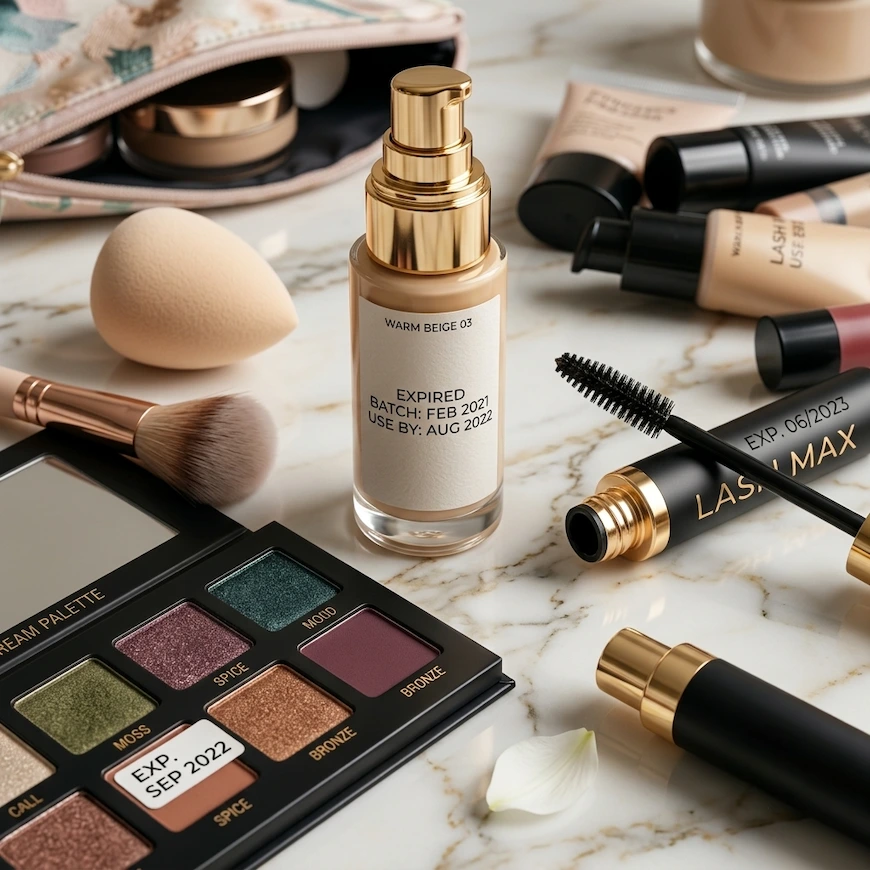
Quick Answer: Yes — but US law doesn’t require an expiration date on cosmetics, so most products don’t have one. Look instead for the PAO symbol: a small open-jar icon with a number like 12M, meaning it’s good for 12 months after you open it. As a default: mascara 3 months, liquid eyeliner 6 months, foundation and concealer 1 year, lipstick 1–2 years, powders 2 years. Sunscreen is the exception, it’s a drug, so it legally must carry a real expiration date.
Open your makeup bag and try to find an expiration date. On most of what’s in there, you won’t find one, and that isn’t an oversight.
There are no U.S. laws or regulations requiring cosmetics to carry a shelf life or an expiration date. The FDA treats determining shelf life as the manufacturer’s responsibility, and manufacturers aren’t required to share that information with anyone.
So when people ask does makeup expire, the honest answer is yes, but nobody is legally obliged to tell you when. Which turns the real question into something more practical. Not does makeup expire in the abstract, but how do you tell, product by product, with no date printed anywhere.
Here’s how.
The PAO symbol: the number you’re looking for
Turn the product over and look for a small icon of an open cream jar with a number and the letter M inside or beside it. Something like 6M, 12M, 24M.
That’s the Period After Opening. It tells you how many months the product stays in good condition once you’ve opened it. Not from the date it was made, and not from the date you bought it.
12M means twelve months from first use. If it sat in a drawer unopened for two years first, the clock still starts when you open it.
Two things worth knowing. First, it’s an EU requirement rather than a US one. In Europe, cosmetics with a lifespan over 30 months have to display it. In the US it’s voluntary, which is why you’ll find it on some products and not others, usually depending on whether the brand also sells into Europe. Second, when there’s no symbol at all, use the timeline below and trust your nose over any printed number.
One tip that saves a lot of guessing later: write the date you opened it on the bottom of the tube in permanent marker. Ten seconds of effort, and you never have to wonder does makeup expire on this particular tube again, because you’ll know exactly how old it is.
When does makeup expire? A product-by-product timeline
Timings run from first opening, assuming reasonable storage. When people ask does makeup expire, this is the table they’re really after.
| Product | Toss after | Sooner if… |
|---|---|---|
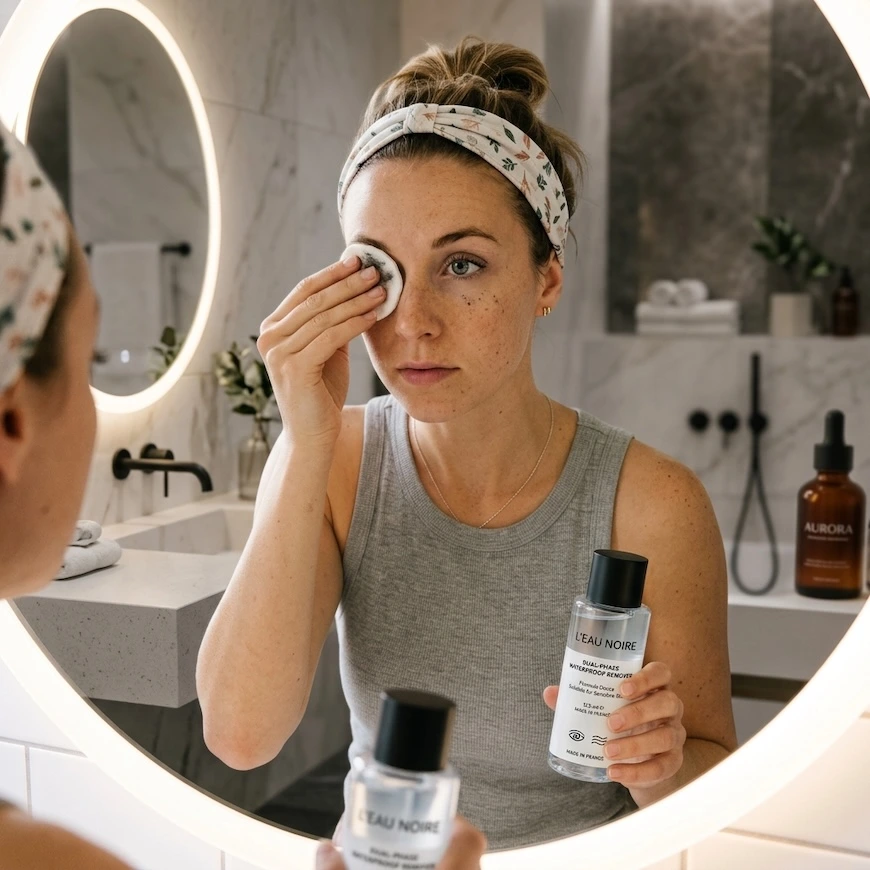
| Mascara | 3 months | It smells odd, dries out, or clumps more than it coats. Waterproof formulas dry faster, so removing waterproof mascara properly matters as much as replacing it. |
| Liquid eyeliner | 3–6 months | It thickens or smells |
| Pencil eyeliner | 1–2 years | The tip oozes oil or develops a white film |
| Liquid foundation | 12 months | It separates, thickens, or smells rubbery |
| Liquid concealer | 12 months | It separates or looks oily on top |
| Stick or pan concealer | 12–18 months | It cracks or turns rubbery |
| Cream blush / cream shadow | 12 months | Texture goes patchy or greasy |
| Powder products (blush, shadow, setting powder) | 2 years | A hard film forms on the surface, or colour looks chalky |
| Lipstick | 1–2 years | It turns gooey, smells waxy or rubbery, or drags |
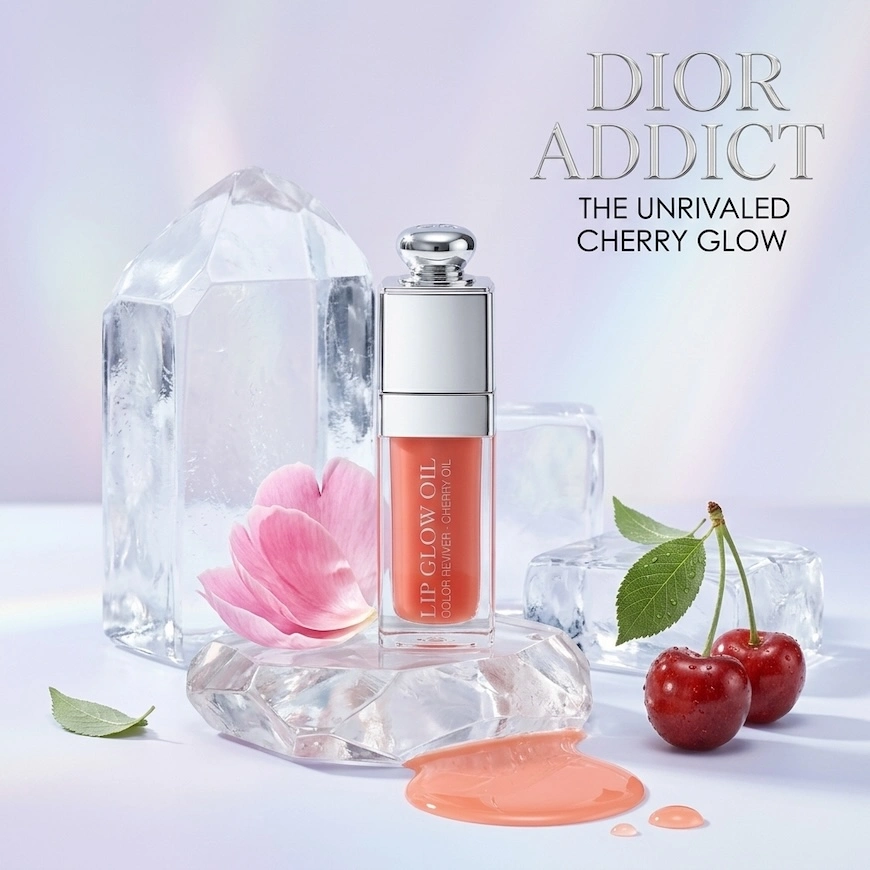
| Lip gloss / lip oil | 12 months | It separates or smells off |
| Sunscreen & SPF makeup | The printed expiration date | It’s separated or has been in a hot car. See below. |
| Perfume | 3–5 years | It darkens or smells sour rather than faded |
| Makeup sponges | 1–3 months | It tears, stains permanently, or won’t wash clean |
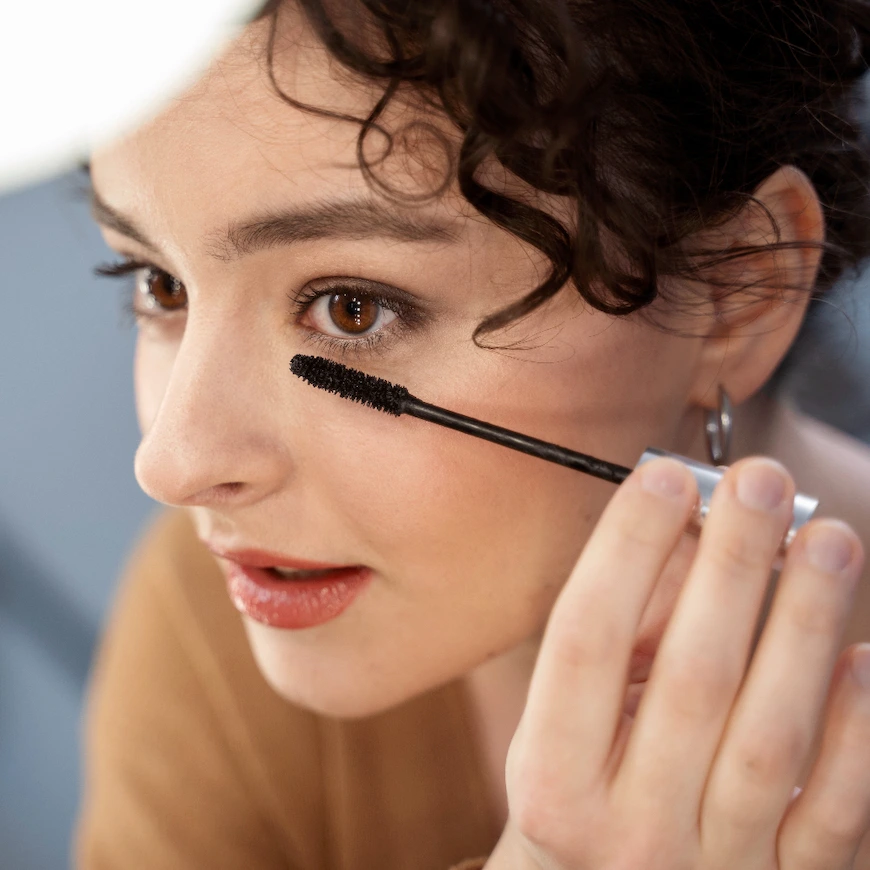
Mascara is the one to take seriously. The FDA notes that manufacturers usually recommend discarding it two to four months after purchase, because the wand collects bacteria and fungi from your lashes on every single use and carries them back into a dark, moist tube. Three months is a sensible default. If you’re going to be replacing something four times a year, choosing a mascara worth keeping is worth ten minutes of thought.
And if it dries out, don’t add water, and never saliva. The FDA calls that out specifically, since you’d be introducing bacteria straight into the product. A dry mascara is a finished mascara. That’s the clearest possible answer to does makeup expire in the eye category: it expires early, and it expires whether you like it or not.
The exception: sunscreen legally must have a date
This is the part most articles miss, and it’s the most important thing on the page.
Sunscreen is not a cosmetic under US law. It’s a drug. So are acne treatments. And a foundation, moisturiser or powder with SPF labelling is regulated as both, cosmetic and drug at once.
Drugs have to be tested for stability and are required to carry an expiration date on the label, and the manufacturer must ensure the product still works as claimed until that date. So the question of does makeup expire has one clean legal answer here, and only here.
Your mascara has no legally required date. Your sunscreen does, so go and check the date on your sunscreen right now, because it’s printed on the tube or stamped into the crimp at the bottom. Expired sunscreen isn’t simply old. Its filters degrade, which means the SPF on the label stops being the SPF you’re actually getting. Heat speeds all of this up, so a tube that spent a summer in a car door has aged well past what the date suggests.
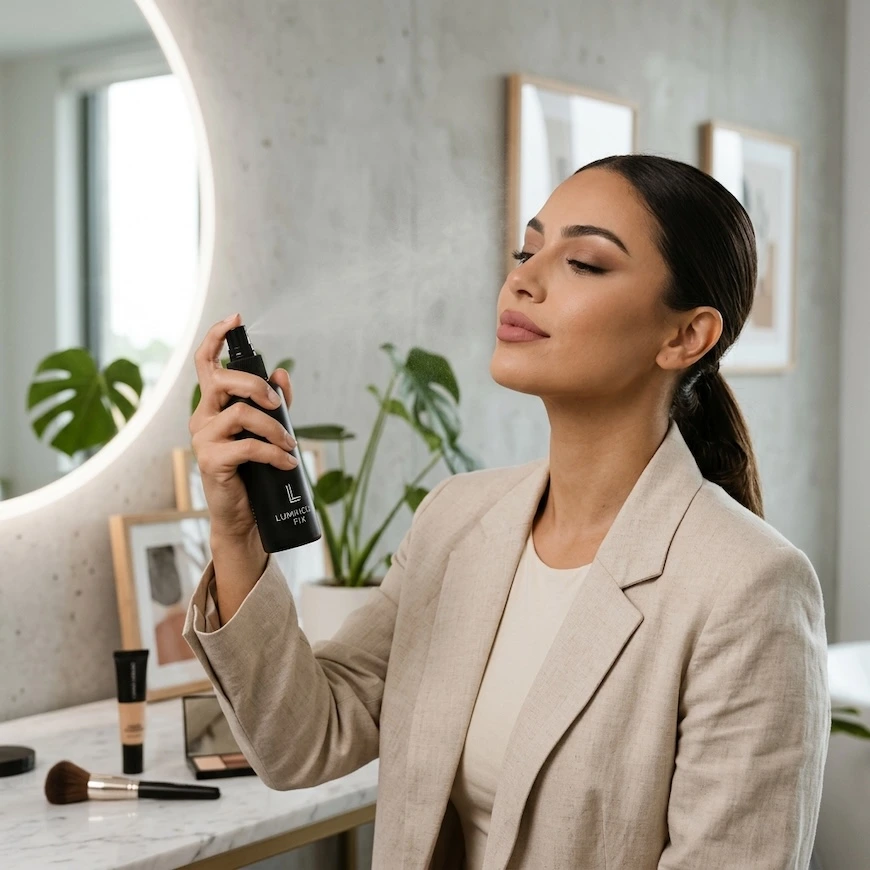
Same logic applies to the SPF products you top up with during the day. If you’re reapplying sunscreen over makeup using a powder or a mist, that product carries a date too, and an expired one gives you the reassurance of reapplying without the protection.
If you can’t find a date on a sunscreen, or it’s separated, grainy, or smells different, replace it. This is the one product where “it’s probably fine” carries a real cost.
Does makeup expire if it’s unopened?
Yes, but far more slowly, and this is the most common follow-up question people have.
An unopened product still has an intact preservative system, no introduced bacteria and no air exposure. Plenty still degrades in there. Emulsions separate, because foundations and creams are oil and water held together, and given long enough they drift apart. Preservatives break down over time, which is what allows growth once you finally do open it. Oils go rancid, so anything with high oil content like lip products, cream blush or oil-based cleansers develops that distinctive crayon smell. Pigments shift too, especially with light exposure.
A reasonable rule: unopened and stored somewhere cool and dark, most makeup is fine for two to three years from manufacture. After that, treat it with suspicion regardless of the seal. If it’s a liquid that has separated and won’t remix, don’t open it at all. Does makeup expire on a shelf? Slowly, and without any visible warning.
Powders are the exception in both directions. With no water in the formula there’s not much for bacteria to live on, so unopened powders last a long time. Once opened, a dirty brush going in repeatedly is what shortens their life, not the formula itself.
What actually happens if you use expired makeup
Not usually a disaster. Usually a slow annoyance you never connect to the cause, which is exactly why does makeup expire is a question worth taking seriously rather than filing under beauty trivia.
You’ll typically get breakouts that don’t respond to your skincare, because the product is reintroducing bacteria every morning. Or irritation, itching and rashes, as preservatives fail and the formula drifts. Or the product just stops performing, and foundation that oxidises orange by lunchtime is the classic version of that, along with mascara that flakes and powder that won’t grip.
The genuinely serious one is eye infections. The FDA is blunt about this: in rare cases, people have lost their sight temporarily or permanently from an infection traced to an eye cosmetic. Styes, conjunctivitis and corneal infections are all documented outcomes of contaminated eye makeup.
Which is why three rules matter more than any timeline.
Throw away every eye product you were using if you get an eye infection. All of them. Reinfecting yourself from the same tube is a real and depressingly common cycle. That includes anything reusable in the eye area, and false lash glue and eye safety deserve the same scrutiny as the mascara sitting next to them.
Never share eye makeup, and be wary of in-store testers, handled by dozens of people daily. The American Academy of Ophthalmology’s eye makeup safety guidance says the same. If you must swatch something, use a fresh cotton swab.
Don’t apply mascara in a moving car. The FDA warns about this specifically, because one bump and the wand scratches your cornea, and even a slight scratch can turn into a serious infection
Expired makeup and breakouts
If your skin has turned on you for no obvious reason, the age of your products is worth checking before you change anything else. Breakouts that don’t respond to skincare often trace back to a foundation you’ve had longer than you think, or the sponge you’ve been using with it since last winter.
The fix isn’t complicated. Replace the suspect product, wash everything that touches your face, and give a simple skincare routine underneath a few weeks to settle things down before you go looking for a more exotic explanation.
How to make your makeup last longer
Most of what shortens a product’s life is handling, not time. Which means the answer to does makeup expire depends partly on you.
Keep it out of the bathroom. Steam and humidity are ideal conditions for bacteria and mould, so a bedroom drawer beats a shelf next to the shower. Keep it out of heat too. The FDA singles out hot cars, where heat breaks down preservatives and lets microbes grow faster.
Stop dipping your fingers in. Every finger dip adds bacteria and fungi to the pot, so use a clean spatula or a cotton swab for anything in a jar. Close things properly, because air is what oxidises formulas and dries them out. And don’t pump the mascara wand, which drives air into the tube and accelerates the whole process.
Wash your applicators. Sponges every few uses, and how often to wash your makeup brushes is worth reading properly, because a dirty brush contaminates the product, not just your face.
Finally, be careful with resold or flea-market cosmetics, where does makeup expire becomes impossible to answer at all. The FDA warns these may be past shelf life, already used, diluted, or outright counterfeit.
Frequently asked questions
Does makeup expire if it’s unopened?
What is the symbol on makeup that shows expiration?
How long does mascara really last?
Can expired makeup cause acne?
Can expired makeup cause a stye or eye infection?
How can I tell if makeup has gone bad without a date?
Does perfume expire?
Should I throw away makeup after being sick?

Hi, I’m Marwa ✅
I test skincare, haircare, and makeup on real skin and a real budget, and writes the honest reviews to prove it.