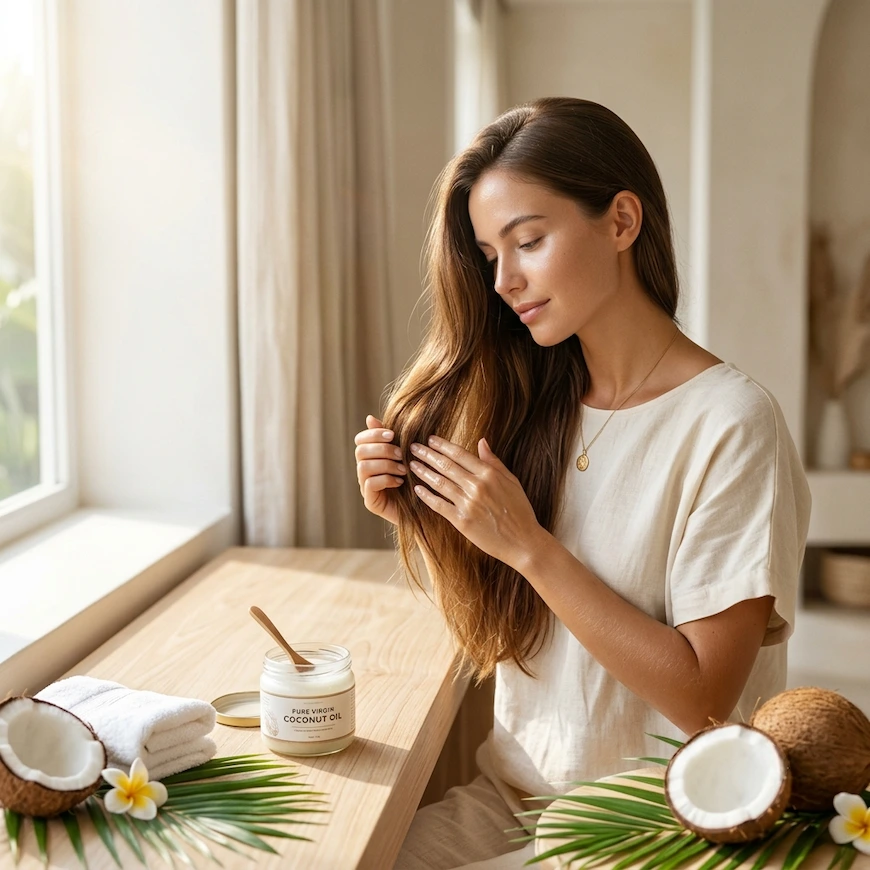
Quick Answer: Coconut oil for hair works, and it is one of the very few oils where that claim survives contact with a lab. Lauric acid gets inside the shaft and cut protein loss by up to 39% in damaged hair. That makes it the best pre-shampoo treatment you can buy for about ten dollars. On your face it is a different story. It is highly comedogenic and clogs pores in most people. Hair yes, face no.
I ran coconut oil for hair through my routine every Sunday for about a year and it was the single best thing I did for mine. I also spent two months of that year using it as a night moisturiser on my face, then spent the following three months dealing with the congestion that caused.
Both outcomes come from one property. Coconut oil is unusually good at getting into things. Into the hair shaft, where you want it. Into your pores, where you really do not.
So the case for coconut oil for hair and the case against it for skin are the same case, read from opposite ends.
The hair science: why it actually works
Most hair oils sit on the surface. Coconut oil does not, and that is the whole reason it earns its place.
The reference study is Rele and Mohile’s 2003 comparison in the Journal of Cosmetic Science, which tested mineral oil, sunflower oil and coconut oil on hair damage.
| Oil | Penetrates the shaft? | Effect on protein loss |
|---|---|---|
| Coconut | Yes | Reduced by up to 39% in damaged hair, around 17% in undamaged |
| Sunflower | No, coats only | No meaningful reduction |
| Mineral | Negligible | None |
Why coconut and not the others: its dominant fatty acid is lauric acid, which has a low molecular weight and a straight, linear shape. That combination lets it slip between the cuticle scales and bind to hair protein. Oils built from larger, kinked molecules cannot do this, which rules out oleic and linoleic acid and therefore sunflower, olive and argan oil.
What “reducing protein loss” means in practice: hair is mostly keratin. Every wash and every brush leaches a little of it out, and that loss is what makes hair progressively weaker, more porous and more likely to snap. Using coconut oil for hair before washing occupies that space and reduces how much protein the water and shampoo carry off with them.
That is a measured, mechanical benefit, and rarer than the marketing on most hair oils suggests.
How to actually use it
The timing is what most people get wrong. Nearly everyone who tells me coconut oil for hair did nothing for them was using it after the shower, on damp ends, as a finishing product. That is the wrong slot in the routine.
The pre-shampoo treatment
This is the main event. Oil goes on before you wash, not after. The protein benefit happens during washing, so it needs to already be in place.
- Melt 1 to 2 teaspoons between your palms. It is solid below about 24°C.
- Apply to dry hair, mid lengths and ends first.
- Work up toward the roots only if your scalp is dry. Skip the scalp entirely if it runs oily.
- Leave it 30 minutes minimum. Longer is fine. Overnight is fine.
- Shampoo it out. You will probably need two rounds.
Once a week is plenty. Twice if your hair is very coarse, very dry or chemically treated.
As an overnight mask
Same method, more oil, and sleep on an old pillowcase or a satin bonnet. Best for coarse, high porosity or bleached hair.
Do not add honey, yogurt or egg. An earlier version of this article suggested mixing those in. They add mess and rinse straight out without contributing anything the oil is not already doing.
As a leave-in, sparingly
A tiny amount on dry ends can smooth them, but this is heavy stuff and it is easy to end up greasy. For a leave-in finisher, argan oil is the better tool. Lighter, and built to sit on the surface. I have covered the difference in argan oil for hair.
Who should be careful
Fine hair can go stiff and limp on it. Use a very small amount on ends only, or skip it.
Low porosity hair has cuticles that lie flat, so the oil sits on top rather than absorbing. Warm it and use less.
Then there is protein sensitivity, and this is the one nobody warns you about. Some people find that coconut oil for hair makes their hair feel brittle over months, because reducing protein loss can eventually tip into protein overload. If your hair starts feeling like straw, take a break and run a moisture mask instead.
What it does not do
It does not make hair grow faster. Growth happens at the follicle, below the scalp. An oil on the shaft never reaches it. What coconut oil for hair does is reduce breakage, so hair gets longer before it snaps. Over months that looks like faster growth. It is not.
The earlier version of this article claimed the vitamin E and K in coconut oil “nourish the hair follicles and stimulate growth.” Coconut oil is a poor source of vitamin K, and there is no route by which a shaft treatment gets to a follicle.
It does not repair damage. Hair is not living tissue and cannot heal. Coconut oil prevents further protein loss. It does not restore what already went. Only scissors fix split ends.
It does not treat hair loss either. If you are shedding more than usual or your part is widening, that is a different problem. See the AAD’s page on the first signs of hair loss.
On dandruff: coconut oil has some antimicrobial activity and may soothe a dry, flaky scalp. But real dandruff is usually driven by Malassezia yeast, and treating that needs an antifungal shampoo. Oil can even feed the yeast. If the flaking keeps coming back, my post on dandruff covers the difference between a dry scalp and the actual condition.
For scalp massage and anything growth related, the scalp care routine for hair growth is the proper guide.
Coconut oil and your face: read this part
This is where most coconut oil articles let readers down, and where the earlier version of this one did too. The evidence for coconut oil for hair is solid. The evidence for it on facial skin points the other way, and the two keep getting bundled together as though one endorses the other.
Coconut oil is highly comedogenic. The same molecular behaviour that gets it into your hair shaft gets it into your pores and keeps it there. On most people’s facial skin that means congestion, closed comedones and breakouts, often several weeks later, which is exactly why nobody connects the two.
The AAD advises choosing non-comedogenic or oil free products if you are acne prone. Coconut oil is the opposite of that.
The honest guidance
| Where | Verdict |
|---|---|
| Face | Avoid, especially if acne prone or congested |
| Removing face makeup | Only with a thorough double cleanse afterwards, and a proper cleansing balm is better |
| Lips | Fine |
| Body | Good. Legs, arms, elbows, feet |
| Hands and cuticles | Good |
| Very dry patches on the body | Good as an occlusive over moisturiser |
If your skin is dry rather than oily and you have used it on your face for years without trouble, carry on. Skin varies. But it should never be handed out as a general facial moisturiser, and certainly not for sensitive skin, which is the claim the old version made.
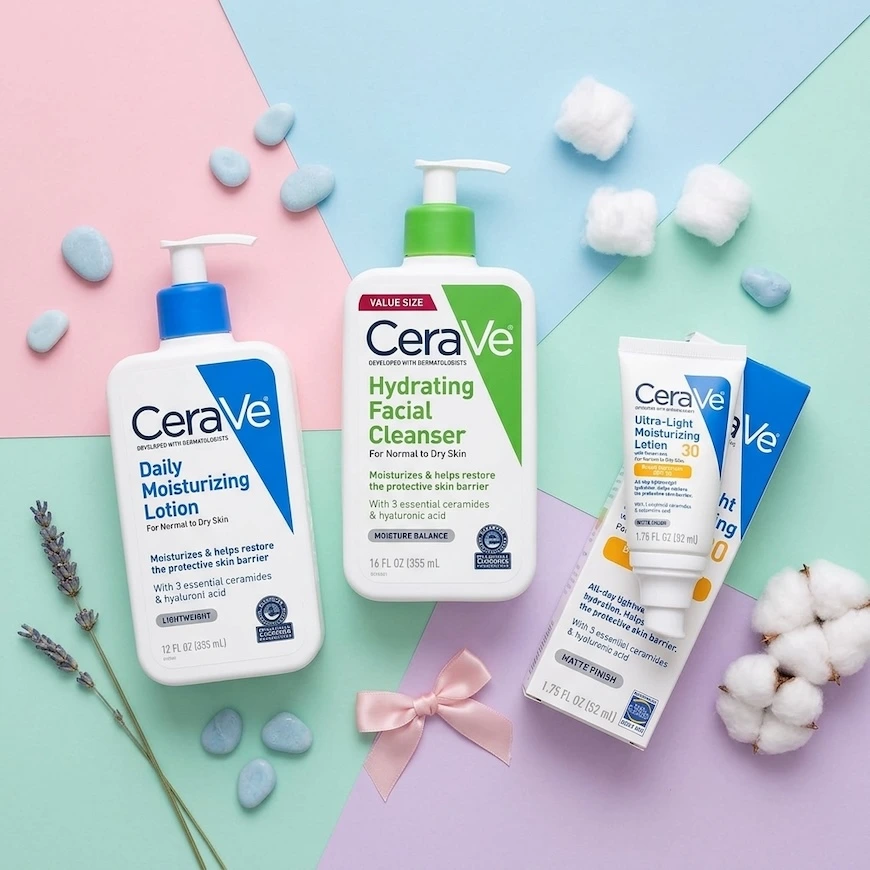
Better for the face: a non-comedogenic moisturiser with ceramides or glycerin. My drugstore skincare routine under $50covers workable options, and if your skin is dry across the board the AAD’s tips for relieving dry skin go further.
Coconut oil vs argan oil
You probably own both, or are choosing between them. I get asked this more than anything else, because coconut oil for hair and argan oil get sold as the same kind of product when they are not.
| Coconut oil | Argan oil | |
|---|---|---|
| Main fatty acid | Lauric | Oleic, linoleic |
| Behaviour | Penetrates the shaft | Coats and seals |
| Protein loss | Reduced up to 39% | Little effect |
| Weight | Heavy | Light |
| When to use | Before washing | After washing |
| Best for | Deep conditioning, coarse or damaged hair | Shine, frizz, fine hair, daily finishing |
| On the face | Comedogenic, avoid | Better tolerated, still patch test |
| Cost | Very cheap | Moderate |
They are complementary rather than competing. Coconut before the shower, argan after. If your hair is fine, skip the coconut and just use argan.
What to buy
Look for virgin or extra virgin, cold pressed and unrefined. The ingredient list should read Cocos Nucifera Oil and nothing else. It should smell faintly of coconut. Refined versions are deodorised and stripped of some useful compounds.
Skip fractionated coconut oil for hair treatments. It stays liquid and is much nicer to handle, but the lauric acid has been largely removed, which is the entire point of the exercise.
A jar runs $8 to $15 and lasts months. This is one of the cheap things in beauty, worth saying out loud because plenty of brands sell “coconut oil hair treatments” at ten times the price for a silicone product with coconut oil sitting near the bottom of the ingredient list.
Store it cool and dark. It solidifies below about 24°C, which is normal. Warm the jar or scoop it with a spoon.
Frequently asked questions
Should you put coconut oil on wet or dry hair?
Dry hair, before washing. The protein benefit happens during the wash, so the oil needs to be in place first. Leave it 30 minutes minimum, then shampoo out.
Does coconut oil make hair grow faster?
No. Growth happens at the follicle beneath the scalp, and a shaft treatment does not reach it. It reduces breakage, so hair gets longer before snapping, which can look like faster growth over months.
Coconut oil or argan oil, which is better?
Different jobs. Coconut penetrates and works best before washing. Argan seals and works best after. Coarse or damaged hair benefits from both. Fine hair usually does better on argan alone.
Does coconut oil clog pores?
Yes, for most people. The same properties that make coconut oil for hair effective also let it sit in pores and block them. Breakouts often show up weeks later, which makes the cause easy to miss.
How often should I use coconut oil for hair?
Once a week is enough for most people. Twice weekly if your hair is coarse, very dry or chemically treated. Fine hair may need less, or none at all.
Why does my coconut oil go solid?
It solidifies below about 24°C. That is normal and says nothing about quality. Warm it between your palms before applying.
The bottom line
Coconut oil for hair is one of the few evidence backed treatments in the aisle, and it costs about ten dollars. Use it before you shampoo, once a week, ends first.
Keep it off your face. The property that makes coconut oil for hair so good is the same one that makes it a poor facial moisturiser. That is not a contradiction, it is a map of where to put it.
Related: argan oil for hair for the after wash half of the routine, and haircare mistakes that damage your hair for the habits working against you.

Hi, I’m Marwa ✅
I test skincare, haircare, and makeup on real skin and a real budget, and writes the honest reviews to prove it.