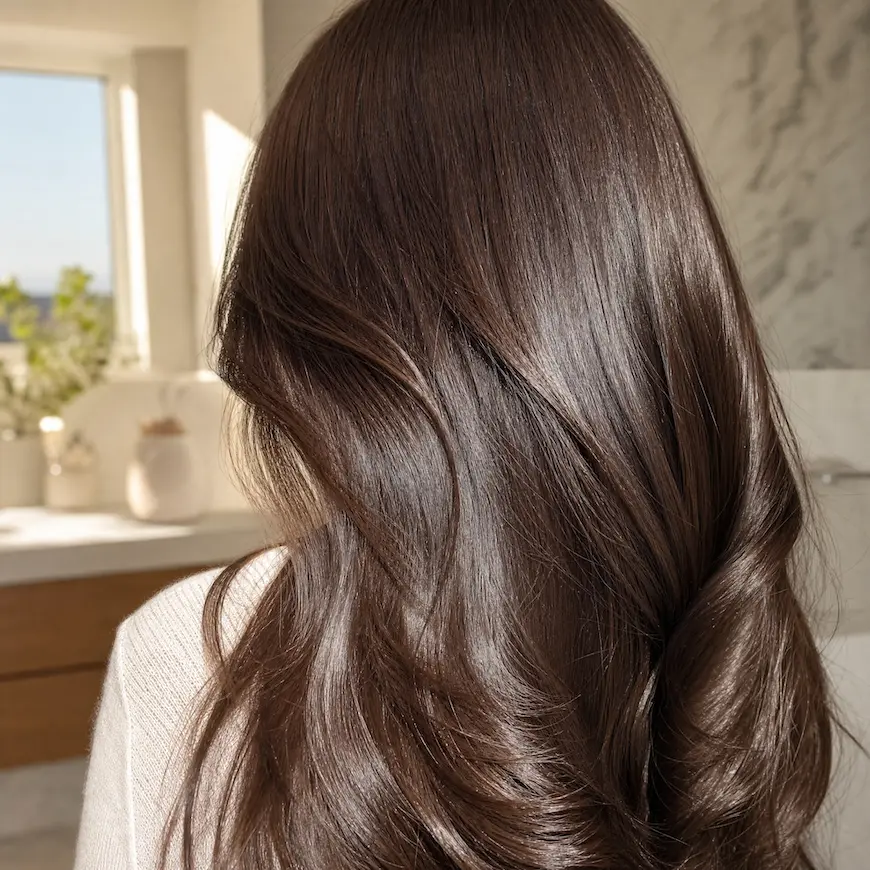
Quick Answer: Flat hair is usually a product-weight and root-direction problem, not a hair problem. If you want voluminous hair, wash with a lightweight volumizing shampoo, keep conditioner on the mid-lengths and ends only, then dry your roots in the opposite direction to how they naturally fall, either flipping your head upside down or lifting sections with a round brush. Finish with dry shampoo or texture spray at the roots, never at the lengths. That sequence is what produces voluminous hair, and no product replaces it.
My hair is fine, straight, and by 2pm it has usually given up. For years I attacked this with product, buying more mousse, more powder, more spray, and got hair that was flat and crunchy.
What actually fixed it was embarrassingly simple. I stopped putting conditioner near my roots, and I started drying my hair in the opposite direction to how it falls. Those two changes did more for voluminous hair than every product I had bought combined.
Here is the full method for voluminous hair: what to change in the shower, what to do while drying, which products earn their place, and how to tell whether you have flat hair or thinning hair, because they need completely different solutions.
Why your hair falls flat
Three causes, and almost everyone standing between themselves and voluminous hair has at least one of them.
1. Product weight. Conditioner, masks, oils and heavy creams applied at or near the scalp coat the hair exactly where it needs to stand up. Fine hair is especially unforgiving, and a product a thick-haired friend finds perfect will flatten fine hair for the entire day.
2. Root direction. Hair dries in whatever direction you leave it. If you towel it, comb it flat, and let it air dry, your roots set lying down against your scalp. That is a styling problem rather than a hair-type problem, and it is completely fixable.
3. Buildup. Silicones, dry shampoo residue, and hard-water minerals accumulate at the scalp over weeks and weigh hair down progressively. If you used to have voluminous hair and gradually stopped, this is usually why.
Notice what is not on that list: having fine hair. Fine hair can absolutely hold voluminous hair. It just cannot hold weight.
Voluminous hair starts in the shower
Keep conditioner off your roots completely
If you change one thing, change this.
Conditioner belongs from the ears down, mid-lengths and ends, if voluminous hair is the goal. Your scalp produces its own oil and does not need conditioning, and every bit of product you put there is weight sitting exactly where you want lift.
I know it feels wrong. Do it for a week.
Use a lightweight or volumizing shampoo
Volumizing shampoos work by cleaning more thoroughly and leaving less residue behind. They do not add anything, they take weight away, and less weight is what voluminous hair needs. Look for “volumizing,” “lightweight,” or “for fine hair,” and be sceptical of anything marketed as ultra-moisturizing or repairing if flatness is your complaint.
Clarify every 2–4 weeks
A clarifying shampoo strips accumulated buildup that regular shampoo leaves behind. If your hair has been getting steadily flatter over months, one clarifying wash often restores voluminous hair immediately and dramatically.
Do not do it more than every couple of weeks. It is deliberately stripping, and overuse leaves hair dry and brittle. Follow with conditioner on the ends.
Rinse cool, and be careful how you dry
A cool final rinse helps the cuticle lie flat, which reads as shine rather than frizz on voluminous hair.
On towels, there are two separate concerns worth keeping apart. The AAD’s advice for avoiding breakage is to towel-dry or air-dry and to handle wet hair as little as possible, because wet hair snaps more easily when combed or brushed. That is about damage, and it is sound.
The volume concern is different. A tight towel turban pulls hair taut against your skull and sets your roots flat before you have started styling. You can satisfy both by squeezing gently with a microfiber towel or an old cotton t-shirt rather than wrapping and twisting.
One exception from the same AAD guidance: if your hair is tightly curled or textured, brushing while wet actually reduces breakage rather than causing it.
Drying: where voluminous hair is made or lost
The principle behind every technique below: hair sets in whatever direction it dries. To get lift, dry your roots pointing away from your scalp, the opposite of how they naturally fall.
Everything else is a variation on that one idea.
Method 1: blow-dry upside down
The classic, and it works. Flip your head forward, aim the dryer at your roots, and scrunch with your fingers as you go. Your roots dry standing up because gravity is temporarily on your side, which is the whole trick behind voluminous hair.
Flip back up at the end and go easy on the brushing. The AAD points out that heavy daily brushing causes split ends, and in this case it also undoes the lift you just built.
On heat: heat causes damage, which is true and not in dispute. But you do not have to choose between damage and voluminous hair. The AAD recommends letting hair partially air dry before you style, reducing how many times a week you blow dry, and keeping heat tools on low or medium rather than maximum. Add a heat protectant and hold the dryer a few inches away, and you get the styling benefit at a fraction of the cost. Their guidance on styling without damage is the reference.
Method 2: root-lift with a round brush
More control than upside-down drying, slightly more effort. For voluminous hair at the crown, take sections, lift each straight up and away from the scalp with a round brush, and direct the dryer at the roots while the section is held up. Hold for a few seconds as it cools, because cooling while lifted is what sets it.
Most people skip the cooling and wonder why their voluminous hair drops within the hour.
Method 3: velcro rollers, the most underrated
The best volume-per-effort option available, and almost nobody under 50 uses them. Dry your hair to about 90%, roll four to six large velcro rollers at the crown, pointing up and back. Leave them in while you do your makeup. Take them out cool and you have voluminous hair.
No heat, no skill, twenty minutes of doing nothing.
Method 4: diffuse, if you’re curly or wavy
Curly and wavy hair gets voluminous hair from encouraging the curl pattern rather than lifting roots. Use a diffuser attachment on low speed, cup sections upward toward your scalp, and hold. Do not move it around constantly, because that is what causes frizz.
Method 5: overnight braids or a loose topknot, no heat at all
Braid slightly damp hair into two or four loose braids before bed, or twist it into a very loose high bun. Undo in the morning and finger-comb. You get waves and voluminous hair with zero heat.
Loose is the operative word. See the hair tie section below for why tight overnight styles are a bad idea.
Products that actually add volume
Ranked by how much difference they make to voluminous hair.
| Product | What it does | Where to apply | Rough price |
|---|---|---|---|
| Root-lift spray / mousse | Adds structure at the root while drying | Damp roots, before drying | $8–25 |
| Dry shampoo | Absorbs oil, adds grip | Roots only | $7–15 |
| Volumizing powder | Instant grit and lift | Roots, sparingly | $10–25 |
| Texture / sea salt spray | Separation and grit, not lift | Mid-lengths, dry hair | $10–25 |
| Clarifying shampoo | Removes weight-causing buildup | Whole head, every 2–4 weeks | $8–20 |
| Velcro rollers | Sets root lift with no heat | Crown, 90% dry hair | $8–15 |
One caveat the AAD raises about this whole category: go easy on heavy-hold styling products, and avoid combing through hair after applying them, because that combination breaks hair over time. Apply, then leave it alone, and your voluminous hair lasts longer for it.
The dry shampoo mistake almost everyone makes
Dry shampoo works far better as a preventative than a rescue. Spray it on clean, dry hair the night before. It absorbs oil as it is produced overnight, so you wake up with voluminous hair that never went flat in the first place.
Used the traditional way, on day-three hair, it is mopping up oil that already did the damage. Same product, dramatically different result.
Hold it about 10 inches away, spray at the roots in sections, wait 30 seconds, then massage in.
Texture spray is not a volume product
Worth being clear, because they are marketed interchangeably. Sea salt and texture sprays add grit and separation. They make hair look piecey and undone, and they help other products grip. They do not lift roots and they will not give you voluminous hair on their own.
Use texture spray for the look and use root lift and drying technique for the actual volume. Go easy on salt sprays if your hair is dry or colour-treated, because salt is dehydrating with repeated use.
Cut and colour tricks that fake voluminous hair
Layers, placed properly. Long layers remove weight so the hair beneath can lift into voluminous hair. Ask your stylist for “long layers to remove weight, keeping the ends full.” Heavy, blunt one-length cuts hang straight down and flatten fine hair. Badly placed short layers can make hair look sparse, so this is worth an actual conversation rather than a photo.
Change your parting. Free, instant, and it works. Flip your part to the opposite side of where it usually sits. The hair has to travel a direction it is not used to, and it stands up in protest for hours, which reads as voluminous hair. If you have had the same part for years, this alone is noticeable.
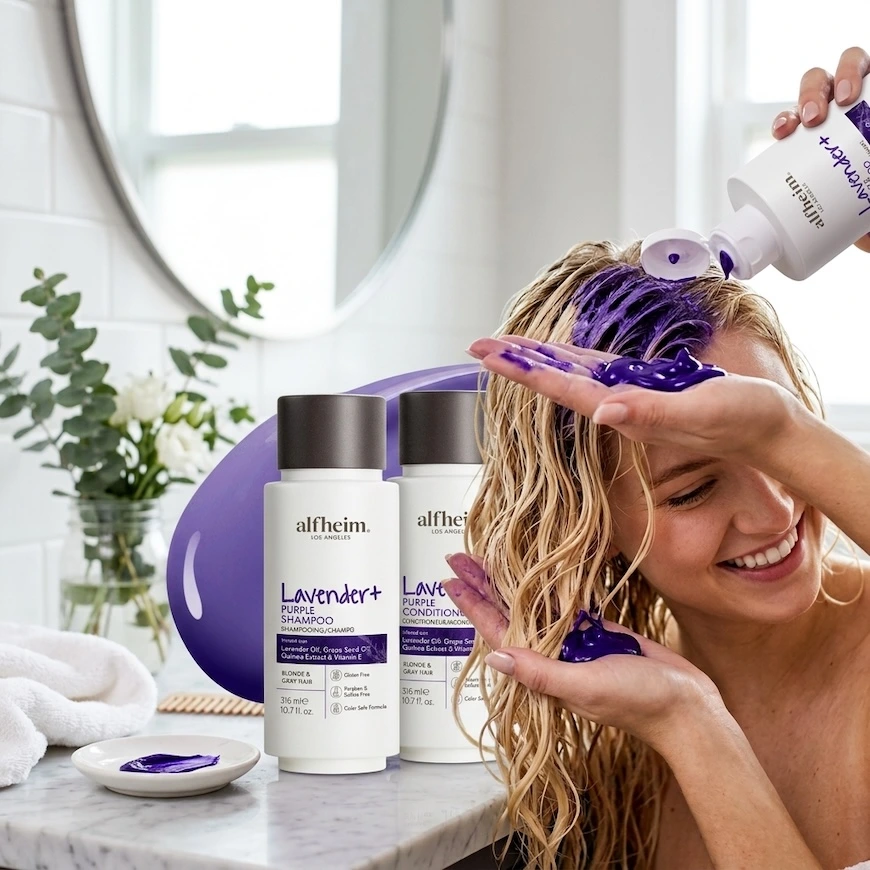
Dimension in colour. Slightly lighter pieces around the face and at the crown create the visual impression of depth and thickness. Flat, single-process colour reads as flatter hair, particularly in photos. If you are blonde, keeping your tone bright matters too, and my guide to purple shampoo for blonde hair covers the brassiness side of that.
Habits that flatten your hair without you noticing
Touching it. Every time you run your fingers through your hair you transfer oil from your hands to your roots and pull the voluminous hair out of it. This is the hardest one to stop.
Tight ponytails in the same place. Beyond flattening the crown, repeated tension in one spot causes breakage. The AAD is direct about this: continuously worn braids, cornrows, ponytails and extensions pull on the hair, and if the tension continues, permanent hair loss can develop. Vary your placement, and use a fabric scrunchie rather than a thin elastic.
Sleeping on cotton. Cotton pillowcases create friction that flattens and roughens hair overnight. Silk or satin, or a satin bonnet, protects the voluminous hair you built.
Skipping washes too long. The “training your hair” idea does not hold up, because your scalp produces oil at the rate it produces oil. If day three is flat and greasy, wash on day two. There is no prize.
Heavy leave-in products. Oils, serums and creams belong on the ends. Anything applied near the scalp is weight. Some of the most common versions of this are in my roundup of haircare mistakes that damage hair.
Flat hair or thinning hair? They’re not the same problem
This distinction matters, because nothing in this article helps with the second one.
Flat hair. You have your normal amount of hair and it is lying down. Your ponytail feels the same thickness it always has, your part looks the same width, and voluminous hair returns after a wash or a restyle.
Thinning hair. You are losing density. Signs include a ponytail that feels noticeably thinner than it used to, a part that is widening, more shedding than usual in the shower or on your pillow, or seeing more scalp in photographs.
If that second description fits, styling will not fix it, and the earlier you look into it the better the outcome tends to be. The AAD’s page on the first signs of hair loss is a good starting point, and it is worth seeing a dermatologist rather than buying another volumizing product.
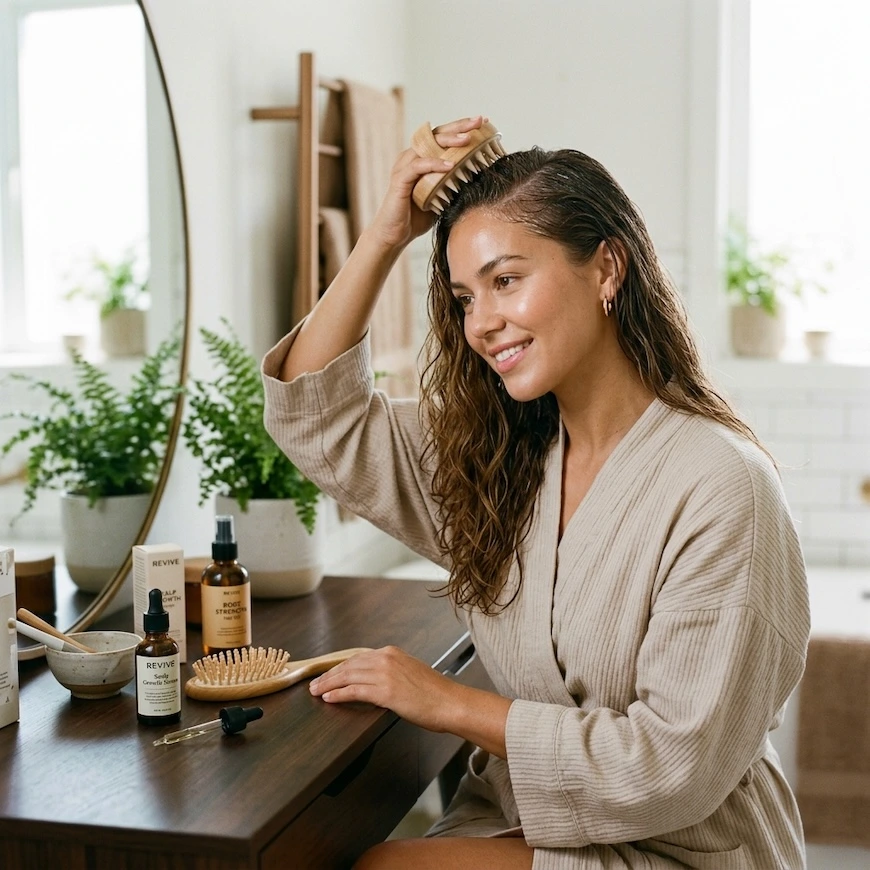
Worth knowing: scalp health underpins both. If you have never given yours attention, my scalp care routine for hair growth is the place to start, and it covers oils, massage and growth properly.
Frequently asked questions
Why is my hair so flat even after washing?
Usually product weight or buildup. Conditioner applied too close to the scalp is the most common cause, and accumulated silicone and dry shampoo residue is the second. Try a clarifying shampoo and keep conditioner from the ears down.
Does dry shampoo actually give you voluminous hair?
Yes, because it absorbs oil and adds grip at the roots. It works far better applied to clean hair the night before than to already-oily hair, since it prevents flatness rather than trying to reverse it.
How can I make thin hair look thicker?
Long layers to remove weight, dimensional colour rather than flat single-process, root-lift while drying, and a changed parting. Texture spray adds the appearance of density through separation.
Does teasing damage your hair?
Backcombing roughens the cuticle and causes breakage with regular use. Occasional teasing at the crown for an event is fine, daily teasing is not. Root-lift spray and velcro rollers get you voluminous hair without the damage.
Should I stop using conditioner if my hair is flat?
No, just move it. Conditioner on mid-lengths and ends protects your hair. Conditioner at the roots flattens it. Skipping it entirely leaves you with dry, frizzy, damaged ends, which does not look voluminous either.
How often should I wash fine hair?
Whenever it needs it, typically every one to two days for fine or oily hair. The idea that you can train your scalp to produce less oil is not supported, and leaving hair unwashed to build volume achieves the opposite.
The bottom line
Conditioner from the ears down. Dry your roots pointing the wrong way. Dry shampoo the night before, not the morning after. Clarify once a month. That is voluminous hair in four sentences.
That is most of it. Products help, but technique does the heavy lifting, and if you have been buying volumizing products and still do not have voluminous hair, technique is almost certainly what is missing.
Related: if your hair is damaged as well as flat, haircare mistakes that damage your hair covers the repair side, and Olaplex is worth understanding before you spend money on bond-building treatments.

Hi, I’m Marwa ✅
I test skincare, haircare, and makeup on real skin and a real budget, and writes the honest reviews to prove it.