This post contains affiliate links. If you buy through them, we may earn a commission at no extra cost to you.
Quick Answer: High-frequency wands have a genuine antibacterial mechanism, a 2022 study found they significantly reduced acne bacteria in the lab, driven by ozone rather than heat. But that research was in vitro, and the authors say human studies are still needed. So: plausible as a complementary tool for mild acne; unproven for collagen, scars, pigmentation or hair growth. And they’re not safe for everyone, skip them if you’re pregnant, have a pacemaker, epilepsy, or rosacea.
A high frequency skin therapy wand has been standard equipment in esthetician toolkits for decades, and the handheld version has become one of the most-bought at-home beauty devices on Amazon.
A high frequency wand also comes wrapped in claims that run from well-founded to entirely invented. So this review does two things: tells you what the research actually shows, and reviews the most popular device honestly. If you’re weighing this against everything else on the market, at-home skincare devices, compared is the wider view.
What a high frequency wand actually is
A high frequency wand is a glass electrode filled with an inert gas, usually argon (which glows violet) or neon (orange), connected to a handle that passes a low-current, high-frequency electrical charge through it.
When the electrode of a high frequency wand touches your skin, the gas ionises and the process generates ozone at the surface. That ozone is what does the work.
On the argon versus neon question: argon is generally recommended for oily and acne-prone skin, neon for dry and mature skin. In practice the difference is modest, since both produce ozone and ozone is the active mechanism. Don’t let electrode colour drive your purchase.
What the research actually shows
This is where most high frequency wand reviews overstate things, including the previous version of this one.
The main study is High-frequency devices effect in vitro: promissing approach in the treatment of acne vulgaris?, published in Anais Brasileiros de Dermatologia in 2022 by a team at Ludwig Maximilian University in Munich. They exposed Propionibacterium acnes (now usually called Cutibacterium acnes, the bacterium involved in acne) and a range of other skin bacteria and fungi to high-frequency therapy, then counted what survived.
What they found: significant reductions in colony counts across nearly every species tested, with P. acnes significantly reduced after one minute of treatment.
How it works: the authors investigated heat and ozone separately, and the antimicrobial effect tracked ozone production rather than temperature. Ozone, not warmth, appears to be doing the killing.
Then the two caveats that matter most.
First, this was in vitro. Bacteria on agar plates, not acne on human faces. Skin is vastly more complicated than a culture dish.
Second, the authors say so themselves. Their stated limitation is that the experiments were performed in vitro only and that in vivo work is needed to assess clinical effects. Their conclusion is carefully worded: the results give a mechanistic basis for high frequency as a complementary treatment option.
So the honest position is this. There’s a plausible, measured mechanism for an antibacterial effect, which is more than most beauty gadgets can claim. Trying a high frequency wand alongside a proper acne routine is reasonable. It is not a proven acne treatment and it shouldn’t replace one.
What it won’t do
The antibacterial evidence for a high frequency wand gets stretched to cover a long list of claims it doesn’t support.
| Claim | Evidence |
|---|---|
| Reduces acne bacteria | Lab evidence, plausible mechanism. Human trials still needed |
| Temporary glow and circulation | Plausible short-term, like any facial massage |
| Stimulates collagen | No good evidence. For a device with real collagen data, see what microneedling can and can’t do |
| Heals scars and hyperpigmentation | No supporting evidence |
| Promotes hair growth | No supporting evidence. Growth happens at the follicle |
| Treats dandruff | Not demonstrated. Antifungal shampoo for dandruff has decades of evidence behind it |
| Removes wrinkles | No |
One claim worth reversing entirely. You’ll read that a high frequency wand improves product absorption and that you should follow with your best serum to take advantage. Increased absorption isn’t selective. It applies to fragrance and preservatives as readily as to actives. Afterwards, apply something bland: a bland moisturiser afterwards beats your strongest treatment, and vitamin C timing is a separate slot in your routine, not this one.
Who shouldn’t use a high frequency wand
This is the section missing from nearly every review of these devices, including the earlier version of this one.
Don’t use one if you have a pacemaker, an implanted defibrillator, or any implanted electronic device, since electromagnetic interference is a real risk. The same applies if you have active blood clots or DVT, where increased circulation carries embolism risk. Metal implants or extensive dental metalwork in the treatment area rule it out, as does broken, infected or actively inflamed skin.
Ask a doctor first if you’re pregnant, since effects on fetal development aren’t established and standard guidance is to avoid electrical stimulation devices, or if you have epilepsy or a seizure disorder.
Use real caution with rosacea or eczema. Both are aggravated by stimulation and heat, and “safe for all skin types” is not accurate for reactive skin. Know your skin type first if you’re unsure which camp you’re in.
Three practical safety points nobody mentions:
- Never use it over alcohol-based products. Alcohol is flammable and the device produces an electrical arc. Cleanse, dry, and apply nothing before a session.
- Ventilate the room. These devices make ozone by design, that’s the mechanism, and ozone irritates airways at sufficient concentration. A small closed bathroom is the wrong place for this.
- Keep it away from your eyes, and off the thyroid area at the front of the neck.
On the cancer question, since it gets asked constantly: these devices don’t emit ionising radiation, which is the type associated with cancer risk. The realistic concerns are ozone in an unventilated room, skin irritation, and the contraindications above. If you have a specific medical condition, ask your doctor rather than the internet.
The NuDerma skin therapy wand: an honest review
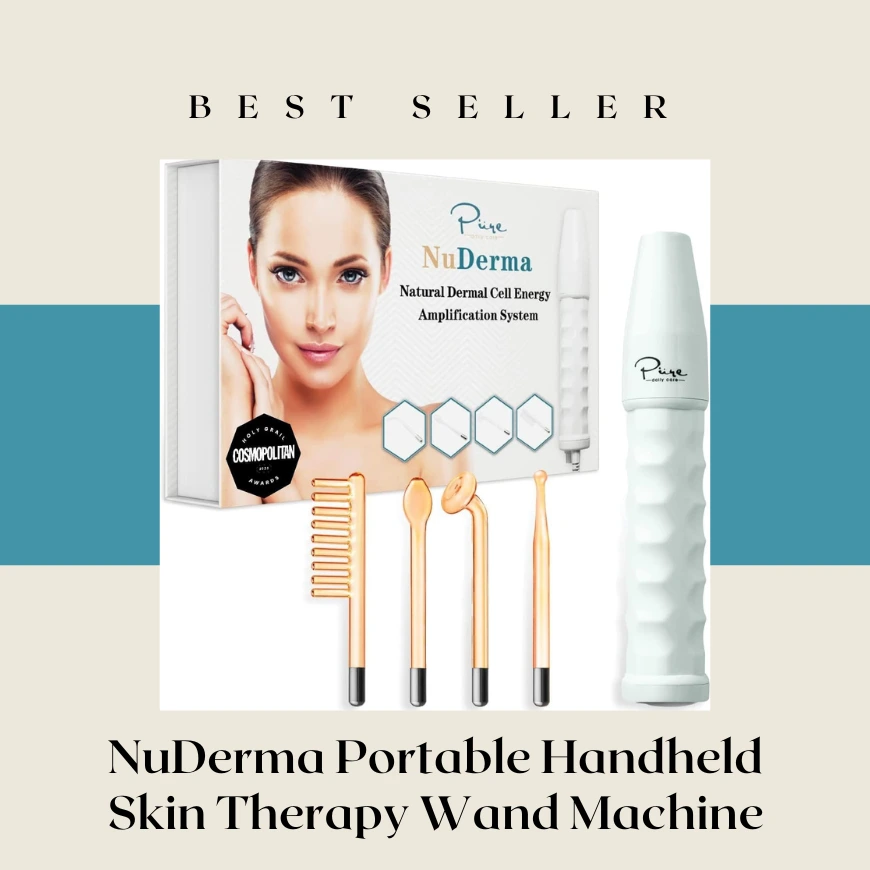
The NuDerma Portable Handheld Skin Therapy Wand is the most popular at-home high frequency wand on Amazon, with tens of thousands of ratings.
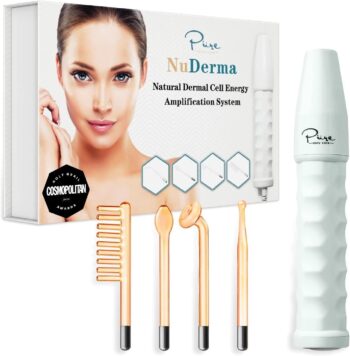

What’s good about it. The build quality is better than the price suggests, and it performs comparably to devices costing considerably more, with owners commonly reporting years of use. You get four electrodes: mushroom for broad facial areas, spot for targeted blemishes, comb for the scalp, and tongue for larger areas and contours. That’s more versatile than the single-electrode models. It’s also genuinely simple, since you attach, switch on and glide, with nothing to calibrate. The sensation is mild, a faint tingle and a slight ozone smell that most people find unremarkable rather than unpleasant.
What’s less good. The glass electrodes are fragile and break if dropped, and replacements aren’t always easy to source. The instructions are thin on safety, and none of the contraindications above appear prominently, which is why that section exists. Results are modest and slow: three to six weeks before you’d notice anything on active breakouts, and nothing at all on scars or wrinkles.
Who it’s for: someone with mild to moderate breakouts who already has a working routine, enjoys a ritual, and holds realistic expectations. If you’re not sure what you’re treating, what your breakouts might mean and blackheads and what isn’t one are worth reading first, because a lot of what people treat as acne isn’t.
Who should skip it: anyone on the contraindications list, anyone with cystic or severe acne, which needs dermatologist-led treatment rather than a gadget, and anyone expecting collagen, scar or wrinkle results.
A fair comparison: at this price you could buy several months of a proven topical instead. If acne is the main problem, adapalene gel has far more evidence behind it and costs less. Worth checking your routine too, since the AAD’s list of habits that worsen acne catches more breakouts than any device will. For device context in the other direction, at-home dermaplaning compared covers a tool with a clearer, narrower job.
How to use one properly
Assuming you’ve cleared the safety list above, this is how to use a high frequency wand without wasting six weeks.
- Cleanse and dry completely. No makeup, no sunscreen, no residue, and nothing alcohol-based.
- Choose your electrode: mushroom for general use, spot for individual blemishes, comb for scalp.
- Insert the electrode before switching on, and remove it after switching off.
- Start at the lowest intensity. Increase only if you feel nothing at all.
- Keep it moving in small circles. Never hold it still in one spot.
- Ten to fifteen minutes, two or three times a week. More is not better, and daily use tends to irritate.
- Ventilate the room.
- Afterwards, apply something bland. A plain moisturiser, not your strongest active. The AAD’s dermatologist basics are a good sanity check on the rest of your routine.
- Wipe the electrodes with alcohol after use and let them dry fully before the next session. Never use the device while they’re still wet.
On timing: if a high frequency wand helps your breakouts, you’d expect to see it somewhere between three and six weeks. The AAD’s guidance for acne products generally is six to eight weeks before judging, so give it that long before deciding. If nothing has changed after that, it isn’t working for you, and that’s useful information rather than a reason to use it harder.
Frequently asked questions
How does a high frequency wand work?
A glass electrode filled with argon or neon gas carries a low-current, high-frequency charge. On contact with skin the gas ionises and generates ozone at the surface, and that ozone appears to be the antimicrobial mechanism. The researchers found the effect wasn't driven by heat.
Are high frequency wands safe?
For most healthy people using one correctly, yes. They're not safe for everyone, though. Avoid one if you have a pacemaker or implanted electronic device, or active blood clots, and ask a doctor if you're pregnant or have epilepsy. Use caution with rosacea or eczema. Never use it over alcohol-based products, and ventilate the room, since the device produces ozone by design.
Can you use a high frequency wand every day?
Better not to. Two or three times a week for ten to fifteen minutes is the usual guidance, and daily use tends to cause irritation without extra benefit. Consistency over several weeks matters more than frequency.
Does a high frequency wand help hair growth?
There's no good evidence that it does. Hair growth happens at the follicle and is governed by genetics, hormones and general health. Better scalp circulation is pleasant but hasn't been shown to produce growth. Minoxidil has actual evidence behind it.
Can a high frequency wand cause cancer?
No. These devices don't emit ionising radiation, which is the type linked to cancer risk. The realistic concerns are ozone in an unventilated room, skin irritation, and the contraindications above. Use it in a ventilated space and follow the cautions.
Can you use a high frequency wand while pregnant?
Standard safety guidance advises against it. The effects on fetal development haven't been established, and while facial use keeps the current well away from the abdomen, most guidance recommends avoiding electrical stimulation devices in pregnancy altogether. Ask your doctor.
Argon or neon, which electrode is better?
Argon (violet) is usually recommended for oily and acne-prone skin, neon (orange) for dry and mature skin. In practice the difference is small, since both generate ozone and that's the active mechanism. Don't make it your deciding factor.
How long until I see results from a high frequency wand?
Three to six weeks of consistent use, if it works for you, and only on active breakouts. There's no evidence-based timeline for scars, pigmentation or wrinkles, because there's no good evidence it affects them. If nothing has changed after six to eight weeks, it isn't the right tool for your skin.
Is high frequency better than LED light therapy?
Different mechanisms, different evidence bases. Blue LED for acne and red LED for skin quality both have more human clinical research behind them. If you're choosing one for acne and want the better-studied option, LED is the more evidenced pick.
Reviewed August 2026. General information, not medical advice. Persistent or severe acne should be assessed by a board-certified dermatologist.

Hi, I’m Marwa ✅
I test skincare, haircare, and makeup on real skin and a real budget, and writes the honest reviews to prove it.