Quick answer: A hair gloss is a deposit-only treatment. It coats the hair with a tint and a shine layer, and it can’t lighten anything. A hair gloss at home contains no peroxide and no ammonia, which is why it won’t wreck your hair the way colour can. It lasts four to six weeks and fades out gradually instead of leaving a line at your roots. Clear adds shine only. Tinted cancels brass or refreshes faded colour. If you’re starting from scratch, buy dpHUE Gloss+.
What a hair gloss at home actually does
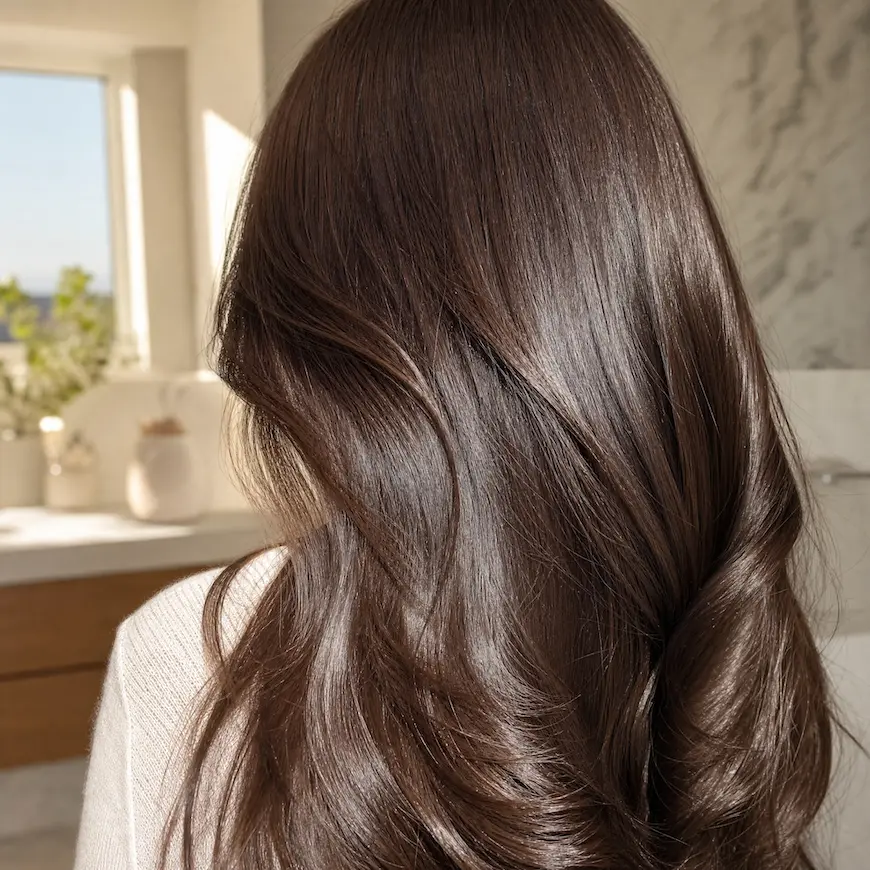
It adds shine, and that part isn’t marketing. A gloss lays a thin film over the hair and smooths the cuticle down, so light bounces off evenly instead of scattering off a rough surface. Even light bouncing back is the whole definition of shiny.A tinted one also deposits pigment, so it corrects tone. Violet cancels yellow, blue cancels orange, and a warm gloss puts the gold back into a brunette that’s gone dull. It won’t recreate a colour you’ve lost, but it will bring back the depth.What it can’t do is lighten your hair, cover a lot of grey, or change your shade. There’s no lift in it at all. A gloss only ever adds.
Gloss vs dye vs toner vs glaze
This is where everybody gets stuck, so here it is in one table.
| Gloss | Permanent dye | Toner | |
|---|---|---|---|
| Can it lighten? | No | Yes | No |
| Peroxide? | No, not at home | Yes | Usually a little |
| How long | 4 to 6 weeks | Until it grows out | 2 to 4 weeks |
| Regrowth line? | No, it fades evenly | Yes | No |
| Adds shine | Yes, that’s the point | Not really | A little |
| Best for | Between salon visits | Changing your colour | Killing brass after bleach |
So where does “glaze” fit? It doesn’t. It’s the same product. Some brands say gloss, some say glaze, a few go with “shine treatment” because they think it sounds less scary. Ignore all of it.There is one distinction that does matter, though. A salon gloss is usually demi-permanent and gets mixed with a low-volume developer, so it can shift your tone a bit more. A hair gloss at home is deposit-only, with no developer at all. That’s why the salon version looks more dramatic. It’s also why the at-home one is almost impossible to get badly wrong.
Does a hair gloss at home damage your hair?
No, and the reason why is more reassuring than the answer on its own.I went through the ingredient list on dpHUE Gloss+, probably the most popular hair gloss at home on the market. The colour comes from direct dyes: Basic Blue 99, Basic Red 76, Basic Brown 16 and 17, Acid Violet 43. All of that sits in a conditioning base of cetearyl alcohol, behentrimonium chloride and dimethicone.What isn’t on the list: hydrogen peroxide, ammonia, PPD.
Those three are what make permanent colour permanent. Peroxide opens the cuticle and strips out your natural pigment, and ammonia holds the cuticle open while it happens. That’s the bit that leaves hair porous and dry.A gloss doesn’t do any of that. The pigment sits on the outside of the hair shaft and washes off over a few weeks. Nothing opens the cuticle, so there’s nothing to damage. Most people I know say their hair actually feels better afterwards, which makes sense when you remember the whole thing is carried in a conditioner.
Worth saying clearly: a gloss makes damaged hair look better without making it any stronger. If your ends are snapping off, you need a bond-building treatment, not a shine layer over the top.
Two caveats that are genuinely worth knowing:Porous hair grabs pigment fast. Bleached, fine or damaged hair can take a tinted gloss much darker than the box promises, and dry ends will drink it faster than your mid-lengths. Start with less time on the clock, never more.And it stains. Gloves, an old towel, and wipe your hairline as you go.
Clear or tinted?
Clear gloss has no pigment in it whatsoever. Pure shine and smoothing, nothing else. Go clear if you already like your colour and just want it to look expensive again, if your hair is virgin, if you’ve been over-toned and can’t take one more scrap of pigment, or if it’s your first attempt and you’d rather have zero risk.Tinted gloss is pigment plus shine. That’s the one you want if your blonde has gone yellow, your brunette has gone orange, your colour has faded flat, or you’re trying to blend a few greys.If you’re torn, buy clear. It cannot go wrong, the shine payoff is identical, and after one use you’ll know whether you want tone as well.
How long a hair gloss at home lasts
Four to six weeks, or roughly six to ten washes.Four things cut that short: hot water, sulphate shampoo, washing too often, and heat styling on top. If your gloss keeps vanishing inside a fortnight, it’s the shower temperature nine times out of ten. Turn it down before you blame the product.It’s also worth learning to protect it overnight. Cotton pillowcases rough the cuticle up while you sleep, and a rough cuticle is exactly what the gloss spent twenty minutes smoothing down.
The best bit is that it fades rather than grows out. No line at the roots, no obvious moment where you’re forced to redo it. You can stop whenever you feel like it and nothing looks off, which is the single biggest practical advantage a gloss has over dye.
Hair gloss at home, or book the salon?
| At home | Salon | |
|---|---|---|
| Cost | The price of one product | 5 to 10 times that, every time |
| Tone change | Subtle | Can genuinely shift your shade |
| Grey coverage | Blending only | Can properly cover |
| Risk | Very low | None, but you’re paying for that |
| Time | 20 minutes in your bathroom | An appointment |
Do it yourself if you’re refreshing tone, killing brass, or chasing shine. Book the salon if you want a real colour change, you’re covering more than about 30% grey, or a colour has gone wrong and needs correcting. A gloss will not rescue a colour disaster. It’ll just make the disaster shinier.
Glossing grey hair
Grey behaves differently and most articles skip straight past it. Grey has no pigment left in it, which makes it porous and extremely absorbent. It takes gloss faster than the rest of your head and shows every scrap of deposit you put on it.A gloss blends grey. It doesn’t cover it. If you’ve got a few coming through at the front, a gloss softens the contrast enough that they read as highlights instead of stripes. If you’re 50% grey and you want it gone, you need colour and there’s no getting round that.
If you’re growing your grey out on purpose, a clear gloss or a violet-toned one is about the best thing you can do for it. Silver and white hair yellows from UV, minerals in your water and product build-up, and both of those fix the yellowing without adding colour you never asked for.
On timing: start at half whatever the box says. You can always go again next wash. You can’t take it off once it’s on.
Killing brass with a gloss
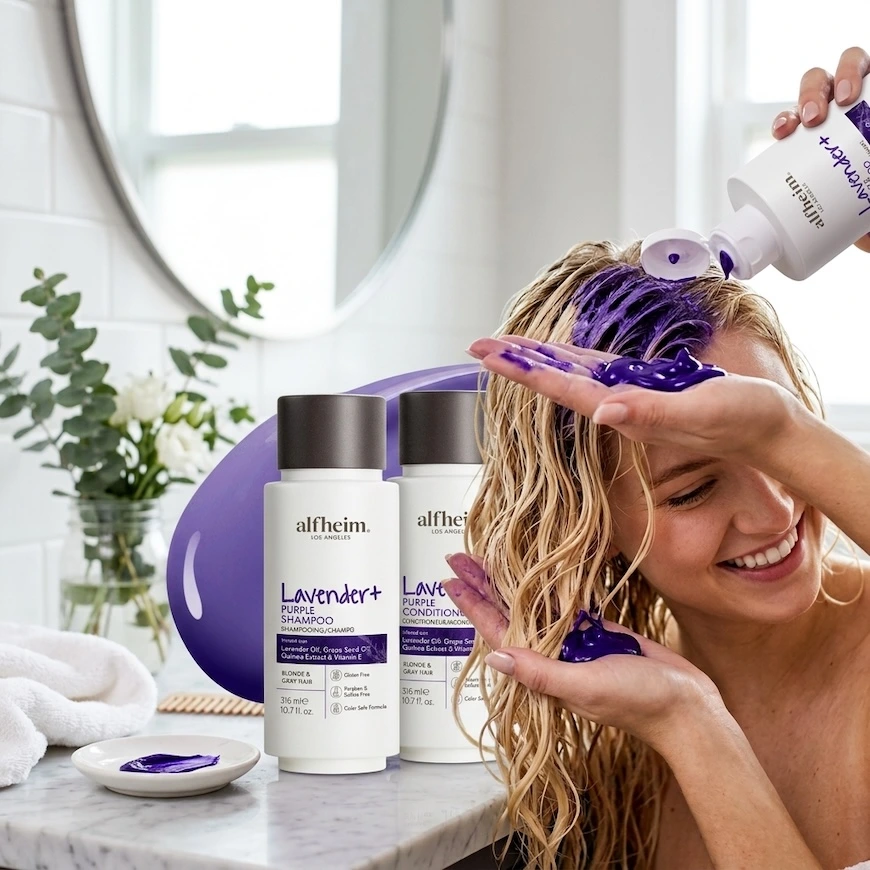
If your blonde has gone yellow or your brunette has gone orange, a tinted hair gloss at home handles it better than purple shampoo does. It deposits more pigment, deposits it more evenly, and it adds shine while it’s there.Match the tone to the problem. Yellow in blonde wants violet, or anything labelled ash or pearl. Orange in brunette or in lifted dark hair wants blue, or an ash brown. If you’ve got both going on, alternate between them, or just use an ash gloss, which usually contains a bit of each.Easiest way to tell: hold a strand up to daylight. Straw yellow means violet. Copper orange means blue.
How to do a hair gloss at home
- Shampoo first and condition afterwards, not before. Clean hair takes gloss evenly, and conditioner beforehand blocks it.
- Towel-dry to damp, not soaking. Wet hair dilutes the pigment and you’ll end up patchy.
- Gloves. Every single time.
- Section into four and work from the back forward, because the back is what you’ll rush otherwise.
- Mid-lengths and ends first, roots last. Roots run warmest and grab fastest, so they need the least time on.
- Comb it through properly so every strand is coated.
- Set a timer, and on your first attempt take it off five minutes early.
- Rinse until the water runs clear. Cool water is more comfortable and slightly kinder. It doesn’t “seal the cuticle”, that’s a myth, but it’s still the better call.
- Wipe your hairline with a damp cloth straight away, not in ten minutes.
Repeat every four to six weeks. Any more often than that and pigment starts building up, especially on porous ends.
The 5 best at-home glosses
As an Amazon Associate I earn from qualifying purchases at no extra cost to you. I read the ingredient list on every gloss on this page, because the difference between the ones that are genuinely deposit-only and the ones that aren’t matters a lot more than the price does.
Best overall: dpHUE Gloss+ Deep Conditioning Treatment
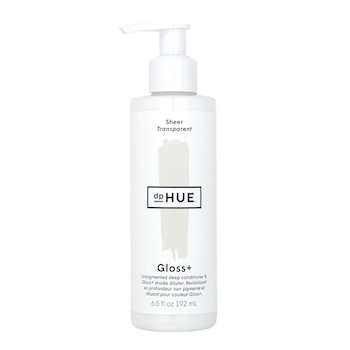

The product that dragged this whole category into the mainstream, and it still does the job better than anything else. Deposit-only direct dyes in a conditioning base that actually conditions, with no peroxide, no ammonia and nothing that opens the cuticle.Twenty minutes in the shower, a wide shade range with a clear option included. If you only buy one thing off this page, buy this one.Best for: anyone starting out, whatever your colour.
Best budget: L’Oréal Paris Le Color Gloss
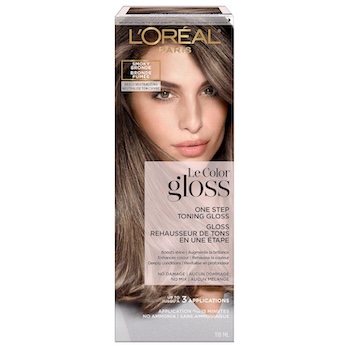
In-shower, one step, and a fraction of what the salon-adjacent options cost. It isn’t as pigmented as dpHUE and it does fade quicker, but for topping up shine between proper treatments it’s very hard to argue with the price.Best for: first-timers, or keeping a gloss ticking over between the good stuff.
Best for a specific shade: Moroccanoil Color Depositing Mask
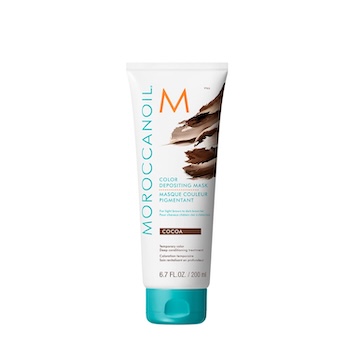
The widest shade range here by a distance. Platinum, Champagne, Cocoa, Copper, Bordeaux and more besides. Technically a mask rather than a gloss, which in practice means gentler, more conditioning, and a bit less pigmented.Best for: knowing exactly which tone you’re after. Platinum and Champagne are excellent on grey and silver.
Best premium: Kérastase Soin Acide Chroma Gloss
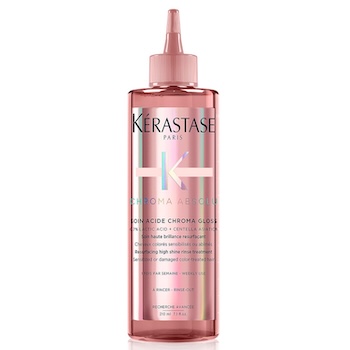
Salon-tier, priced accordingly, and the shine is a real step up rather than a marginal one. If your colour costs a fortune to maintain, this protects that investment between appointments.Best for: expensive colour you want to keep looking expensive.
Best for colour-treated hair: Pureology Colour Glaze
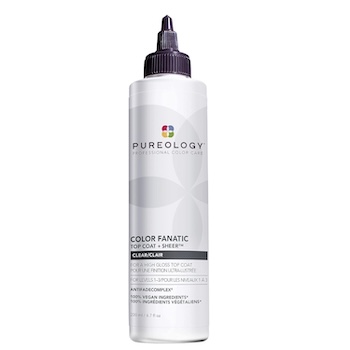
Built around protecting the colour you’ve got rather than changing it. The sulphate-free base matters more here than it usually would, because sulphates are the fastest way to strip a gloss straight back out.Best for: maintaining salon colour, not correcting it.
Frequently Asked Questions
Does a hair gloss at home damage your hair?
No. There's no hydrogen peroxide and no ammonia in an at-home gloss, so nothing opens the cuticle. The pigment sits on the outside and washes off over a few weeks. Most people find their hair feels better afterwards, because the base it's carried in is a conditioner.
Hair gloss or dye, which should I use?
Dye if you're changing your colour or covering a lot of grey. Gloss for everything else: refreshing tone, killing brass, adding shine between salon visits. A gloss fades out evenly with no regrowth line, so you're not committing to anything.
How long does a hair gloss at home last?
Four to six weeks, or six to ten washes. Hot water, sulphate shampoo and washing frequently all shorten it. If yours disappears in a fortnight, turn the shower down.
What’s the difference between gloss and glaze?
Nothing meaningful. Some brands say gloss, some say glaze, some say shine treatment. Same product.
Can a hair gloss cover grey?
It blends grey, it doesn't cover it. A few greys at the front will soften and start reading as highlights. If you're around half grey and want it gone, you need colour, and a gloss won't get you there.
Should I get a clear or a tinted gloss?
Clear if you like your colour and just want shine, or if it's your first go. Tinted if your blonde has gone yellow, your brunette has gone orange, or your colour has faded flat. When in doubt, clear. It can't go wrong.
Can I gloss over bleached hair?
Yes, and it's one of the best uses for it. But bleached hair is very porous and grabs pigment fast, so take it off early the first time. You can always repeat next wash.
Is a hair gloss at home as good as the salon?
For shine and for refreshing tone, close enough that most people wouldn't be able to tell. For an actual shade change or proper grey coverage, no. Salon glosses are demi-permanent and mixed with a developer, and that's what lets them shift tone properly.

Hi, I’m Marwa ✅
I test skincare, haircare, and makeup on real skin and a real budget, and writes the honest reviews to prove it.