This post contains affiliate links. If you buy through them, we may earn a commission at no extra cost to you.
Quick Answer: Almost all matted hair can be saved without cutting — it just takes slip and patience. Saturate the mat with conditioner or oil (far more than feels reasonable), leave it 20–30 minutes, then separate with your fingers first, working from the very ends upward in small sections. Never comb a dry mat, and never pull from the roots. Severe matting can take two or three hours across more than one session — that’s normal, not failure.
If you’re reading this with a knot you can’t get a comb through, start here: you almost certainly don’t need scissors.Matted hair looks unsalvageable and usually isn’t. What it needs is lubrication and time, in that order. Most people asking how to detangle matted hair fail because they try to brush before they’ve done either.
The single principle underneath every step below: matted hair has to be made slippery before it can be separated.That’s the whole of how to detangle matted hair without losing any of it.
Why hair mats
Matting happens when shed hairs don’t fall out. You lose 50 to 100 hairs a day, and normally they drop away. When they can’t, because hair is long, textured, braided or uncombed, they wrap around the hairs still attached and knot together. That’s the difference between a tangle (two or three hairs crossed) and a mat (dozens interlocked).
What accelerates it:
- Not detangling regularly, which is the single biggest cause
- Sleeping with loose hair on cotton, which creates friction all night
- Product buildup, which makes strands sticky and grabby
- Dryness, since a raised, roughened cuticle catches on its neighbours
- Damage, which is the same mechanism, permanently
- Illness, surgery or hospital stays where hair goes days unbrushed on a pillow
- Take down from braids or extensions, where weeks of shed hair is released at once
These overlap with the usual haircare mistakes that cause damage, and the AAD’s list of habits that damage hair reads almost identically.
Worth knowing: if you’re matting far more than you used to, that points to shedding or damage rather than a styling problem. Check whether you’re seeing shedding or breakage before you change anything else. If your fallen hairs have a small white bulb, that’s normal shedding. If they’re short pieces with no bulb, that’s breakage, and matting will keep recurring until you deal with the breakage. Knowing how to detangle matted hair only helps if the cause is friction rather than damage.
What you need before you start
Don’t begin without these. Half of how to detangle matted hair safely is having the right things in reach, and starting unequipped is how people end up cutting.
| Tool | Why | Don’t use |
|---|---|---|
| A lot of conditioner | Slip. This is 80% of the job | Anything “volumising” or clarifying, the opposite of what you need |
| Detangling spray or leave-in | Slip you can reapply as you go | Dry shampoo, which makes it worse |
| Wide-tooth comb | Wide gaps pass through knots instead of compressing them | Fine-tooth combs and paddle brushes, which tighten mats |
| Flexible detangling brush | Bristles give rather than rip | Boar bristle, too dense for a mat |
| Sectioning clips | Keeps finished hair out of the way so it doesn’t re-tangle | Nothing to avoid here |
| An oil (coconut, olive, argan) | For severe mats. Penetrates and softens overnight. Try argan oil for the lengths | Mineral oil alone, since it coats without softening |
AAD guidance backs the basics here: a wide-tooth comb on wet hair, gentle handling, a t-shirt instead of a towel.
Product picks:
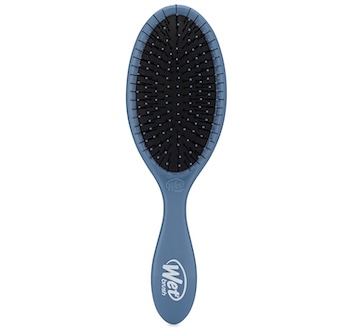
1. Best detangling brush, Wet Brush Original Detangler. Bristles that flex rather than tear. The safest tool for wet hair, when hair is most fragile. Skip it if: your matting is severe. Use fingers first, this comes later.

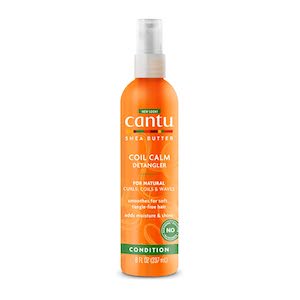
2. Best for textured and coily hair, Cantu Coil Calm Detangler. Shea butter base, generous slip, formulated for coils.
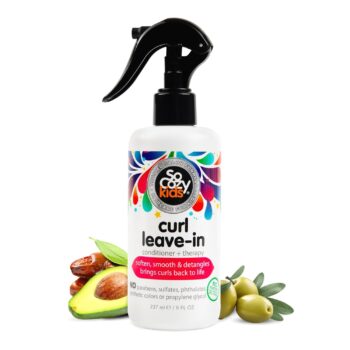
3. Best for kids and sensitive scalps, So Cozy Leave-In Conditioner Spray. Tear free, light, and gentle enough for a child already upset about their hair.
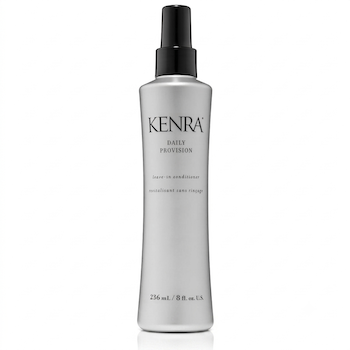
4. Best all-purpose leave-in, Kenra Daily Provision. Good slip, doesn’t weigh hair down, and adds heat protection.
1K+ bought in past month
Cheapest effective option, a large bottle of basic rinse-out conditioner. For severe matting you need volume, not sophistication, and how to detangle matted hair cheaply comes down to buying enough of it. Aussie Miracle Moist works because you can use half a bottle without hesitating.
The method: step by step
This is how to detangle matted hair from start to finish. Read all six before you start.
Step 1. Saturate. Then add more.
Dampen the hair (damp, not soaking, since wet hair is weakest) and work conditioner or detangling spray through the mat until it feels genuinely slippery. Most people use a quarter of what’s needed.
Leave it 20 to 30 minutes. This is the step everyone skips and the one that decides the outcome. Put a shower cap over it. Gentle warmth helps it penetrate.
Step 2. Section everything else away.
Divide the hair and clip back everything you’re not working on. Loose hair re-tangles into the section you’re fixing and you go backwards.
Work on one small section at a time, smaller than feels efficient.
Step 3. Fingers first, always.
Before any tool touches it, use your fingers to gently pull the mat apart. Hold the hair above the knot with one hand, close to the scalp, so the pull is against your own grip, not your roots.
Ease strands apart rather than pulling them through. Finger detangling does most of the work on a genuine mat, and it’s the only method where you can feel resistance before you cause damage. If you take one thing from how to detangle matted hair, take this.
Step 4. Work from the ends upward.
Once the mat has loosened, start combing at the very ends, the last inch, and work up in increments.
This is the rule people get backwards. Combing from the roots down drives every knot into one dense mass at the ends. Working upward removes them one at a time.
Step 5. Short strokes, no force.
Small, patient strokes. If the comb stops, stop with it. Go back to fingers, add more product, and try again.
Force is what breaks hair, and it’s the one way how to detangle matted hair goes wrong permanently. Anything that needs you to pull hard is causing damage you’ll be looking at for months.
Step 6. Rinse, condition again, dry gently.
Once you’re through, rinse and apply a conditioner or mask, since detangling is stressful for the cuticle. If the hair was badly matted, a bond-building treatment afterwards is worth it. Squeeze water out with a microfibre towel or a cotton t-shirt rather than rubbing, and air dry as much as you can. When you go back to hot tools, gentler heat styling afterwardskeeps you out of this situation.
Realistic timing: a moderate mat takes 20 to 45 minutes. Severe matting takes two to three hours, sometimes across two sessions. That’s normal.
Severely matted hair
If the mat is dense, large, or has been sitting there for days or weeks, everything above still applies, only slower, with one addition.
The overnight oil soak. This is the technique that saves hair people have given up on, and it’s the part of how to detangle matted hair that most guides leave out.
- Work a generous amount of oil, coconut, olive or argan, right into the mat. Coconut oil penetrates the hair shaft rather than just coating it, which makes it the best evidenced choice.
- Cover with a shower cap or a satin scarf.
- Leave it overnight.
- In the morning, add conditioner on top of the oil and begin finger detangling.
Oil softens the cuticle over hours in a way a 20 minute conditioner can’t. For a mat that’s been felting a week, it’s often the difference between saving it and cutting it.
For very severe matting, also:
- Break it into sessions. Two hours on, rest, resume tomorrow. Fatigue is what makes people yank.
- Work at the edges inward. Loosen the outer perimeter of the mat rather than attacking the middle.
- Reapply product constantly. As soon as it stops feeling slippery, stop and add more.
- Get someone to help if the mat is at the back of your head. You can’t feel tension on a spot you can’t see.
- Sit somewhere comfortable with something to watch. Sounds trivial. It’s the difference between finishing and giving up.
Can severely matted hair be saved? Almost always, yes, given enough slip and enough patience. What can’t be saved is hair that has genuinely felted, meaning the strands have locked into a solid mass with no separation possible even when saturated. That’s rare, and it takes weeks of neglect, illness or hospitalisation to get there. If a section is genuinely felted, cutting that section is the right answer, and a stylist can take far less than you’d fear.
Matting after braids, extensions and protective styles
Take down matting is a different problem, and how to detangle matted hair after braids follows slightly different rules. It catches people out because the hair looked fine going in.
Why it’s worse: during six or eight weeks of braids, the hairs you shed daily have nowhere to go. They stay trapped in the braid. On take down, weeks of shed hair releases at once, tangled around the hair still growing. That’s why post braid matting is dense and immediate. The AAD’s textured hair care pages cover the same ground.
The method that works:
- Take down slowly, one braid at a time. Rushing is where most damage happens.
- Detangle each section immediately after undoing it. Don’t take everything down and then face it all at once.
- Apply conditioner or oil to each section as you go, while it’s still separated.
- Expect a large amount of shed hair. A handful per braid looks alarming and is normal. It’s weeks of accumulated shedding, not sudden hair loss.
- Finger detangle from the ends, exactly as above.
- Wash only after everything is detangled. Shampooing matted hair tightens the mat considerably.
Prevention next time: ask for braids that aren’t too tight, don’t leave them in beyond six to eight weeks, and separate the hair gently at the roots every fortnight.
⚠️ On tightness: braids that hurt or that cause bumps along the hairline are too tight. Sustained tension causes traction alopecia, which can become permanent hair loss if you repeat it over years. The same goes for tight hair ties and tension in daily styling. Discomfort is not the price of a good install.
Preventing it from happening again
- Detangle before you wash, not after. Washing a tangle tightens it.
- Sleep on satin or in a bonnet. Cotton creates friction all night, and this is the single highest impact change most people can make.
- Condition every wash. Skipping conditioner is a direct cause of matting.
- Comb daily, gently, from the ends up, even on days you don’t style.
- Braid or twist long hair loosely at night rather than leaving it loose.
- Clarify occasionally if you use a lot of product, since buildup makes hair grab.
- Trim every 8 to 12 weeks. Split ends catch on each other and start mats.
Do these and you’ll rarely need to think about how to detangle matted hair again.
When to see a professional
Go to a salon if:
- The mat is close to the scalp and you can’t get product under it
- It covers a large portion of your head
- You’ve worked at it across two sessions with no progress
- Your scalp is sore, tender or showing bald patches. Stop immediately, and look at scalp care if your scalp is sore
- The hair has genuinely felted into a solid mass
- It’s a child’s hair and they’re distressed. A stylist will be faster and gentler than a difficult hour at home
A stylist can do this faster, with better products and leverage, and will cut far less than you’re picturing. Many salons offer detangling as a service, which is worth knowing before you attempt how to detangle matted hair alone at 11pm.
Stop straight away if you see: blood or broken skin on the scalp, significant pain, or hair coming out in clumps from the root rather than releasing from the mat.
Frequently asked questions
What is the fastest way to learn how to detangle matted hair?
There isn't a fast version, and that's the point. The method is saturate, wait, separate with fingers, then comb from the ends up. Anyone learning how to detangle matted hair fails at the waiting step first. Give the conditioner or oil the full 20 to 30 minutes and the rest goes quicker than forcing it.
What is the best product for matted hair?
Whatever gives the most slip. For severe matting, a large bottle of cheap rinse-out conditioner beats an expensive detangling spray, because you need volume. For textured hair, a shea butter based detangler. For overnight softening on a bad mat, coconut oil. The product matters less than using enough of it.
Should you detangle matted hair wet or dry?
Damp, not soaking, and never fully dry. Dry hair has no slip and snaps. Fully saturated hair is at its weakest and stretches before it breaks. Damp hair with plenty of conditioner is the sweet spot for how to detangle matted hair: enough slip to separate, enough strength to survive it.
How do I detangle matted hair after taking out braids?
Take the braids down one at a time and detangle each section immediately before moving on. Apply conditioner or oil to each section as you go, finger detangle from the ends upward, and wash only once everything is detangled. Expect a lot of shed hair, which is weeks of normal shedding at once, not sudden hair loss.
Why does my hair keep matting?
Usually friction and infrequent detangling, and sleeping with loose hair on cotton is the most common cause. Product buildup, dryness and damage all make it worse by roughening the cuticle so strands catch on each other. If matting increased suddenly, check whether you're seeing more breakage, since broken pieces tangle around intact hairs.
Does coconut oil help with matted hair?
Yes, and it's the best evidenced oil for this. It penetrates the hair shaft rather than only coating it, softening the cuticle over several hours. Work it into the mat, cover with a cap, leave overnight, then add conditioner on top before finger detangling.
How long does it take to detangle severely matted hair?
Two to three hours is realistic for severe matting, and splitting it across two sessions is fine. Moderate matting takes 20 to 45 minutes. If you find yourself rushing or pulling harder, stop. Fatigue is when the damage happens.
Will detangling matted hair cause hair loss?
Some hair will come out, and most of it had already shed and was trapped in the mat. That's not new loss. What does cause real damage is pulling. Force breaks hair mid shaft, and if you're pulling at the roots, sustained tension can cause traction alopecia. If your scalp is sore or you see bald patches, stop and see a professional.
What kind of brush is best for matted hair?
A wide-tooth comb or a flexible-bristle detangling brush. Wide gaps pass through knots. Fine teeth compress them into a denser mat. Avoid paddle brushes and boar bristle until the hair is fully detangled, since they're finishing tools rather than rescue tools. Fingers first, always, whatever else you've read about how to detangle matted hair.
Reviewed August 2026. General information only. If your scalp is painful, bleeding, or showing bald patches, see a dermatologist rather than continuing.

Hi, I’m Marwa ✅
I test skincare, haircare, and makeup on real skin and a real budget, and writes the honest reviews to prove it.