Quick Answer:They’re opposite problems. Dandruff comes from an oily scalp, a yeast called Malassezia feeds on sebum and irritates the skin, producing large, yellowish, greasy flakes. Dry scalp comes from too little moisture and produces small, white, powdery flakes with tight, itchy skin. Moisturising treats dry scalp and makes dandruff worse. If flakes come with redness and swelling, that’s seborrheic dermatitis, not plain dandruff.
If you’ve been fighting flakes with a moisturising mask or a hair oil and getting nowhere, there’s a good chance you’re treating the wrong condition.
Dandruff and dry scalp look similar from a distance and are almost opposites underneath. One is a problem of too much oil. The other is a problem of too little. And the standard advice for each makes the other one worse.
That mix-up is the reason most people asking how to get rid of dandruff end up buying something that quietly makes it worse. So start by working out which one you actually have.
The 60-second test
| Look at… | Dandruff | Dry scalp |
|---|---|---|
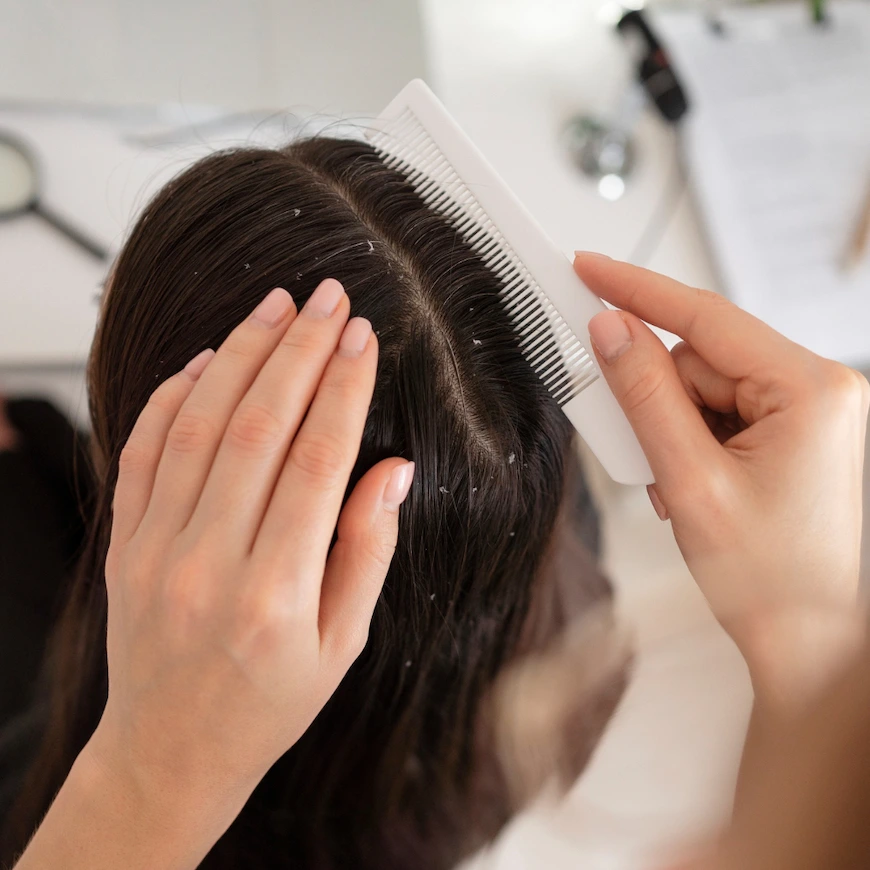
| The flakes | Large, yellowish or off-white, greasy. Clump together and stick to hair. | Small, white, powdery. Fall away loosely. |
| Your scalp | Oily, sometimes shiny | Tight, rough, sometimes flaky elsewhere on your body too |
| Your hair | Greasy sooner than you’d like after washing | Dry, brittle, prone to breakage |
| Skin elsewhere | Usually normal or oily. May flake at eyebrows, nose creases, ears, chest. | Dry hands, dry legs, worse in winter |
| Washing more often | Helps | Makes it worse |
There’s a slower check that settles it. Put a little plain moisturiser or a light oil on one patch of scalp overnight, then wash normally in the morning. If the flakes in that patch have gone, you were dealing with dryness. If they’re unchanged, or worse, it’s dandruff, and you’ve just fed the yeast. Worth doing before you spend anything, since how to get rid of dandruff and how to fix a dry scalp are two different projects with almost no overlap.
One more thing to rule out before you go any further. If your scalp isn’t only flaky but red, swollen or genuinely inflamed, that’s past plain dandruff. The American Academy of Dermatology draws the line clearly: seborrheic dermatitis causes inflammation, while dandruff does not. Dandruff sits at the mildest end of the same spectrum. Inflammation means it’s worth seeing a dermatologist rather than working your way through the shampoo aisle.
What actually causes dandruff
Not dryness. That’s the myth this whole article exists to correct.
Three things have to line up.
Your scalp produces oil. The areas with the most sebaceous glands, meaning the scalp, eyebrows, sides of the nose and chest, are exactly where seborrheic dermatitis shows up.
Then there’s Malassezia, which is a yeast, so a fungus, and it lives on virtually everyone’s skin quite harmlessly. It isn’t a bacterium and it isn’t an infection you caught from anyone. Dandruff is not contagious. What it does is metabolise the fats in sebum, and the by-products of that process irritate the skin of people who happen to be sensitive to them.
Which brings us to the third piece: your own sensitivity. This is the part that explains why two people with identically oily scalps can end up with completely different scalps. Dandruff is an inflammatory reaction to something already living on you. It’s also why the condition is chronic and manageable rather than curable.
Follow that logic and the answer to how to get rid of dandruff stops being a shelf of hopeful products and becomes one rule: antifungal, not antibacterial. Reduce the yeast, reduce the oil it feeds on, calm the reaction.
Things that reliably set it off:
- Cold, dry weather, which is why it seems like dryness
- Stress
- Hormonal changes
- Product buildup on the scalp, especially heavy oils and styling products
- Hats, wigs and headwraps that create a warm humid microclimate, which is also why satin bonnets and protective styles need a bit of thought if you’re prone to flaking
- Illness, or anything that suppresses your immune system
The four active ingredients, and which to pick
Every anti-dandruff shampoo relies on one of these. The choice matters far more than the brand does.
| Active | What it does | Best for |
|---|---|---|
| Zinc pyrithione | Antifungal and antibacterial | First try. Gentlest and most widely available. Common in sulfate-free and gentler shampoos. |
| Ketoconazole | Strong antifungal | When zinc pyrithione isn’t enough. OTC at 1%, prescription at 2%. |
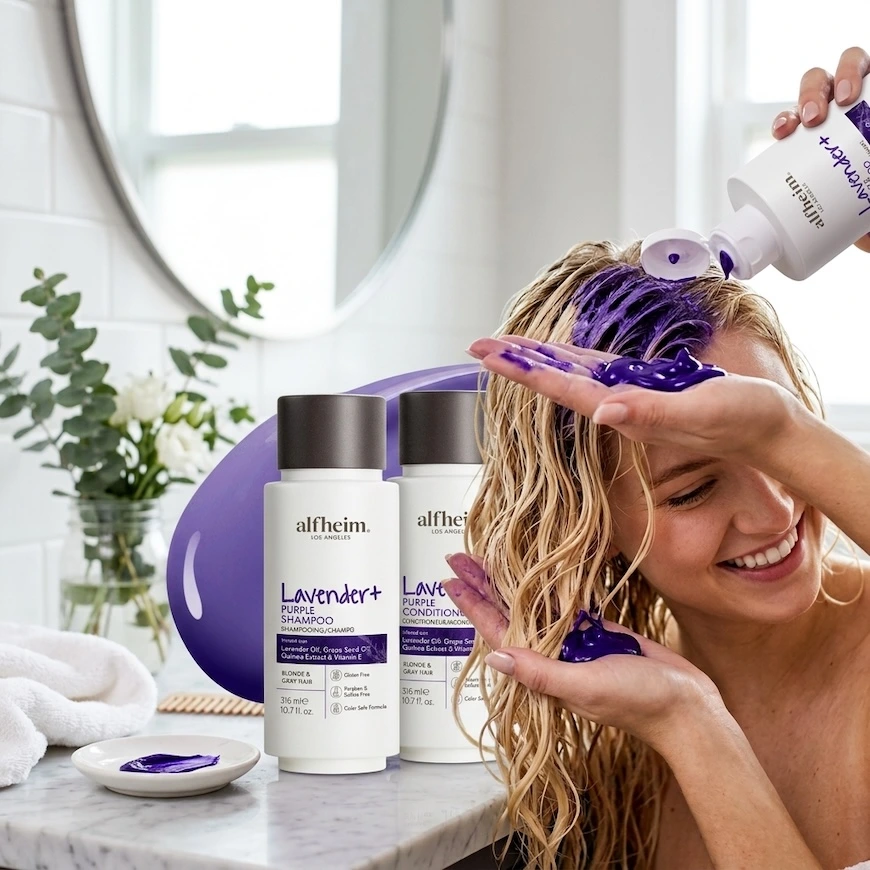
| Selenium sulfide | Slows skin cell turnover, reduces yeast | Stubborn, heavy flaking. Worth knowing that selenium sulfide can discolour blonde hair and other treated shades. |
| Salicylic acid | Exfoliates existing scale | Thick, crusted buildup. Doesn’t touch the yeast, so pair it with an antifungal. |
Salicylic acid is the one people misread most often. It clears the flakes you can see and does nothing whatsoever to the cause. On its own, it’s cosmetic.
How to get rid of dandruff with medicated shampoo
This is where most people go wrong, and it costs them months of buying and rebuying.
Leave it on. The biggest mistake is treating it like ordinary shampoo. The active ingredient needs contact time against your scalp, and the AAD’s guidance is to leave the shampoo on for the time stated on the bottle before rinsing. In practice that means five minutes, timed. Lather, leave it, wash the rest of yourself, then rinse.
Apply it to your scalp, not your hair. The condition is on your skin. Part your hair in sections and work the product in with your fingertips rather than your nails, which just add irritation.
Frequency depends on your hair type. Straight or wavy hair can take it two or three times a week. Curly or tightly coiled hair should have it once a week. Washing coily hair three times a week to chase flakes causes dryness and breakage that’s a bigger problem than the flakes were, and the AAD’s guidance accounts for this specifically. Almost nothing online gets that part right.
Once it’s controlled, don’t stop. Drop to once a week for maintenance. The flakes come back when treatment stops, and that isn’t the product failing.
Rotate when it stops working. If a shampoo that used to work no longer does, switch to one with a different active. The AAD explicitly recommends rotating between dandruff shampoos, and keeping two on the go is a reasonable long term habit.
A rough timeline, so you know whether it’s working: itching usually settles first, within a wash or two. Visible flaking takes two to three weeks to drop off properly. Six weeks of correct use with no change at all means the problem isn’t dandruff. Nobody selling shampoo tells you how to get rid of dandruff on that kind of schedule, because a slow honest answer sells less than a bottle promising results overnight.
Beyond the shampoo itself, a full scalp care routine covers what you do between washes, which is where most of the maintenance actually happens.
Why your dandruff shampoo isn’t working
Weeks of use with nothing to show for it usually comes down to one of five things, and none of them are the brand.
- You’re rinsing it out immediately. Fix this before anything else. Five minutes, timed.
- You’re applying it to your hair instead of your scalp.
- You’ve built tolerance to that active. Rotate to a different one.
- You stopped as soon as it improved. It’s chronic, so the maintenance dose is indefinite.
- It isn’t dandruff. Scalp psoriasis, contact dermatitis from a hair product and fungal infections all flake. If six weeks of correct use changes nothing, that’s a dermatologist visit, not a sixth shampoo.
There’s a sixth, less common one that catches people out: too much conditioner on the scalp. Conditioner belongs on the lengths, not the roots. Heavy conditioners and oils applied to the scalp feed exactly the thing you’re trying to suppress, which quietly undoes everything else you’re doing about how to get rid of dandruff.
How to get rid of dandruff on textured, curly and coily hair
Standard dandruff advice, meaning wash more often and wash vigorously, is written for hair that tolerates frequent washing. Coily hair generally doesn’t, and following it trades flakes for breakage.
Wash once a week with the medicated shampoo, not two or three times. Contact time matters more than frequency here, so five to ten minutes on a weekly wash beats a rushed rinse three times a week. Follow with a conditioner on the lengths only; medicated shampoos are drying and you need the moisture, just not at the root.
Be careful with heavy oils and greases on the scalp. Sebum is what Malassezia eats, and added oils don’t help. That’s the caveat to a lot of popular advice, coconut oil on hair, not scalp being the one worth spelling out, since it’s genuinely good for the strands and genuinely unhelpful applied to a flaking scalp. If you want slip and softness, argan oil for the lengthsdoes the same job without feeding anything.
Protective styles and headwraps create the warm, humid conditions the yeast prefers, so a flare in the middle of a long-worn style usually has an obvious cause. And since medicated washes leave hair thirstier than usual, detangling without breakage becomes more important than it was, along with the wider set of haircare mistakes that cause damage that tend to pile up when you’re washing on a schedule you’re not used to.
The AAD notes that seborrheic dermatitis is most common in Black people. Which makes the near-total absence of texture-specific guidance in mainstream advice on how to get rid of dandruff a real gap, and a fairly indefensible one.
When flakes mean something else
See a dermatologist if:
- Your scalp is red, swollen, painful or weeping
- Flakes are thick, silvery and firmly attached, which looks more like scalp psoriasis
- Six weeks of correct medicated shampoo use hasn’t helped
- Flaking is spreading to your face, chest or eyebrows
- You’re also losing hair from the affected areas
- The itching is bad enough to disturb your sleep
On hair loss specifically: dandruff itself doesn’t cause it. Persistent scratching can, because the mechanical damage breaks hairs and inflames follicles. So the hair loss people blame on dandruff is usually the scratching, which is a reason to treat the flaking properly rather than panic about it. If you’re not sure whether you’re seeing breakage or shedding, that distinction changes what you do next.
Frequently asked questions
How to get rid of dandruff fast?
Faster than you'd think, if you're doing it correctly. Use a shampoo with zinc pyrithione or ketoconazole, apply it directly to the scalp, and leave it on five full minutes before rinsing. Most people see a difference within two or three washes. What they don't see is a permanent fix, because there isn't one.
Is dandruff caused by dry scalp?
No, and this is the most common misconception about it. Dandruff goes with an oily scalp, because the yeast Malasseziafeeds on sebum and irritates the skin. Cold weather makes dandruff flare, which is why it gets mistaken for dryness, but moisturising the scalp typically makes it worse.
Is Malassezia a bacteria or a fungus?
It's a yeast, which is a type of fungus. It lives harmlessly on almost everyone's skin. That's why antifungal ingredients like ketoconazole and zinc pyrithione work on dandruff and antibacterial products don't.
How long should I leave dandruff shampoo on?
About five minutes, timed. Contact time is the part of how to get rid of dandruff that people skip, and rinsing immediately is the single most common reason medicated shampoo appears to fail. Apply it to the scalp, leave it, then rinse.
Why does my dandruff shampoo stop working?
Usually tolerance. Scalps stop responding to an active they've been exposed to for a long time. The AAD recommends rotating between dandruff shampoos with different active ingredients, and keeping two and alternating them generally prevents the problem before it starts.
How often should I wash my hair if I have dandruff?
Two to three times a week for straight or wavy hair. Once a week if your hair is curly or tightly coiled, because washing coily hair more often causes dryness and breakage that outweighs the benefit. Extend contact time instead of increasing frequency.
Can dandruff cause hair loss?
Dandruff itself doesn't. Persistent scratching can, by breaking hairs and inflaming follicles. Any hair loss usually stops once the itching is under control, so figuring out how to get rid of dandruff properly is also the fix for the shedding.
Can dandruff be cured permanently?
No, but it can be controlled indefinitely. It's a chronic condition, so flakes return when treatment stops, which is why the once a week maintenance wash matters after it clears. That isn't the product failing. That's how the condition behaves. Control is the realistic goal here, and control is entirely achievable.
Reviewed for accuracy August 2026. General information only, not medical advice. Persistent, painful or inflamed scalp conditions should be assessed by a board-certified dermatologist.

Hi, I’m Marwa ✅
I test skincare, haircare, and makeup on real skin and a real budget, and writes the honest reviews to prove it.