Quick Answer: If you’re buying one Olaplex product, buy No. 3, and use it correctly: apply to damp, towel-dried hair before shampooing, leave 10 minutes or more, then shampoo and condition. It is not a conditioner. For most people the useful set is No. 3 + No. 4 shampoo + No. 5 conditioner. Bond builders genuinely reconnect broken disulfide bonds, but they don’t restore virgin hair, they reduce breakage and improve how hair feels and behaves.
Olaplex has a real claim to changing haircare. It’s the brand that turned “bond building” into a category, and every other lab spent the next decade catching up. It also has nine numbers, a naming system nobody can keep straight, and a reputation problem it never quite shook off.
Three questions come up more than all the others: which Olaplex to buy, how to use Olaplex without wasting it, and whether the hair loss stories hold up. This guide answers all three.
Which Olaplex number do you need?
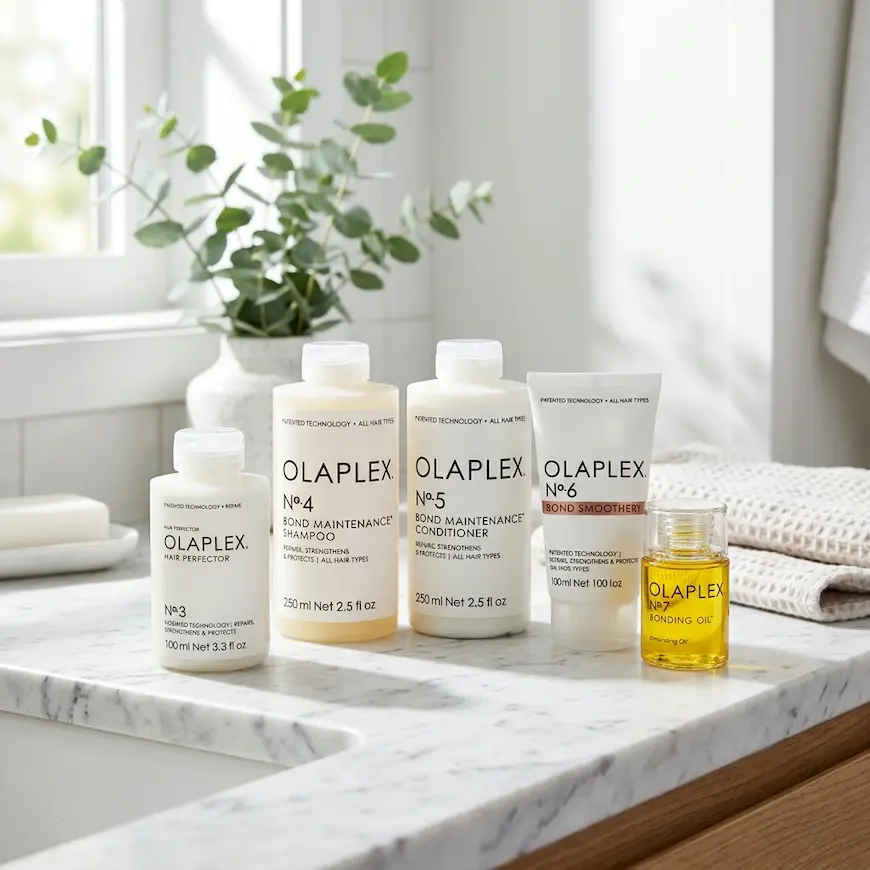
The numbers don’t indicate strength, and they aren’t an order of operations. They’re roughly the order Olaplex released the products in, which is why the system makes no sense to anyone standing in a shop holding two bottles. Here’s what each Olaplex product actually does.
| If you… | Buy | Why |
|---|---|---|
| Only want one product | Olaplex No. 3 Hair Perfector | The core treatment. Everything else in the Olaplex line supports it |
| Have bleached or badly damaged hair | Olaplex No. 0 + No. 3 together | No. 0 is a primer that boosts No. 3. On its own it does nothing |
| Want a full wash routine | Olaplex No. 4 + No. 5 | Shampoo and conditioner that hold the repair between treatments |
| Have frizz | Olaplex No. 6 Bond Smoother | Leave-in cream. The most-loved Olaplex product after No. 3 |
| Heat style regularly | Olaplex No. 7 Bonding Oil | Shine plus heat protection to about 450°F, though it’s cheaper to lower your heat tool temperature. For shine alone, argan oil for shine does much the same job |
| Have dry, coarse or thick hair | Olaplex No. 8 Bond Intense Moisture Mask | Moisture, not strength. A different job from No. 3 |
| Want a leave-in for fine hair | Olaplex No. 9 Bond Protector Serum | Lighter than No. 6 and won’t flatten fine hair, so it pairs well with how to add volume back |
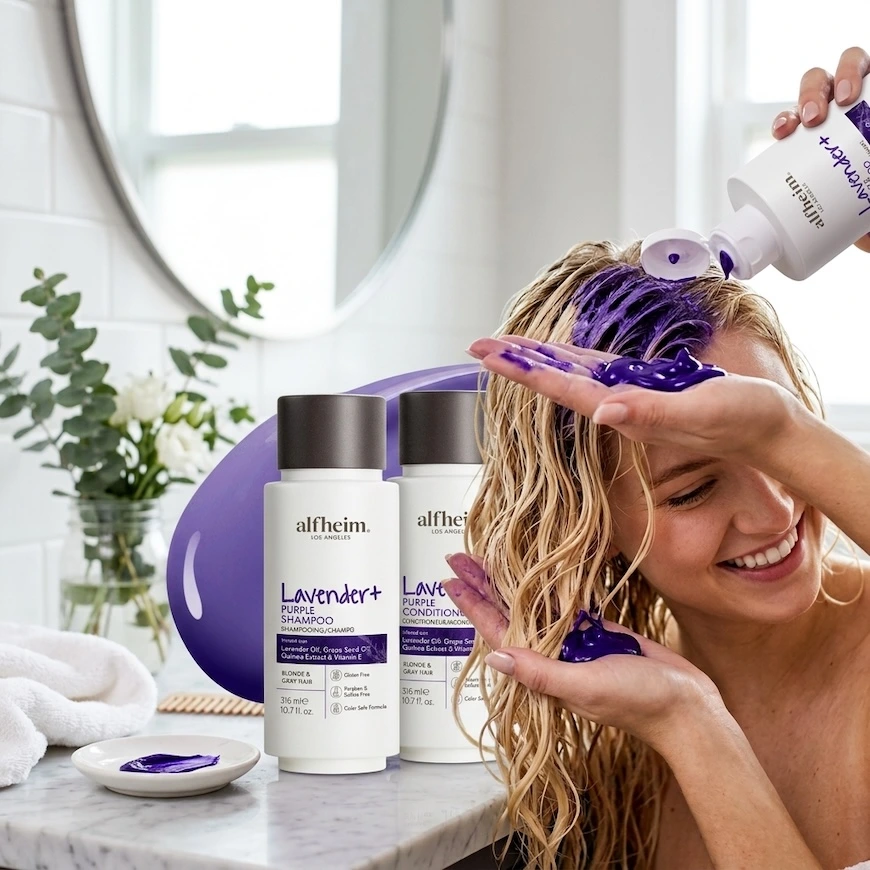
| Are blonde and fighting brass | Olaplex No. 4P Blonde Enhancer | A purple shampoo for brassy blonde, with the bond technology added |
| Have product buildup | Olaplex No. 4C Clarifying Shampoo | Monthly, not weekly. It’s a deep clean |
| Are in a salon chair | Olaplex No. 1 + No. 2 | Professional only. Mixed into colour or bleach, never sold for home use |
The honest Olaplex starter kit is No. 3, No. 4 and No. 5. That’s treatment plus maintenance, and it’s where most people should stop until they know whether Olaplex does anything for their hair.
Don’t buy the whole line. Nine products is a lot of money and several of them overlap badly. Olaplex No. 6, No. 9 and No. 7 are all leave-ins doing similar work at different weights, and you don’t need three of them.
How Olaplex works, and what it can’t do
Your hair’s strength comes largely from disulfide bonds: sulphur-to-sulphur links between cysteine amino acids inside the strand. Bleach, permanent colour, relaxers and heat all break them. Break enough and hair goes limp, stretchy, and snaps when you comb it. If you want the full list of what causes bond damage, most of it is stuff people do to themselves on purpose.
The active ingredient in Olaplex, bis-aminopropyl diglycol dimaleate, finds those broken sulphur groups and reconnects them. That’s a real mechanism, and it’s the reason bond builders became a category instead of a fad.
Now the part the brand pages leave out.
Olaplex fixes one kind of damage. It reconnects disulfide bonds. It does not:
- Rebuild the protein chains themselves
- Replace the lipids bleach strips out
- Repair a cuticle that’s physically torn up
- Return hair to virgin condition
As chemists covering hair repair have put it, these treatments have been successful at limiting damage from chemical processing, but they leave people with the impression that all damage is reversible. It isn’t. Hair is not living tissue and cannot heal.
So what should you expect from Olaplex? Less breakage. Better elasticity. Hair that combs through without a fight and holds a style. Not the hair you had before you bleached it.
Worth the money if your hair is chemically processed. A waste of it if your hair is already healthy and you’re hoping for growth or thickness, because Olaplex does neither.
How to use Olaplex No. 3 properly
This is where most people go wrong, and it’s why half the Olaplex reviews online say it did nothing.
Olaplex No. 3 is a pre-shampoo treatment. Not a conditioner. Not a mask.
The correct method:
- Start with damp, towel-dried hair. Not soaking, because water dilutes the product. Not bone dry either.
- Apply generously from mid-length to ends and through any damaged patches, then detangle with a wide-tooth comb so the Olaplex reaches every strand instead of sitting on top.
- Leave it at least 10 minutes. Longer is better up to a point, and plenty of people leave Olaplex on for 30 to 60 minutes.
- Don’t rinse it out on its own. Shampoo and condition as normal with the Olaplex still in your hair. This part isn’t optional. No. 3 was never built to be left in, and skipping the wash is why some people say their hair felt gummy afterwards.
- Once a week for most people. Twice a week for freshly bleached hair, for the first few weeks only.
Common mistakes:
| Mistake | What happens |
|---|---|
| Using Olaplex after shampooing, like a conditioner | Far less effective, and you skip the wash-out step |
| Applying it to soaking wet hair | Dilutes the product |
| Leaving it in without washing | Hair feels heavy, coated, sometimes gummy |
| Using it daily | No extra benefit, and hair can go limp |
| Expecting results after one use | Bond repair is cumulative. Give Olaplex 3 to 4 weeks |
About Olaplex No. 0: it’s a primer for No. 3, not a treatment on its own. Apply No. 0 to dry hair, leave it 10 minutes, then layer No. 3 on top without rinsing and give it another 10 minutes before you shampoo. Worth doing on bleached hair. Skip it otherwise.
Does Olaplex cause hair loss? The lawsuit, answered
This is the most-searched question about the brand, so here it is plainly.
What happened: in February 2023, a group of plaintiffs sued Olaplex, alleging that the products caused hair loss and scalp injury. The case got substantial press coverage and an enormous amount of social media attention.
What happened next got far less coverage:
- On 11 July 2023, the court severed the claims and dismissed all but the first named plaintiff, finding that the claims did not arise from the same transaction or occurrence. Different Olaplex products, used at different times, with substantially different alleged injuries.
- The remaining claim was voluntarily dismissed on 24 July 2023, without prejudice.
- No active hair-loss class action or MDL against Olaplex exists as of 2026. (A separate false-advertising case over “Made in USA” labelling settled in July 2025. Nothing to do with hair damage.)
On lilial specifically. Much of the panic centred on butylphenyl methylpropional, or “lilial”, a fragrance ingredient the EU’s Scientific Committee on Consumer Safety moved to phase out of cosmetics by March 2022 over reproductive toxicity concerns. Olaplex pulled it from No. 3 in February 2022. Current Olaplex formulas don’t contain it. A bottle bought before 2022 is a reason to replace that bottle, not a reason to avoid the brand.
So can a bond builder cause hair loss? Not through the bond-building mechanism. Two things are still worth knowing.
- Protein overload is real. Push strengthening treatments onto hair that’s crying out for moisture and it goes stiff and brittle, and brittle hair snaps. In the mirror that reads as hair loss. It’s breakage. The fix is moisture rather than more protein, and a pre-wash oil helps here, since coconut oil reduces protein loss during washing.
- Any product can trigger an allergic reaction in an individual. Scalp irritation, itching or a rash means stop using it and see a dermatologist.
To work out whether it shed or broke, look at a fallen hair. A small white bulb at the end means it shed naturally, which is normal at 50–100 a day. No bulb, with a frayed or blunt end, means it broke. That’s the one to act on.
And one thing Olaplex can’t help with at all: it works on the strand, not the skin. If hair is thinning rather than snapping, the answer is a healthy scalp underneath and a dermatologist, not another bottle.
Olaplex vs K18 vs Redken
| Olaplex | K18 | Redken ABC | |
|---|---|---|---|
| Approach | Reconnects disulfide bonds | Peptide that targets keratin chains | Citric acid, lowers pH to seal the cuticle |
| Time | 10+ min pre-shampoo, then wash | 4 min, leave in. No rinse | Standard wash routine |
| Best for | Bleached and chemically processed hair | People who won’t sit through a long treatment; fine hair | Everyday maintenance, shine, lower budget |
Which to choose: Olaplex if your hair is bleached or heavily processed and you’ll actually commit to a weekly treatment. K18 if you won’t, because a four-minute leave-in is a different proposition and it suits fine hair that goes limp under anything heavier. Redken ABC if you want everyday shine at a lower price and you’re not dealing with severe damage.
Can you use them together? Yes, but not in the same wash, and you’ll pay twice for benefits that overlap. Pick one lane for six weeks and judge from there.
What results to expect from Olaplex, and when
| Timeframe | What you should notice |
|---|---|
| After 1 use | Softer, easier to comb. That’s conditioning, not repair |
| 2–3 weeks | Less breakage on the brush, hair holds style better |
| 4–6 weeks | Meaningfully less snapping, better elasticity |
| 3 months | About as good as Olaplex gets. This is the plateau |
What you should not expect: faster growth, thicker hair, more hair, or split ends sealing shut. Bond builders do none of that. Splits only ever get cut off.
Whatever Olaplex gives you back, friction takes some of it away again while you sleep, so protect it overnight with satin if you’re going to the trouble of a weekly treatment at all.
If nothing has changed after six weeks of using Olaplex correctly, your hair probably wants moisture rather than protein. Swap to No. 8 or a rich mask for a few weeks and see whether that was the missing piece.
Frequently asked questions
How do you use Olaplex No. 3?
Apply Olaplex No. 3 to damp, towel-dried hair before shampooing, comb it through, leave it at least 10 minutes, then shampoo and condition as normal. It's a pre-shampoo treatment, not a conditioner and not a leave-in mask. Using it after shampoo is the most common mistake, and it's why so many people think Olaplex doesn't work.
Can I leave Olaplex No. 3 in overnight?
You can, and some people do it for very damaged hair, but you still have to shampoo it out afterwards. Leaving Olaplex in without washing makes hair feel heavy or gummy. Past about an hour the extra benefit is small, so overnight isn't necessary for most hair.
Does Olaplex cause hair loss?
There's no evidence that it does. A 2023 lawsuit alleged it, but in July 2023 the court severed the claims and dismissed all but the lead plaintiff, who then withdrew. No active hair-loss class action against Olaplex exists as of 2026. What people sometimes experience is breakage from protein overload, which is using strengthening products on hair that needs moisture. It looks like loss. It's a different problem with a different fix.
Is Olaplex still made with lilial?
No. Butylphenyl methylpropional came out of Olaplex No. 3 in February 2022, ahead of the EU phase-out deadline. Current formulas don't contain it. Only bottles bought before 2022 would.
Is Olaplex a protein treatment?
Not exactly, and the distinction matters. Protein treatments deposit protein onto the hair. Olaplex reconnects disulfide bonds that already exist. It still produces a strengthening effect, so it can contribute to protein overload if you stack it with other strengthening products. Stiff, straw-like hair means cut back and add moisture.
Does Olaplex work on curly or 4C hair?
Yes. Bond damage happens in every hair type, and it matters more if you colour, relax or heat style. Textured hair usually needs more moisture alongside it, so pairing Olaplex No. 3 with No. 8 works better than No. 3 alone. Deep condition after treating.
Olaplex or K18, which is better?
Neither is better outright, they work differently. Olaplex reconnects disulfide bonds and needs 10+ minutes before shampooing. K18 uses a peptide that targets keratin chains, takes four minutes, and stays in. Choose Olaplex for bleached and heavily processed hair, K18 if you want speed or your fine hair weighs down easily.
How long does it take for Olaplex to work?
Hair feels softer immediately, but real bond repair is cumulative. Expect noticeably less breakage at two to three weeks, clear improvement at four to six, and a plateau around three months. If nothing has shifted after six weeks of correct use, your hair probably needs moisture rather than protein.
Reviewed August 2026. General information, not medical advice. If you’re experiencing scalp irritation or genuine hair loss, see a board-certified dermatologist.

Hi, I’m Marwa ✅
I test skincare, haircare, and makeup on real skin and a real budget, and writes the honest reviews to prove it.